Environmental group raises concern about flooding at Alberta coal mines

Advertisement

Advertise with us

EDMONTON - An environmental group is calling for stronger action from Alberta's energy regulator after it announced heavy rain had caused flooding and excessive surface run-off at energy sites, including coal mines.

Read this article for free:


or

Already have an account? Log in here »

To continue reading, please subscribe:

Subscribe and receive a limited-edition Free Press branded hat or tote.

Digital Subscription

One year of digital access for only $205*

  • Enjoy unlimited reading on winnipegfreepress.com
  • Read the E-Edition, our digital replica newspaper
  • Access News Break, our award-winning app
  • Play interactive puzzles

*First annual payment billed as $205.00 + GST for one year. This annual subscription will automatically renew at $233.00 + GST every 52 weeks (10% off the regular annual price of $259.35). Offer available to new and qualified returning subscribers only. Cancel any time.

To continue reading, please subscribe:

Add Free Press access to your Brandon Sun subscription for only an additional

$1 for the first 4 weeks*

  • Enjoy unlimited reading on winnipegfreepress.com
  • Read the E-Edition, our digital replica newspaper
  • Access News Break, our award-winning app
  • Play interactive puzzles
Start now

*Your next Brandon Sun subscription payment will increase by $1.00 and you will be charged $17.95 plus GST for four weeks. After four weeks, your payment will increase to $24.95 plus GST every four weeks.

Hey there, time traveller!
This article was published 23/06/2023 (1184 days ago), so information in it may no longer be current.

EDMONTON – An environmental group is calling for stronger action from Alberta’s energy regulator after it announced heavy rain had caused flooding and excessive surface run-off at energy sites, including coal mines.

The Alberta Energy Regulator posted on its website Tuesday that some coal mines in the Hinton and Grande Cache areas reported wastewater being discharged into the environment. It said the mixture of surface run-off and sediment was above approved water-quality limits and from unauthorized sources.

“There have been no reported impacts to public safety,” the statement said.
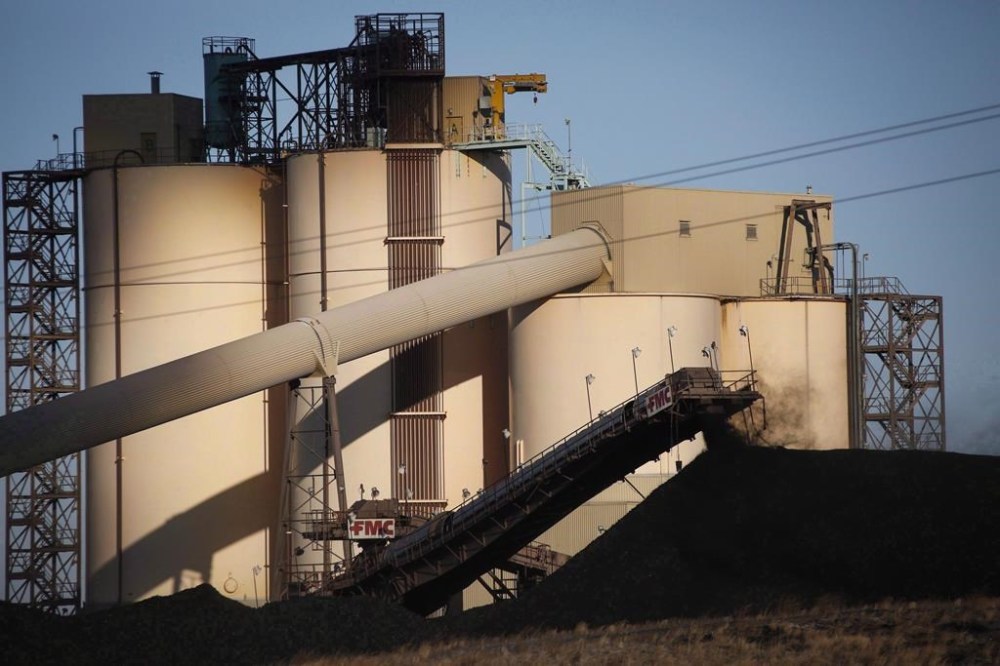
A conveyor belt transports coal at the Westmoreland Coal Company's Sheerness Mine near Hanna, Alta., Tuesday, Dec. 13, 2016. An environmental group is calling for improvements after Alberta's energy regulator announced that heavy rain had caused flooding and excessive surface runoff at energy sites, including coal mines. THE CANADIAN PRESS/Jeff McIntosh

The regulator said the rain along the eastern slopes of the Rockies was easing off, but that it would continue to monitor the situation across the province and respond to other situations at energy sites as they arise.

However, the Canadian Parks and Wilderness Society said it’s alarmed that the regulator hasn’t provided more details about the environmental effects of the spills, including what was in the wastewater, potential contaminants or even the exact locations.

The regulator’s dashboard shows one of this week’s spills occurred Monday at CST Coal. It was a release of wastewater from a settling pond into the Smoky River.

A second spill happened Tuesday at Prairie Mines and Royalty near Robb, Alta., where wastewater was released into the Lovett and Erith rivers and Chance Creek.

Both postings said the emergency phase is over, but the regulator deferred comment Friday on any effects to the companies involved.

Westmoreland Mining, which owns Prairie Mines and Royalty, said in a statement that the release of surface water at both the Coal Valley and Obed mines was due to “an unusually intense rain event that overwhelmed the entire region and exceeded the water control capacity of the mines — which were designed, and subsequently approved by AER, to handle a 100-year storm event.”

It added that the water was surface run-off and did not contain any chemicals or other substances that would adversely affect the environment.

Gillian Chow-Fraser of the Canadian Parks and Wilderness Society, said the latest spills raise concerns.

“There have been so many incidents of that happening so far this year across mines across the province at both coal mines and oilsands mines,” she said Friday in an interview. “It’s very clear that we’re putting a lot of stress on these rivers and these watersheds that so many people depend on.”

Chow-Fraser said she expected more information from the regulator, particularly since coal mines can have harmful contaminants.

“There can be selenium in there, which is poisonous to fish, which can be harmful to wildlife and the water,” she said. “The makeup of that wastewater is really important to understand what are the environmental risks.”

She said the regulator also needs to do more to prevent similar spills in the future.

“It’s obvious that infrastructure needs to improve to buffer against these extreme weather events, which we know are going to increase with climate change,” she said.

“There needs to be more regulatory oversight to understand why these discharges keep happening and how we are going to stop them.”

Chow-Fraser said she would also like to see improved environmental monitoring downstream of the spills as they continue to happen.

A months-long leak of industrial wastewater from an Imperial Oil oilsands mine site was revealed earlier this year. It was followed by another 5.3 million litres of wastewater that escaped from a containment pond, which prompted the regulator to issue an environmental protection order.

This report by The Canadian Press was first published June 23, 2023.

— By Colette Derworiz in Calgary.

Report Error Submit a Tip

More Stories

Jets GM insists club’s not working under any deadline in netminder’s trade request

Mike McIntyre 7 minute read Preview

Jets GM insists club’s not working under any deadline in netminder’s trade request

Mike McIntyre 7 minute read Thursday, Sep. 17, 2026

Connor Hellebuyck and his family were subject to so much post-Olympic vitriol that both the Winnipeg Jets security team and even police had to get involved.

Read
Thursday, Sep. 17, 2026

Former Bombers linebacker Gauthier enjoying career as electrician

Taylor Allen 6 minute read Preview

Former Bombers linebacker Gauthier enjoying career as electrician

Taylor Allen 6 minute read Yesterday at 12:44 PM CDT

Most professional football players don’t ride off into the sunset on their own terms.

Shayne Gauthier was well aware of that, but it didn’t make it sting any less when the Winnipeg Blue Bombers informed the veteran linebacker that they weren’t bringing him back for 2026.

“I was really hoping to play one more (season) because it would have been my 10th season, so, I’d say it didn’t really end the way I wanted,” Gauthier recently told the Free Press.

“It left a little sour taste in my mouth, but that’s part of pro sports. If everybody got the ending that they wanted, then it wouldn’t really work.”

Read
Yesterday at 12:44 PM CDT

A life’s story: activist, educator, organizer knew the true meaning of community

Janine LeGal 7 minute read Preview

A life’s story: activist, educator, organizer knew the true meaning of community

Janine LeGal 7 minute read 3:00 AM CDT

Somewhere between a love for sharing stories and a love of community connections, Michael (Mike) Maunder lived his life. Giving voice to people and neighbourhoods was a passion for the natural-born community organizer.

An author, teacher and principal, Maunder lived in a one-bedroom apartment in West Broadway and devoted himself to community development, education and neighbourhood renewal.

He maintained a connection with Augustine United Church, whose commitment to social justice he appreciated, volunteered at the Sandy-Saulteaux Spiritual Centre, and found comfort in a Buddhist prayer community.

Maunder died on July 15 at the age of 80.

Read
3:00 AM CDT

Puzzles Palace

1 minute read Monday, Jul. 27, 2026

To solve our puzzles, please subscribe with this special offer: |

Family account spiced with magic realism, geopolitical intrigue and a ghost story

Reviewed by Zilla Jones 4 minute read Preview

Family account spiced with magic realism, geopolitical intrigue and a ghost story

Reviewed by Zilla Jones 4 minute read 2:01 AM CDT

Tom Lin’s second novel Babylon, South Dakota moves beyond a historical account of an immigrant family’s struggle, delightfully blending and bending genres.

Lin is a Chinese-born novelist whose family emigrated to the U.S. when he was four years old. His debut novel, The Thousand Crimes of Ming Tsu, won the 2022 Andrew Carnegie Medal for Excellence in Fiction, making him the youngest ever recipient of that award. He earned a PhD in English from the University of California Davis and is currently an assistant professor of English and creative writing at the University of Iowa.

Babylon, South Dakota takes place in an unspecified time period that can be understood to be during the Mao era — likely the 1950s or ’60s. A young Chinese couple, the Hsuis, immigrate to the rural community that gives the book its title. They take the names Saul and Mei and settle on a 160-acre homestead left to them by a distant relative.

Saul’s dream is to breed and sell chrysanthemums from seeds he brought from China, while Mei wants to raise livestock. They speak no English, know nothing of life in the United States, are unprepared for the harshness of winter and the isolation of the farm and bring nothing with them except some gold, which Mei hides around the house for emergencies. Their only link to the outside world is a discarded and marginally functioning TV set, which Saul rescues and rigs up.

Read
2:01 AM CDT

Canada must not accept another Iranian autocracy

David Matas 5 minute read 2:01 AM CDT

Iran is a state run by a radical government victimizing its citizens and its neighbours. How do we change that? Any regime change that repeats the mistakes of the past is not a solution.

What went wrong in the past which led to the current regime? One answer is the U.K. and American aided coup which led to the ouster in 1953 of a democratically elected government headed at the time by Mohammad Mossadegh and its replacement with an American friendly autocrat, the Shah of Iran, Mohammad Reza Pahlavi.

The Shah imposed his rule through the Iranian National Intelligence and Security Organization — SAVAK, the acronym of its Persian name. SAVAK systematically inflicted torture, arbitrary killings and extra-judicial killings on perceived opponents of the regime. It was only a matter of time before repression of a regime directed to serving foreign interests would be overthrown.

What replaced the regime of the Shah, in 1979, the current regime of the mullahs, is a regime as intolerant and violent as the regime of the Shah and then some. That was not inevitable. But neither was it surprising. The vicious nature of the current regime, following the example set by the Shah, and its hatred for the United States, reacting to the U.S. aided imposition of the Shah, both echoes and reacts to the past. In 1979, the U.S. reaped what it sowed in 1953.