‘Not as dramatic’: Saskatchewan farmers draining water demonstrate benefits
Advertisement
Read this article for free:
or
Already have an account? Log in here »
To continue reading, please subscribe:

Digital Subscription
One year of digital access for only $205*
- Enjoy unlimited reading on winnipegfreepress.com
- Read the E-Edition, our digital replica newspaper
- Access News Break, our award-winning app
- Play interactive puzzles
*First annual payment billed as $205.00 + GST for one year. This annual subscription will automatically renew at $233.00 + GST every 52 weeks (10% off the regular annual price of $259.35). Offer available to new and qualified returning subscribers only. Cancel any time.
To continue reading, please subscribe:
Add Free Press access to your Brandon Sun subscription for only an additional
$1 for the first 4 weeks*
- Enjoy unlimited reading on winnipegfreepress.com
- Read the E-Edition, our digital replica newspaper
- Access News Break, our award-winning app
- Play interactive puzzles
*Your next Brandon Sun subscription payment will increase by $1.00 and you will be charged $17.95 plus GST for four weeks. After four weeks, your payment will increase to $24.95 plus GST every four weeks.
Read unlimited articles for free today:
or
Already have an account? Log in here »
Hey there, time traveller!
This article was published 22/07/2023 (1156 days ago), so information in it may no longer be current.
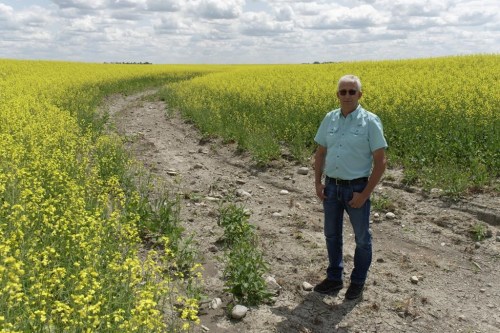
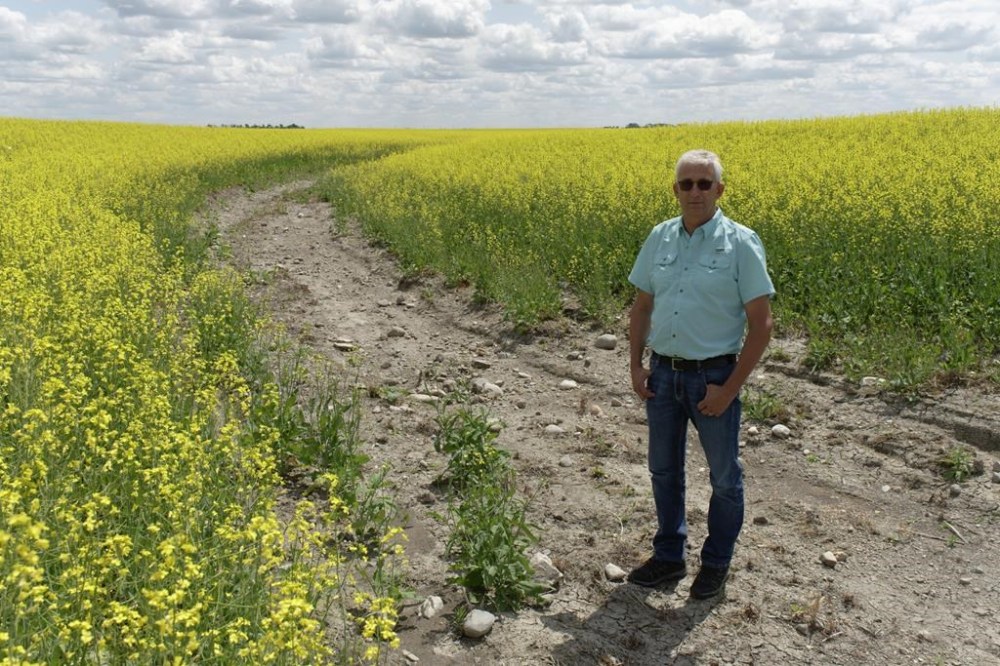
GRENFELL, Sask. – It’s an area of farmland Ryan Maurer says is worth as much as a Lamborghini.
High run-off flooded one of his fields in spring 2022, leaving shallow pools of water. This was before the farmer opened ditches to drain it.
“Would you take your Lamborghini and park it in a slough?” Maurer asked on his farm near Grenfell, Sask., about 125 kilometres east of Regina.
No, he says, he wouldn’t.
“But society’s asking us to do that,” Maurer added. “And then they turn around and tell us to grow more food.”
Maurer’s land is part of a drainage network known as the Tetlock Conservation and Development Area Authority. It’s where farmers work together to move water through each other’s land and out into a creek.
The farmers in the Tetlock network say the water is moved in a managed and slower pace when it’s released, helping mitigate potential flooding downstream. There are control gates, smaller culverts, tile piping and holding ponds.
In fact, the Tetlock normally only adds 0.5 per cent of water to the flow of the creek, indicates data provided by the farmers who oversee the network.
“It’s not as dramatic as everybody says it is,” said Owen Pekrul, a farmer who’s also part of the drainage network. “Because it’s a ditch or it’s organized, they think it affects a lot of things.”
But for some, drainage is a problem.
Farmers downstream of some other networks say huge gushes of water continue to wash out their fields each year.
Environmental groups also worry about the loss of wetlands, as some are drained to make way for more arable acres. They say this puts habitats at risk and causes water quality to degrade.
Rural municipalities have raised concerns about illegal works causing water to breach grid roads.
Rural officials have asked the Water Security Agency, which is in charge of overseeing drainage, to ensure illegal drainers get permits.
“The biggest concern that we have is that many ratepayers just are not following the rules that are in place, the laws if you will,” said Helen Meekins, a councillor with the Rural Municipality of Pleasantdale in southeast Saskatchewan.
“The rural municipality isn’t against drainage,” Meekins added. “But, if they go through the permit process, then at least we know where there’s going to be more water and how it’s going to affect the infrastructure that we have in place.”
Some farmers say managed networks, such as the Tetlock, could help address flooding issues as long as everyone upstream and downstream can work together.
Maurer, as well as others involved in the network, are members of the Saskatchewan Farm Stewardship Association, a group that has lobbied the province for managed drainage to promote soil health and crop production.
He said drainage helps him turn soil that’s too salty into something that can grow healthy crops.
It also allows him to be more productive with his time on the field. That’s because those working the machines don’t have to move around various sloughs when they apply fertilizer and spray chemicals.
“These little sloughs are a couple inches of water. There’s nothing major,” Maurer said. “So, we over-apply. How do we get around that? Well, drainage and management is the answer.”
Not all drainage has been done in a managed way in Saskatchewan.
For decades, producers have dug ditches to move water out without approval from the Water Security Agency.
In 2018, Saskatchewan’s auditor estimated there were up to 9,712 square kilometres of land with unapproved works.
The agency has said it’s brought many unpermitted works into compliance by working with landowners and making sure the stream, pond or lake can handle the amount of water flowing in.
Research projects have also been looking into best practices. In one, a farmer has been draining water from various sloughs into one larger consolidation pond.
Candace Mitschke, the executive director with the Saskatchewan Farm Stewardship Association, said different solutions are required for each farm because landscapes across the province aren’t the same.
But, she said, issues can be resolved when people work together.
In rare cases, farmers have expropriated downstream land so they can get a permit and manage the water appropriately.
“Sometimes you’re not going to get people to co-operate no matter what you do. In those cases, that’s when expropriation is that important piece and enables that network to function,” Mitschke said.
The Water Security Agency still has a ways to go to bring all unapproved works into compliance.
Since 2017, only about a third of land with unpermitted works, about 3,146 square kilometres, has been brought into compliance.

Saskatchewan’s auditor has recommended unpermitted drainage be addressed quickly. The longer people wait, it noted, the more frustrated they become.
The auditor has also recommended the agency establish a wetlands policy to ensure water quality doesn’t degrade, which the agency says it’s working on.
For Maurer, it’s all about water management. He again pointed to the Tetlock network as an example of good practices.
“If everybody did that, it would be managed going in,” he said. “Just by saying, ‘Quit draining water,’ it doesn’t help anybody. It creates the problem.”
This report by The Canadian Press was first published July 22, 2023.