Montreal’s Mount Royal Park is getting a makeover. What would architect Olmsted say?
Advertisement
Read this article for free:
or
Already have an account? Log in here »
To continue reading, please subscribe:

Digital Subscription
One year of digital access for only $205*
- Enjoy unlimited reading on winnipegfreepress.com
- Read the E-Edition, our digital replica newspaper
- Access News Break, our award-winning app
- Play interactive puzzles
*First annual payment billed as $205.00 + GST for one year. This annual subscription will automatically renew at $233.00 + GST every 52 weeks (10% off the regular annual price of $259.35). Offer available to new and qualified returning subscribers only. Cancel any time.
To continue reading, please subscribe:
Add Free Press access to your Brandon Sun subscription for only an additional
$1 for the first 4 weeks*
- Enjoy unlimited reading on winnipegfreepress.com
- Read the E-Edition, our digital replica newspaper
- Access News Break, our award-winning app
- Play interactive puzzles
*Your next Brandon Sun subscription payment will increase by $1.00 and you will be charged $17.95 plus GST for four weeks. After four weeks, your payment will increase to $24.95 plus GST every four weeks.
Read unlimited articles for free today:
or
Already have an account? Log in here »
Hey there, time traveller!
This article was published 16/09/2023 (1099 days ago), so information in it may no longer be current.
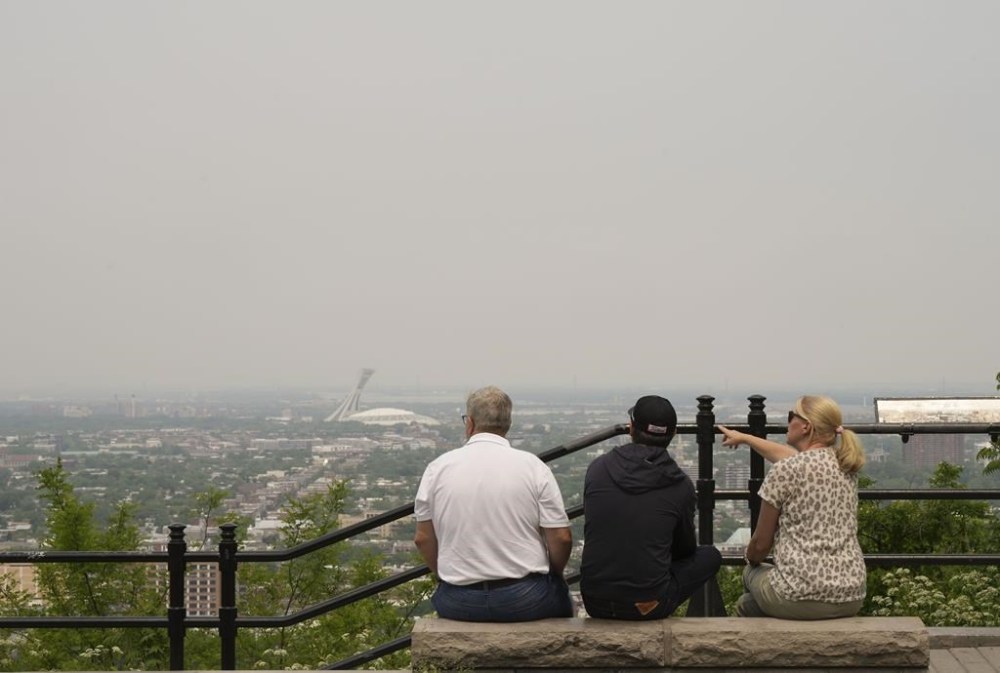
Montreal plans to fundamentally alter its lush, mountain playground.
The decision to close one of two roads up Mount Royal Park is the latest twist in a century-old debate over how to balance conservation of the wooded refuge in the city centre with the transportation needs of the metropolis.
The park’s architect, Frederick Law Olmsted, is responsible for some of the most celebrated public green spaces in North America, including New York’s Central Park. But what the famous landscape artist would think of the closure of Camillien-Houde Way is unclear, says University of Pennsylvania professor emeritus and Olmsted biographer Witold Rybczynski.
“It’s very tricky to try to figure out what a person like Olmsted would think of our world,” Rybczynski said in a recent interview. “He was a very pragmatic person.”
Olmsted died in 1903, before car use became widespread. “I’m sure he would have something interesting to say about automobiles,” Rybczynski continued. “I have no idea what it would be.”
The City of Montreal enlisted Olmsted to design a plan for its new Mount Royal Park in 1872, according to a city-commissioned 2018 study of the site written by historian Denise Caron.
Camillien-Houde Way, however, was not part of Olmsted’s proposal. Montreal constructed the road up the northeastern slope of the mountain in the late 1950s amid a push to expand car infrastructure, Caron wrote. Camillien-Houde joins with Remembrance Road near the summit to form a continuous route across Mount Royal.
On Wednesday, Mayor Valérie Plante announced plans to close Camillien-Houde to cars in 2027 and reopen it as a new pedestrian trail and bike path in 2029. Only emergency vehicles would still be able to use the trail, the city says.
“The mountain is not a shortcut,” Plante said at a news conference. “It’s a destination.”
The decision follows a controversial pilot project in which the city blocked through traffic over the mountain for five months in 2018. A concurrent public consultation on the future of the Mount Royal Park access roads yielded a recommendation to keep them open to cars.
But the Plante administration argues the closure of Camillien-Houde is necessary to protect biodiversity on Mount Royal and make the park more accessible to pedestrians, cyclists and people with reduced mobility, who would be able to use the new wheelchair-friendly trail.
Mount Royal, Plante declared, “belongs to everyone.”
The creation of a universally accessible destination for all city residents was Olmsted’s goal, too, according to Olmsted scholar Charles Beveridge, whose 2009 study on the architect’s plans for Mount Royal Park was published by the City of Montreal.
“The idea was that the park should be detached from the city, should be a quiet place of contemplation where people from all classes and races could find themselves,” Université de Sherbrooke history professor Harold Bérubé said in an interview.
But the professor suggested that ideal was at odds with the park’s exclusive location, as well as the desires of the local bourgeoisie, who used Mount Royal’s Olmsted-designed carriage paths to escape the bustle below.
“People from the lower classes could not access the park because … the park was at the time quite far from the urban core and the working class district,” Bérubé said. “So having easy and cheap access to Mount Royal Park became an important political question.”
Though a funicular connected the mountain summit and eastern base from 1885 until its closure in 1920, there was no eastward mass transit link to the mountaintop until the opening of a tramway in 1930, according to Caron’s history. The rail line carved through forest and rock, delineating the route that Camillien-Houde Way would occupy almost 30 years later.
Beveridge asserted in 2009 that Olmsted “opposed any rapid ascent that short-circuited” the viewing experience he curated for pedestrians and carriage riders travelling up the mountain.
Rybczynski agrees that although the architect designed routes for non-motorized vehicles, pleasure, not transit, was their primary purpose. “These were not shortcuts or part of the street system.”
Bérubé contends that the construction of Camillien-Houde further undermined Olmsted’s vision. “It was really a way of cutting through the mountain, cutting through the park,” Bérubé said. “So the park instead of being this oasis outside of the city became essentially an obstacle to the development of the city.”
Central Park suffered a similar fate as its former carriage paths began to welcome cars, Rybczynski said. New York City banned vehicles from those paths in 2018, though four sunken roads connecting the street grids to the east and west of the park remain.
The difference with Mount Royal, Rybczynski pointed out, is that Camillien-Houde Way is largely at the edge of the park, some of it on land the city acquired after Olmsted’s death.
“It’s hard for me to say (Camillien-Houde) is intrusive,” Rybczynski said. Instead, the professor admits he appreciates the experience the route offers visitors.
“If I was living in Montreal,” he confessed, “I would miss not having that drive.”
For Bérubé, eliminating car traffic on Camillien-Houde would “bring back, perhaps, the park to its beginnings, to this idea of a park that should be outside of the city.”
Rybczynski said that despite deviations from Olmsted’s design, his vision lives on in the fact that the park “plays such a central role in the city, the life of the city.”
“That was certainly … one of the intentions.”
This report by The Canadian Press was first published Sept. 16, 2023.