The Latest on post-tropical storm Lee’s impact on Atlantic Canada
Advertisement
Read this article for free:
or
Already have an account? Log in here »
To continue reading, please subscribe:

Digital Subscription
One year of digital access for only $205*
- Enjoy unlimited reading on winnipegfreepress.com
- Read the E-Edition, our digital replica newspaper
- Access News Break, our award-winning app
- Play interactive puzzles
*First annual payment billed as $205.00 + GST for one year. This annual subscription will automatically renew at $233.00 + GST every 52 weeks (10% off the regular annual price of $259.35). Offer available to new and qualified returning subscribers only. Cancel any time.
To continue reading, please subscribe:
Add Free Press access to your Brandon Sun subscription for only an additional
$1 for the first 4 weeks*
- Enjoy unlimited reading on winnipegfreepress.com
- Read the E-Edition, our digital replica newspaper
- Access News Break, our award-winning app
- Play interactive puzzles
*Your next Brandon Sun subscription payment will increase by $1.00 and you will be charged $17.95 plus GST for four weeks. After four weeks, your payment will increase to $24.95 plus GST every four weeks.
Read unlimited articles for free today:
or
Already have an account? Log in here »
Hey there, time traveller!
This article was published 16/09/2023 (1098 days ago), so information in it may no longer be current.
Post-tropical storm Lee is moving through Nova Scotia and into New Brunswick, bringing high winds, heavy rains and power outages in its wake. Here are the latest developments. All times Atlantic unless otherwise noted:
12 a.m.
Post-tropical storm Lee is about 91 kilometres south-southwest of Moncton, according to the latest update from Environment Canada, and will cross southeastern New Brunswick overnight before reaching Prince Edward Island early Sunday.
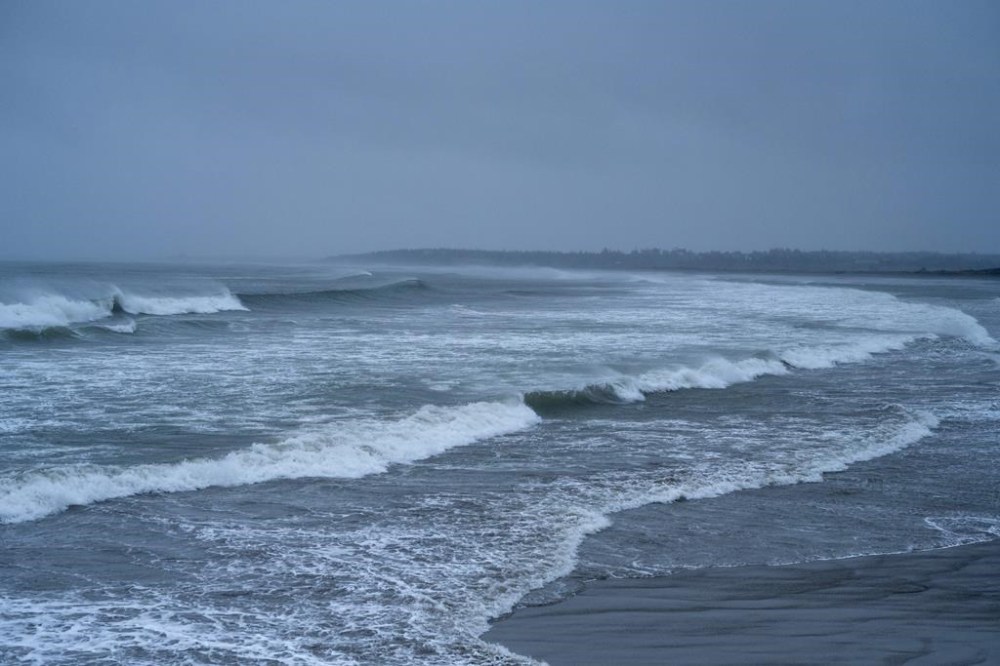
Bands of heavy rain continue to pour over New Brunswick, where 50 to 100 millimetres of rain has already fallen.
Strong winds around 100 km/h are still being reported along the eastern shore of Nova Scotia, and will persist across much of the region throughout the night.
Large offshore waves between 6 and 10 metres have been reported at several buoy platforms off the Atlantic coast of Nova Scotia, but the weather agency says risk of coastal flooding from waves and surge have diminished as high tide has passed in most areas.
—
9 p.m.
Environment Canada says post-tropical storm Lee is about 23 kilometres away from Saint John, and will continue to pummel the Atlantic coast tonight with rain showers, strong winds and high waves.
The weather agency says winds gusting up to a maximum of 110 km/h can be expected over two-thirds of New Brunswick, Prince Edward Island, the Magdelan Islands, northern Nova Scotia and all of Cape Breton.
They say an abundance of rainfall in recent months and days could lead to more trees becoming uprooted during the storm.
Widespread utility outages continue across much of the Maritimes.
An outage map from Nova Scotia Power is showing more than 118,000 customers still without electricity across the province after rainfall warnings for the region ended.
NB Power is reporting more than 14,000 customers without power ahead of Lee’s expected second landfall in New Brunswick tonight.
—
5 p.m.
The National Hurricane Center in the United States says post-tropical storm Lee has made landfall on Nova Scotia’s Long Island.
The area is on a long narrow strip of land known as Digby Neck on the extreme southwest corner of the province about 215 kilometres from Halifax.
The storm is moving across the Bay of Fundy and is expected to make a second landfall in southern New Brunswick later today.
—
4:30 p.m.
An outage map from Nova Scotia Power is showing 160,248 customers are without electricity across the province.
As the numbers climb, most outages are still concentrated in the Halifax region and along the province’s South Shore due to downed trees and power lines.
With post-tropical storm Lee yet to make landfall, NB Power is reporting 31,597 customers are without power, with the majority of the outages in the province’s south and southwest.
—
2:40 p.m.
Halifax Mayor Mike Savage says Lee still has the potential to be dangerous.
Savage told an afternoon media briefing that a number of roads in the municipality had been blocked by sea water and debris from downed trees and power lines.
Officials couldn’t provide a number, but say road blockages have been reported along the Peggy’s Cove Road, in the St. Margarets Bay area, and on Shore Road in Eastern Passage and on Lawrencetown Road.
Harbour ferries have been taken out of service, while municipal parks, recreation centres and libraries have also been closed.
Municipal officials were also working to help keep the city’s homeless population safe by opening three shelters.
—
2:10 p.m.:
Lee is having a significant impact on some parts of Nova Scotia and New Brunswick, but some areas expected to be hit hard have not so far felt the storm’s full effects.
Pam Lovelace, a Halifax municipal councillor for an area that includes the famous Peggy’s Cove lighthouse, says some coastal roads are already under water or strewn with large rocks pushed up by storm surges.
But in Yarmouth, N.S. where wind at the airport had been gusting between 60 and 70 km/h since midnight Friday, the gusts had died down by noon. The rain had stopped and there were barely any waves across Yarmouth harbour.
Town officials feared they might be in for heavy damage if winds shifted to the south around noon when tides are highest, but said that never happened.
In Dorchester, N.B., former deputy mayor Kara Becker said heavy rain earlier in the day had subsided by the afternoon. She described current conditions as resembling a winter nor’easter, only with rain.
—
1:40 p.m.
Nova Scotia Power’s outage map is showing 125,871 customers without power across the province.
Most of the outages appear to be concentrated in the Halifax region and along the province’s South Shore.
NB Power is reporting more than 31, 287 customers without electricity, mostly in the western part of the province.
—
1:30 p.m.
An Environment Canada meteorologist says post-tropical storm Lee may make landfall farther west than initially anticipated.

Jill Maepea says the storm’s centre was expected to hit somewhere along southwestern Nova Scotia later this afternoon.
But she says there is some speculation that its path may arc further west and the storm may cross the Bay of Fundy to land in southern New Brunswick.
Maepea says that as of about noon Atlantic time, Lee was approximately 90 kilometres southwest of Yarmouth, N.S., travelling across the ocean at a speed of about 41 kilometres per hour.
—
This report from The Canadian Press was first published Sept. 16, 2023.
Related Articles
Lee brings floods, outages to Maritimes
Advertisement Advertise With Us
Advertisement Advertise With Us