UN chief calls for an “ambition supernova” as nations make minor progress on climate action

Advertisement

Advertise with us

Countries’ climate action plans are still far behind what’s needed to curb human-caused warming and limit the devastating effects of extreme heat, storms and droughts, but some nations have taken marginal steps toward slashing emissions, a United Nations analysis of national plans found Tuesday.

Read this article for free:


or

Already have an account? Log in here »

To continue reading, please subscribe:

Subscribe and receive a limited-edition Free Press branded hat or tote.

Digital Subscription

One year of digital access for only $205*

  • Enjoy unlimited reading on winnipegfreepress.com
  • Read the E-Edition, our digital replica newspaper
  • Access News Break, our award-winning app
  • Play interactive puzzles

*First annual payment billed as $205.00 + GST for one year. This annual subscription will automatically renew at $233.00 + GST every 52 weeks (10% off the regular annual price of $259.35). Offer available to new and qualified returning subscribers only. Cancel any time.

To continue reading, please subscribe:

Add Free Press access to your Brandon Sun subscription for only an additional

$1 for the first 4 weeks*

  • Enjoy unlimited reading on winnipegfreepress.com
  • Read the E-Edition, our digital replica newspaper
  • Access News Break, our award-winning app
  • Play interactive puzzles
Start now

*Your next Brandon Sun subscription payment will increase by $1.00 and you will be charged $17.95 plus GST for four weeks. After four weeks, your payment will increase to $24.95 plus GST every four weeks.

Hey there, time traveller!
This article was published 14/11/2023 (1047 days ago), so information in it may no longer be current.

Countries’ climate action plans are still far behind what’s needed to curb human-caused warming and limit the devastating effects of extreme heat, storms and droughts, but some nations have taken marginal steps toward slashing emissions, a United Nations analysis of national plans found Tuesday.

The report looked into the climate plans of 195 countries and found that emissions from the burning of coal, oil and gas will go up 9% by 2030 compared to 2010 levels, but will be 2% lower than 2019 levels because of some climate action from countries switching to cleaner energy. But climate scientists warn that the world needs to spew around 45% less by then.

“The world is failing to get a grip on the climate crisis,” United Nations Secretary-General Antonio Guterres said in a statement. “Inch by inch progress will not do. It is time for a climate ambition supernova in every country, city, and sector.”

He called for “net-zero” — when countries only spew as much carbon into the atmosphere as they can take back out — in developed countries to happen by “as close as possible” to 2040, and 2050 for developing nations.

The U.N. climate chief, Simon Stiell, urged that upcoming international climate talks in Dubai become a “turning point” where governments can get on track with plans to cut emissions in line with capping warming at 1.5 degrees Celsius (2.7 degrees Fahrenheit), as agreed by nations in Paris in 2015.

“Governments must not only agree what stronger climate actions will be taken but also start showing exactly how to deliver them,” Stiell said in a press statement. He said that billions around the world expect governments to act on climate change.

Sultan al-Jaber, president of the COP28 climate talks in Dubai and chief of the Abu Dhabi National Oil Company, said the report shows “there is simply no time left for delays.”

Extreme weather events charged by the warming atmosphere are increasing in magnitude and frequency around the world. The last 12 months were the hottest yearlong period ever recorded, according to a recent analysis. Many recent droughts, floods and storms were found to have fingerprints of human-cause climate change, according to attribution scientists.

When countries meet in Dubai, they’ll review their climate action for the last three years as part of what’s been called a “global stocktake.” Negotiators plan to use this report and discussions later this year to figure out what nations need to do next to fight climate change.

Climate activists said the report is just one more reason why global leaders should be held accountable for their inaction at the talks.

“It’s already hell for a lot of people,” said Disha Ravi, an Indian activist with the youth climate group Fridays for Future, of current extreme weather. “I sometimes wonder if they (leaders) care about lives at all.”

“Leaders have continued prioritizing profits over the health and safety of our planet and its inhabitants,” she said. “We cannot continue this way.”

___

Associated Press climate and environmental coverage receives support from several private foundations. See more about AP’s climate initiative here. The AP is solely responsible for all content.
Report Error Submit a Tip

More Stories

How confusing; seems there’s more than one candidate in Hanover named Shayne Barkman

Dan Lett 5 minute read Preview

How confusing; seems there’s more than one candidate in Hanover named Shayne Barkman

Dan Lett 5 minute read Thursday, Sep. 24, 2026

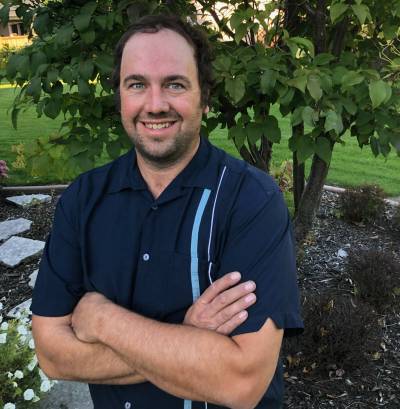
It’s not entirely clear when or why Hanover trustee Shayne Barkman became one of Manitoba’s best-known anti-LGBTTQ+ crusaders.

Back in 2022, when he ran as a candidate for Hanover school board for the first time, there was nary a hint that socially conservative culture wars were going to be a large part of his identity as an elected official.

In a Steinbach Online profile published before the 2022 municipal elections, Barkman highlighted his background as a successful farmer. He said he was entering politics to be a “listening ear” who could promote understanding.

“I would love to kind of just be a voice of reason amongst all the problems coming down the pipe,” Barkman said

Read
Thursday, Sep. 24, 2026

Flammable gas culprit of 2024 Transcona home explosion: police

Malak Abas 1 minute read Preview

Flammable gas culprit of 2024 Transcona home explosion: police

Malak Abas 1 minute read Yesterday at 4:45 PM CDT

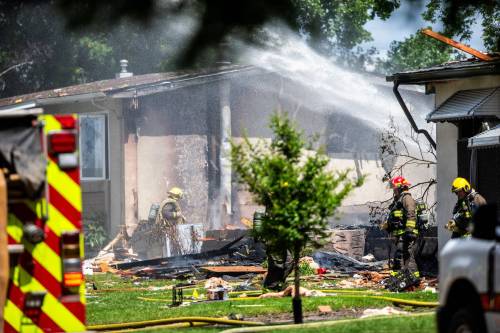
Flammable gas is believed to be the cause of a 2024 house explosion in Transcona that damaged neighbouring homes and displaced residents.

“As a result of the investigation and upon Crown review, the explosion is believed to be an isolated incident,” Winnipeg Police Service Const. Dani McKinnon said in an email Friday afternoon.

“There are no public safety concerns connected to this incident, and no criminal charges have been laid.”

The sudden blast happened in a bungalow on Camrose Bay on June 26, 2024. It levelled the home and caused significant damage to 22 other houses. At the time, it was described as “catastrophic” by the fire chief at the scene.

Read
Yesterday at 4:45 PM CDT

New series terrific addition to RWB repertoire

Holly Harris 5 minute read Preview

New series terrific addition to RWB repertoire

Holly Harris 5 minute read 2:01 AM CDT

‘See the music, hear the dance,” is a famous quote from quintessential ballet influencer George Balanchine, whose pithy bons mots have defined much of American classical dance since the legendary Russian-born choreographer first blazed a trail with the New York City Ballet.

Local balletomanes were given a golden opportunity to experience both up-close-and-personal Thursday when the Royal Winnipeg Ballet officially kicked off its 87th season with its newly minted Studio Series, which runs until Sunday.

The brainchild of the company’s artistic director, Christopher Stowell, the series features an abridged “concert version” of Balanchine’s seminal Who Cares?, set to a playlist of catchy George Gershwin tunes that make up the backbone of the Great American Songbook.

The Studio Series is the latest initiative taken by Stowell as he settles into his arguably still new position. Some of those endeavours will invariably stumble; others will hit their mark. This venture belongs in the latter category, bringing a 500-plus-year-old art form, often perceived as rarified, to audience members who may be hesitant, shy or just plain intimidated to visit the cavernous Centennial Concert Hall.

Read
2:01 AM CDT

Is a better Winnipeg on the horizon?

Tom Brodbeck, Rebecca Chambers, Niigaan Sinclair and Brent Bellamy 20 minute read Preview

Is a better Winnipeg on the horizon?

Tom Brodbeck, Rebecca Chambers, Niigaan Sinclair and Brent Bellamy 20 minute read Yesterday at 4:00 PM CDT

Four Free Press columnists weigh in on the challenges ahead and how the city can become better.

Read
Yesterday at 4:00 PM CDT

Concrete doc befits brutalist Winnipeg

Ben Waldman 4 minute read Preview

Concrete doc befits brutalist Winnipeg

Ben Waldman 4 minute read Thursday, Sep. 24, 2026

Moviegoers across North America are pounding the pavement and lining up around the block to see The History of Concrete, small-screen documentarian John Wilson’s feature-length debut.

Read
Thursday, Sep. 24, 2026

UN chief calls for an “ambition supernova” as nations make minor progress on climate action

Sibi Arasu (), The Associated Press 3 minute read Tuesday, Nov. 14, 2023

Countries’ climate action plans are still far behind what’s needed to curb human-caused warming and limit the devastating effects of extreme heat, storms and droughts, but some nations have taken marginal steps toward slashing emissions, a United Nations analysis of national plans found Tuesday.

The report looked into the climate plans of 195 countries and found that emissions from the burning of coal, oil and gas will go up 9% by 2030 compared to 2010 levels, but will be 2% lower than 2019 levels because of some climate action from countries switching to cleaner energy. But climate scientists warn that the world needs to spew around 45% less by then.

“The world is failing to get a grip on the climate crisis,” United Nations Secretary-General Antonio Guterres said in a statement. “Inch by inch progress will not do. It is time for a climate ambition supernova in every country, city, and sector.”

He called for “net-zero” — when countries only spew as much carbon into the atmosphere as they can take back out — in developed countries to happen by “as close as possible” to 2040, and 2050 for developing nations.