Critics call for review of Alberta Energy Regulator over withheld liability study

Advertisement

Advertise with us

EDMONTON - Critics are calling for a public inquiry into the actions of the Alberta Energy Regulator, after documents surfaced suggesting the agency downplayed the industry's environmental liabilities and withheld information on those costs.

Read this article for free:


or

Already have an account? Log in here »

To continue reading, please subscribe:

Subscribe and receive a limited-edition Free Press branded hat or tote.

Digital Subscription

One year of digital access for only $205*

  • Enjoy unlimited reading on winnipegfreepress.com
  • Read the E-Edition, our digital replica newspaper
  • Access News Break, our award-winning app
  • Play interactive puzzles

*First annual payment billed as $205.00 + GST for one year. This annual subscription will automatically renew at $233.00 + GST every 52 weeks (10% off the regular annual price of $259.35). Offer available to new and qualified returning subscribers only. Cancel any time.

To continue reading, please subscribe:

Add Free Press access to your Brandon Sun subscription for only an additional

$1 for the first 4 weeks*

  • Enjoy unlimited reading on winnipegfreepress.com
  • Read the E-Edition, our digital replica newspaper
  • Access News Break, our award-winning app
  • Play interactive puzzles
Start now

*Your next Brandon Sun subscription payment will increase by $1.00 and you will be charged $17.95 plus GST for four weeks. After four weeks, your payment will increase to $24.95 plus GST every four weeks.

Hey there, time traveller!
This article was published 19/01/2024 (985 days ago), so information in it may no longer be current.

EDMONTON – Critics are calling for a public inquiry into the actions of the Alberta Energy Regulator, after documents surfaced suggesting the agency downplayed the industry’s environmental liabilities and withheld information on those costs.

“The (regulator) has failed to do its job,” Opposition New Democrat energy critic Nagwan Al-Guneid said in a release Friday.

The regulator announced earlier this week that Alberta faces a $33-billion liability from abandoned and inactive wells.
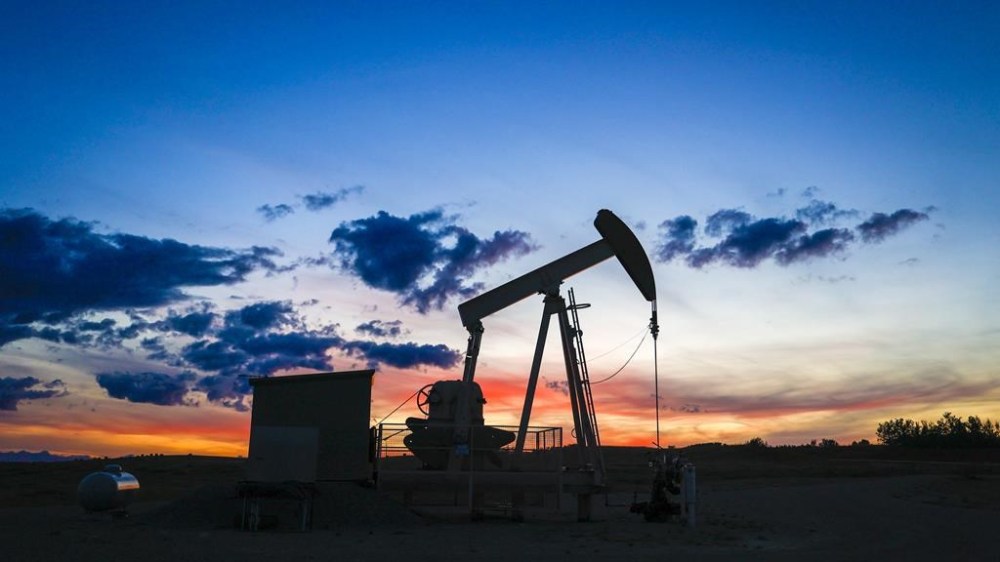
Critics are calling for a public review of the Alberta Energy Regulator after documents surfaced suggesting the agency downplayed the environmental liability of energy infrastructure and kept information from the public. A pumpjack draws out oil from a well head near Calgary on Saturday, Sept. 17, 2022. THE CANADIAN PRESS/Jeff McIntosh

The Canadian Press reported on internal documents suggesting the real figure is closer to $88 billion. Those documents also included a recommendation that the higher estimate be kept internal to avoid alarming investors or the public.

“The documents … demonstrate that Alberta’s Energy Regulator is still operating on the basis of questionable systemic estimates of the cleanup liabilities being imposed on future generations of Albertans,” Al-Guneid said. “While the methods of calculating this multi-generational liability may be complex, Albertans deserve greater levels of transparency from the regulator.”

Martin Olszynski, a law professor at the University of Calgary, said withholding the higher estimate is part of a pattern at the agency. He compared the internal liability estimate to the nine-month gap in 2022 between when the regulator knew about oilsands tailings seeping into groundwater and when it informed downstream First Nations communities in northern Alberta.

“This is all a manifestation of the same disease — regulatory capture of the regulator by the industry,” he said.

“It’s crystal clear that there was an analysis done, deemed to be more accurate than any other analysis. Yet they explicitly and clearly decided not to share that information with Albertans.”

The documents also suggest the regulator didn’t have a good handle on pipeline reclamation or the state of 59,000 pieces of energy infrastructure on the provincial landscape. That’s a serious failing, said Olszynski, a former federal regulatory lawyer.

“I’ve never seen this level of wilful ignorance,” he said. “There should be some accountability.”

Mark Dorin of the Polluter Pay Federation, a landowners group that has argued for years that liabilities are underestimated, agreed some kind of probe is required.

“The (regulator) needs to be reformed,” he said.

He said it’s time to stop talking about the size of the problem and to start doing something about it. He added industry should pay much more into the Orphan Well Fund, which cleans up wells for which no owner can be found.

Last year’s industry-wide levy was $135 million. Dorin said it should be more than $1 billion.

“Cleanup is at the operator’s expense by law,” he said. “Until the last oil company falls, they’re responsible for those cleanups.

“If the (regulator) can’t do the job, cabinet should appoint another body.”

A spokesman for the regulator referred questions on the issue to the provincial government.

Alberta Energy Minister Brian Jean said the issues raised are long-standing and promised an announcement on it later this year.

“Our government intends to make progress on dealing with liability management and increasing reclamation of legacy oil and gas sites,” he said in an email. “We believe that we can enable future oil and gas development and all the benefits they bring while also making sure that oil and gas sites are properly cleaned up.”

The governing United Conservative Party has begun a review of the regulator

But no details on the review, led by longtime oilpatch executive and conservative activist David Yager, have been released, including information on its terms of reference and consultation plans.

Yager filed an interim report of his findings in November, and the government has refused to release it. His final report is due the end of February.

Al-Guneid said an effective regulator is critical for both industry and the Alberta public.

“We need clarity around liabilities for all energy industries to advance our reputation of being a responsible jurisdiction and ensure we’re not shaking investors’ confidence. We need clarity around the actual size of liabilities quickly to identify the problem and develop an appropriate framework.

“Without a competent trusted regulator, the future of all of these critical resources are in jeopardy.”

This report by The Canadian Press was first published Jan. 19, 2024.
Report Error Submit a Tip

More Stories

Furby Street residents fed up with inaction on drug houses

Carol Sanders 6 minute read Preview

Furby Street residents fed up with inaction on drug houses

Carol Sanders 6 minute read Updated: Yesterday at 8:39 AM CDT

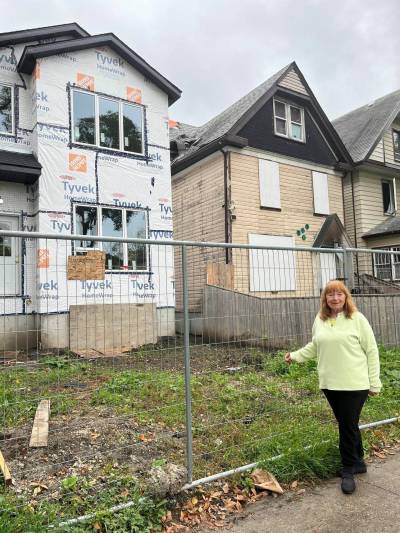
Anxious Furby Street residents contacted the city and their elected officials Friday to — once again — report people coming and going from a boarded-up house they call a dangerous “drug centre” and “den of thieves” that’s just steps away from a house under construction.

Linda Zak, who was holding a yard sale with a group of neighbours Friday morning, described the trouble the home attracts, while a woman slumped on the front steps and a man standing in the yard yelled to someone inside it.

“It is a drug centre,” said Zak, 77. “We know that. A couple of days ago, a person lit the front on fire. Now, as you look at it, you can see where the facade was burning and they were trying to harm people inside.”

“We’re very concerned about it being next to the home this man is building,” she said, pointing to the two-storey that’s nearly completed. The boarded-up house is in the 500 block of Furby.

Read
Updated: Yesterday at 8:39 AM CDT

Completely separating inmates unrealistic, inquest judge says in report on three Stony Mountain slayings

Erik Pindera 5 minute read Preview

Completely separating inmates unrealistic, inquest judge says in report on three Stony Mountain slayings

Erik Pindera 5 minute read 1:43 PM CDT

Nothing short of keeping inmates separated at all times could have prevented three unrelated prisoner-on-prisoner killings several years ago in Stony Mountain Institution’s maximum-security unit, an inquest judge has found.

Provincial court Judge Lindy Choy made the finding after overseeing an inquest earlier this year into the slayings of Adrian Fillion, 42, Michael Monney, 27, and Nolan Thomas, 26, all of which occurred at the hands of fellow maximum-security inmates in the federal prison just north of Winnipeg. The killings occurred when cells were unlocked, allowing inmates to briefly move around to other areas in the cell block.

“The overall impression I was left with from the (Stony Mountain Institution) witnesses was that management of inmates in a custodial facility is a very complex undertaking. There are clearly multiple levels of oversight involved in any decisions that are made and it is all done in a very structured manner,” Choy wrote in her report on the inquest, which was made public Tuesday.

“While maintaining complete physical distance between inmates at all times would have prevented the homicides from occurring, we know that from a social and psychological perspective, this is not generally realistic nor acceptable.”

Read
1:43 PM CDT

Wab Kinew as ‘communicator in chief’

Paul G. Thomas 6 minute read Preview

Wab Kinew as ‘communicator in chief’

Paul G. Thomas 6 minute read Yesterday at 2:00 AM CDT

Premier Wab Kinew and his party have been riding high in the polls longer than normal for a government one year or less away from its first re-election contest. One reason is his ubiquitous, dominating communications presence as NDP leader and premier.

The argument here is that Kinew has supplemented his prerogatives as premier and party leader (such as appointing cabinet ministers and approving party nominations) with the skilful use of communications to advance his policy agenda, boost his personal popularity and maintain the competitive advantage of his party over the opposition Progressive Conservatives.

Communications has always been a significant part of politics and policy making. However, in the contemporary political and media environments, communications considerations have moved from the background to the foreground of decision-making by political parties, including when they are performing in the role of government. Campaigning and governing now overlap in what has been described as a permanent election campaign.

Political parties use communications strategies for several purposes: to establish an image of the leader which makes a positive emotional connection with voters; to promote a coherent message and to keep party members on message; and to gain favourable media coverage for its policies and other actions on almost a daily basis.

Read
Yesterday at 2:00 AM CDT

Puzzles Palace

1 minute read Monday, Jul. 27, 2026

To solve our puzzles, please subscribe with this special offer: |

Province to acquire campground near former residential school

Morgan Modjeski 3 minute read Preview

Province to acquire campground near former residential school

Morgan Modjeski 3 minute read 6:00 AM CDT

A burial site for dozens of children who died while attending the Brandon Indian Residential School will be acquired by the province, the Free Press has learned.

Premier Wab Kinew will announce the province’s plan to protect Turtle Crossing Campground at a news conference in Brandon Wednesday to mark National Day for Truth and Reconciliation. The move is in partnership with the City of Brandon.

The graves of at least 56 children are located at the campground, the Sioux Valley Dakota Nation has said, pointing to a geophysical study conducted by an archaeology firm in 2018.

There have been longstanding concerns from Indigenous leaders and community members that people were camping on the resting place of children victimized by colonialism.

Read
6:00 AM CDT

Expert urges food, drink makers to look to foreign markets

Gabrielle Piché 5 minute read Preview

Expert urges food, drink makers to look to foreign markets

Gabrielle Piché 5 minute read 5:04 PM CDT

Canada’s slowing population growth could restrict business expansion, a top economist for Farm Credit Canada warned Manitoba manufacturers.

Craig Johnston, the federal Crown corporation’s chief economist, addressed Prairie businesses at Farm Credit Canada’s Food and Beverage Summit Tuesday.

“There could be some modest growth in Canadian consumption of food and beverage,” Johnston said, relaying population numbers inside a Victoria Inn Hotel conference room.

Still, per-person spending on food is “stagnant, if not somewhat rising,” Johnson later told reporters.

Read
5:04 PM CDT