A fin whale decomposing on an Oregon beach creates a sad but ‘super educational’ spectacle
Advertisement
Read this article for free:
or
Already have an account? Log in here »
To continue reading, please subscribe:

Digital Subscription
One year of digital access for only $205*
- Enjoy unlimited reading on winnipegfreepress.com
- Read the E-Edition, our digital replica newspaper
- Access News Break, our award-winning app
- Play interactive puzzles
*First annual payment billed as $205.00 + GST for one year. This annual subscription will automatically renew at $233.00 + GST every 52 weeks (10% off the regular annual price of $259.35). Offer available to new and qualified returning subscribers only. Cancel any time.
To continue reading, please subscribe:
Add Free Press access to your Brandon Sun subscription for only an additional
$1 for the first 4 weeks*
- Enjoy unlimited reading on winnipegfreepress.com
- Read the E-Edition, our digital replica newspaper
- Access News Break, our award-winning app
- Play interactive puzzles
*Your next Brandon Sun subscription payment will increase by $1.00 and you will be charged $17.95 plus GST for four weeks. After four weeks, your payment will increase to $24.95 plus GST every four weeks.
Read unlimited articles for free today:
or
Already have an account? Log in here »
Hey there, time traveller!
This article was published 15/02/2024 (958 days ago), so information in it may no longer be current.
It’s not yet known what killed an endangered fin whale, but people can marvel at the large marine mammal as it decomposes on an Oregon beach.
“While it’s sad, it’s also super educational,” Tiffany Boothe, assistant manager of the Seaside Aquarium, said Thursday of the rare sight, which she said is only the second dead fin whale that Oregon has seen in about 30 years.
Just don’t touch it because it can carry diseases that can be transmitted to humans and pets, she said.
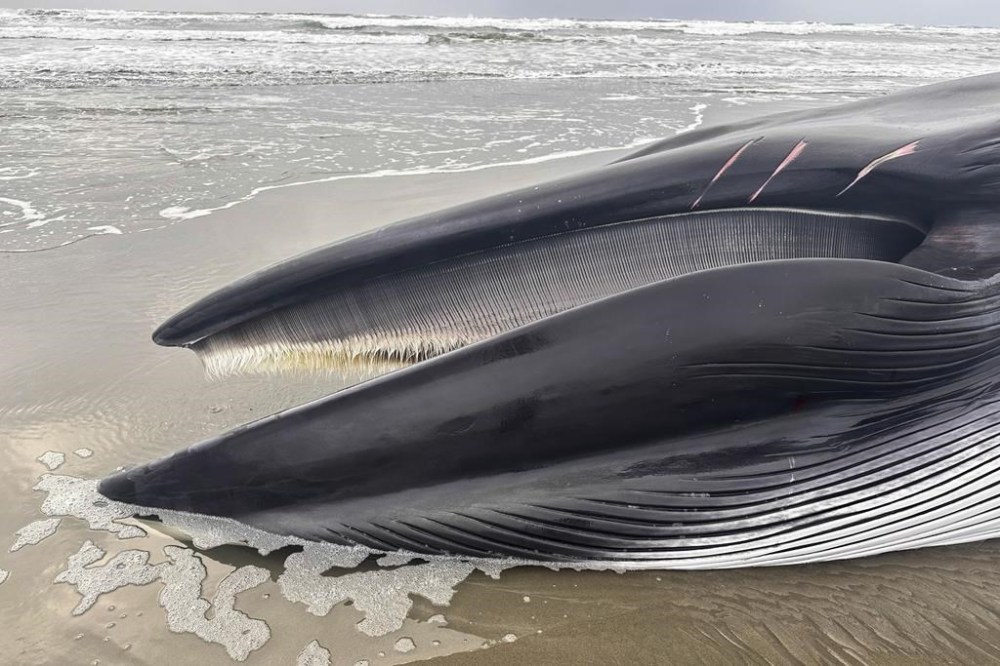
“Also, it smells,” she said. “I don’t know how to describe it. It smells like a dead whale.”
The 46-foot (14-meter) male whale washed ashore at Sunset Beach State Park south of Warrenton on Monday morning. It was entangled in rope.
But before officials could examine the rope and investigate the type of fishing gear it was, someone took it off and took it away, Boothe said.
“It was a well-meaning person, because the animal was still in the surf and appeared to be alive,” she said. “And so they thought they were helping to detangle a live animal.”
While the rope entanglement was severe, the whale wasn’t in it for very long and it didn’t lead to its death. It will be several weeks before results from a necropsy done on Tuesday will reveal what cause the emaciated whale’s death, Boothe said.
The whale will naturally decompose, creating a “huge nutrient boost for the local environment,” feeding scavengers like eagles and ravens, down to little amphipods, Boothe said.
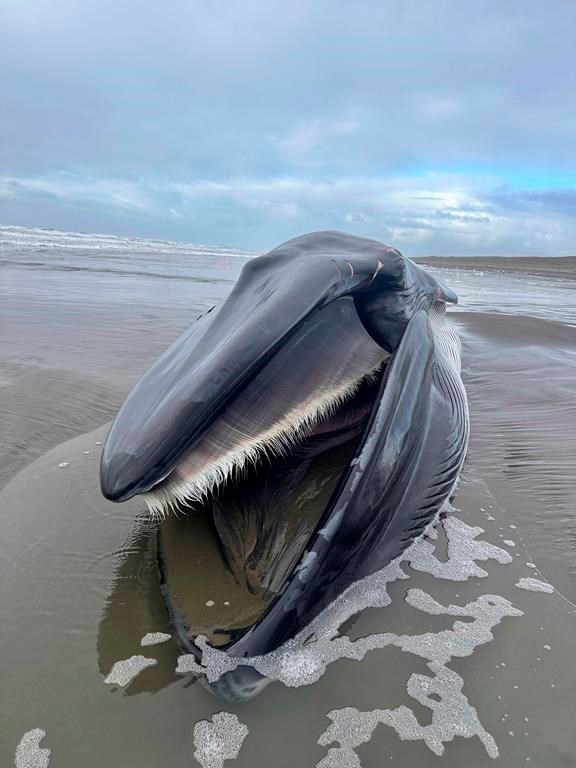
Letting it decompose shows a keener understanding for what to do in these situations than in 1970 when officials opted to use dynamite to blow up a dead whale that washed ashore in southern Oregon.
The exploding whale incident wouldn’t happen now, Boothe said, noting how that solution blew huge chunks of whale carcass into the sky, and even smashed the roof of a car.
Boothe recommends getting a look at the decomposing whale at low tide and with a four-wheel drive vehicle.