Energy producers say they are prepared, ready for 2024 drought, wildfire risks
Advertisement
Read this article for free:
or
Already have an account? Log in here »
To continue reading, please subscribe:

Digital Subscription
One year of digital access for only $205*
- Enjoy unlimited reading on winnipegfreepress.com
- Read the E-Edition, our digital replica newspaper
- Access News Break, our award-winning app
- Play interactive puzzles
*First annual payment billed as $205.00 + GST for one year. This annual subscription will automatically renew at $233.00 + GST every 52 weeks (10% off the regular annual price of $259.35). Offer available to new and qualified returning subscribers only. Cancel any time.
To continue reading, please subscribe:
Add Free Press access to your Brandon Sun subscription for only an additional
$1 for the first 4 weeks*
- Enjoy unlimited reading on winnipegfreepress.com
- Read the E-Edition, our digital replica newspaper
- Access News Break, our award-winning app
- Play interactive puzzles
*Your next Brandon Sun subscription payment will increase by $1.00 and you will be charged $17.95 plus GST for four weeks. After four weeks, your payment will increase to $24.95 plus GST every four weeks.
Read unlimited articles for free today:
or
Already have an account? Log in here »
Hey there, time traveller!
This article was published 09/04/2024 (910 days ago), so information in it may no longer be current.
CALGARY – Canadian energy producers say they are prepared and ready for what could be another spring and summer of drought and wildfires in Western Canada.
Many of this country’s largest conventional oil and gas drillers operate in regions which last year were affected by severe hot, dry weather conditions.
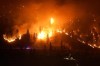
As early as the start of last May, oil and gas companies in northwest and central Alberta as well as northeast B.C. found themselves temporarily halting production as wildfires raged across key fossil fuel-producing regions.
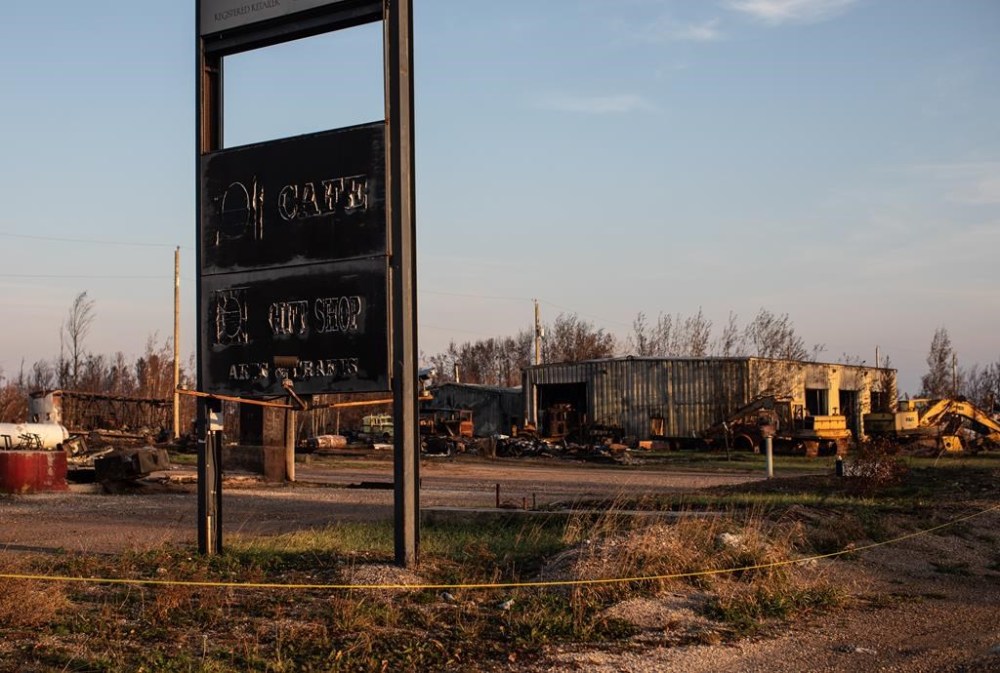
Most of the curtailments were done on a precautionary basis and no significant damage to energy-producing infrastructure occurred.
Now, as this year’s snow melts and spring-like conditions return to Western Canada, oil and gas producers are prepared for what could be another fiery year. In late February, Alberta’s government declared an early start to wildfire season, warning of unusually dry conditions and low snow cover.
“I think we’re paid to worry about everything on behalf of the shareholders, and we do. But you know, we manage these things,” said Jonathan Wright, CEO of NuVista Energy Ltd., in a phone interview Tuesday from Toronto, where he was attending the annual Canadian Association of Petroleum Producers conference.
NuVista, a Calgary-based company, temporarily shut down all of its facilities in the Grande Prairie, Alta. area last May when fires made it impossible to access the company’s sites by road.
The precautionary shutdown resulted in a temporary production impact to NuVista of about 35,000 barrels of oil equivalent per day for much of the month of May, or about 43 per cent of the company’s overall production.
While no one knows what will happen this year, Wright said NuVista will “absolutely stay ahead” of the wildfire situation at all times — both through regular emergency response drills at work sites, as well as the use of satellite imagery to track the course and progression of any blazes.
“We quickly learned (last year) when there were fires coming into the area that we need to track those fires,” Wright said.
“And so there is a NASA fire-tracking website which our field operations folks watch very closely whenever there’s fire risk … That allows you to predict well ahead of time if and when you need to shut in any facilities.”
Many of the fires that burned last year in Western Canada remained smouldering as sub-surface hot spots throughout the winter, and are now igniting as the snow melts and temperatures heat up.
A provincial government map shows 51 active wildfires in Alberta as of this week, though all are listed as either under control or being held.
Dean Setoguchi, CEO of Keyera Corp. — which provides pipelines, processing, storage, and marketing services for the energy industry — said the company has expanded the vegetation-free wildfire buffer zones around its sites since last year, when it had to shut some operations in the Drayton Valley, Alta. area temporarily as flames roared in the region.
“You know, we’ve gone through it once already. We didn’t sustain any material damage last year, and we’re even more prepared this year,” Setoguchi said.
“It’s something that we always have to be mindful of and be careful, but I think we’re very well positioned to mitigate that risk.”
Drought is also expected to be a risk for energy producers this year, particularly in the Montney region of northeast B.C. and northwest Alberta, where natural gas operators use large amounts of water for hydraulic fracturing.
As of March 31, the federal government’s drought monitoring website classified the bulk of the Montney’s oil-and-gas producing areas as either under “extreme” or “severe” drought conditions.
“It’s dry conditions up there and they didn’t get the snowpack they usually do,” said Chris Carlsen, CEO of Birchcliff Energy Ltd., which has operations in the Montney.
But Carlsen, speaking by phone Tuesday from the CAPP conference, said his company has built its own system of water storage reservoirs over the years and is confident it has enough water saved to execute its 2024 drilling program.
“Specific to Birchcliff, we’ve got 30 wells this year, so we need 600,000 give-or-take cubic meters (of water) and we’ve got that stored ourselves,” Carlsen said.
He added once that stored water is used, though, additional drought in 2025 and beyond could become significantly more challenging.
“I think it’s a question of what will happen this spring? Are we going to have a wet spring where we’re going to be able to collect some water for our 2025 program? I think that’s more of a concern from our point of view,” Carlsen said.
Brad Wells, head of energy for BMO Capital Markets, said while weather is unpredictable, both drought and wildfires are significant risks that Canada’s energy sector needs to be prepared for this year.
“I think there’s the potential for water restrictions to impact (well) completions activity, and water draws from the Athabasca River for the oilsands. So (drought) is definitely something we’re watching,” Wells said from Toronto, where BMO is sponsoring the conference.
“And I think wildfires are absolutely a risk that energy producers may have to deal with. Ultimately these things are hard to predict … But it’s definitely a risk that needs to be considered.”
This report by The Canadian Press was first published April 9, 2024.
Companies in this story: (TSX:BIR; TSX:NVA; TSX:BMO)
Related Articles
Fossil fuel fouls clean-grid future
Advertisement Advertise With Us
Advertisement Advertise With Us