Biden administration sets first-ever limits on ‘forever chemicals’ in drinking water
Advertisement
Read this article for free:
or
Already have an account? Log in here »
To continue reading, please subscribe:

Digital Subscription
One year of digital access for only $205*
- Enjoy unlimited reading on winnipegfreepress.com
- Read the E-Edition, our digital replica newspaper
- Access News Break, our award-winning app
- Play interactive puzzles
*First annual payment billed as $205.00 + GST for one year. This annual subscription will automatically renew at $233.00 + GST every 52 weeks (10% off the regular annual price of $259.35). Offer available to new and qualified returning subscribers only. Cancel any time.
To continue reading, please subscribe:
Add Free Press access to your Brandon Sun subscription for only an additional
$1 for the first 4 weeks*
- Enjoy unlimited reading on winnipegfreepress.com
- Read the E-Edition, our digital replica newspaper
- Access News Break, our award-winning app
- Play interactive puzzles
*Your next Brandon Sun subscription payment will increase by $1.00 and you will be charged $17.95 plus GST for four weeks. After four weeks, your payment will increase to $24.95 plus GST every four weeks.
Read unlimited articles for free today:
or
Already have an account? Log in here »
Hey there, time traveller!
This article was published 10/04/2024 (890 days ago), so information in it may no longer be current.
The Biden administration on Wednesday finalized strict limits on certain so-called “forever chemicals” in drinking water that will require utilities to reduce them to the lowest level they can be reliably measured. Officials say this will reduce exposure for 100 million people and help prevent thousands of illnesses, including cancers.
The rule is the first national drinking water limit on toxic PFAS, or perfluoroalkyl and polyfluoroalkyl substances, which are widespread and long lasting in the environment.
Health advocates praised the Environmental Protection Agency for not backing away from tough limits the agency proposed last year. But water utilities took issue with the rule, saying treatment systems are expensive to install and that customers will end up paying more for water.
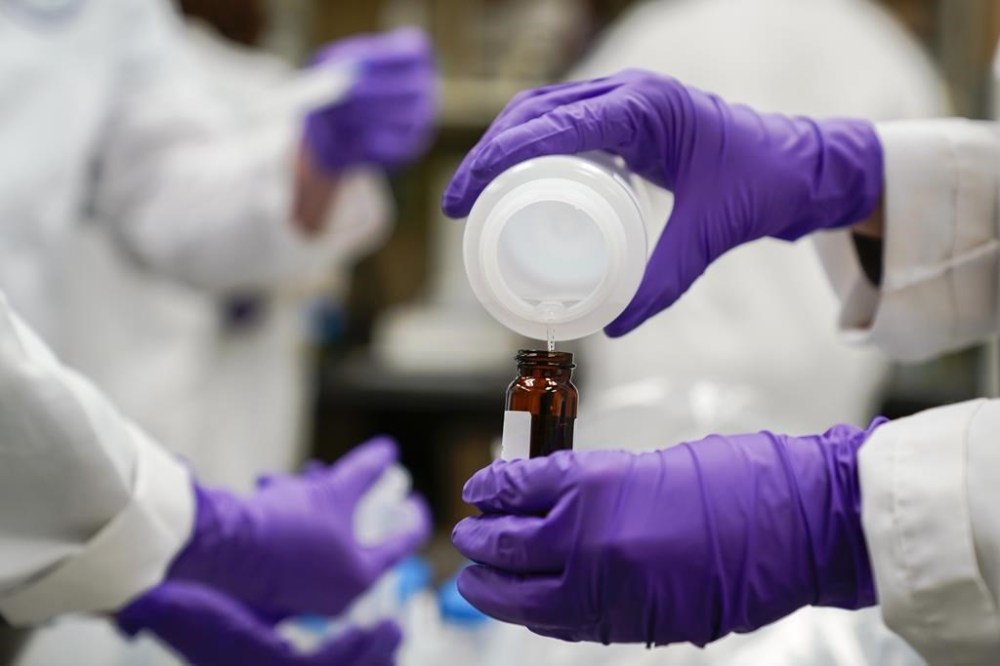
Water providers are entering a new era with significant additional health standards that the EPA says will make tap water safer for millions of consumers — a Biden administration priority. The agency has also proposed forcing utilities to remove dangerous lead pipes.
Utility groups warn the rules will cost tens of billions of dollars each and fall hardest on small communities with fewer resources. Legal challenges are sure to follow.
EPA Administrator Michael Regan says the rule is the most important action the EPA has ever taken on PFAS.
“The result is a comprehensive and life-changing rule, one that will improve the health and vitality of so many communities across our country,” said Regan.
PFAS chemicals are hazardous because they don’t degrade in the environment and are linked to health issues such as low birth weight and liver disease, along with certain cancers. The EPA estimates the rule will cost about $1.5 billion to implement each year, but doing so will prevent nearly 10,000 deaths over decades and significantly reduce serious illnesses.
They’ve been used in everyday products including nonstick pans, firefighting foam and waterproof clothing. Although some of the most common types are phased out in the U.S., others remain. Water providers will now be forced to remove contamination put in the environment by other industries.
“It’s that accumulation that’s the problem,” said Scott Belcher, a North Carolina State University professor who researches PFAS toxicity. “Even tiny, tiny, tiny amounts each time you take a drink of water over your lifetime is going to keep adding up, leading to the health effects.”
PFAS is a broad family of chemical substances, and the new rule sets strict limits on two common types — called PFOA and PFOS — at 4 parts per trillion. Three other types that include GenEx Chemicals that are a major problem in North Carolina are limited to 10 parts per trillion. Water providers will have to test for these PFAS chemicals and tell the public when levels are too high. Combinations of some PFAS types will be limited, too.
Regan will announce the rule in Fayetteville, North Carolina, on Wednesday.
Environmental and health advocates praised the rule, but said PFAS manufacturers knew decades ago the substances were dangerous yet hid or downplayed the evidence. Limits should have come sooner, they argue.
“Reducing PFAS in our drinking water is the most cost effective way to reduce our exposure,” said Scott Faber, a food and water expert at Environmental Working Group. “It’s much more challenging to reduce other exposures such as PFAS in food or clothing or carpets.”
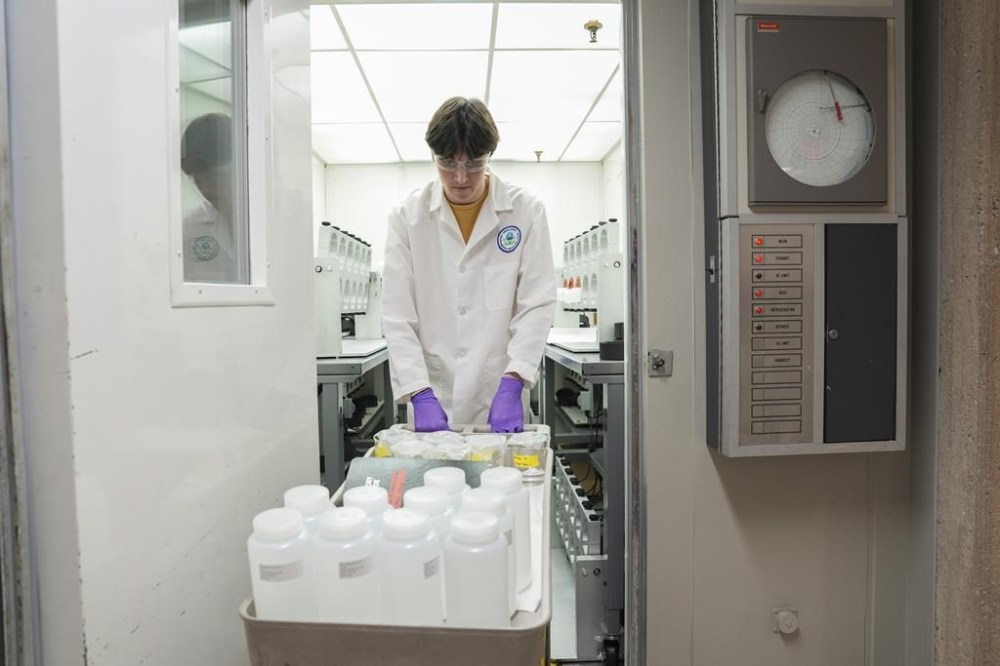
Over the last year, EPA has periodically released batches of utility test results for PFAS in drinking water. Roughly 16% of utilities found at least one of the two strictly limited PFAS chemicals at or above the new limits. These utilities serve tens of millions of people. The Biden administration, however, expects about 6-10% of water systems to exceed the new limits.
Water providers will generally have three years to do testing. If those test exceed the limits, they’ll have two more years to install treatment systems, according to EPA officials.
Some funds are available to help utilities. Manufacturer 3M recently agreed to pay more than $10 billion to drinking water providers to settle PFAS litigation. And the Bipartisan Infrastructure Law includes billions to combat the substance. But utilities say more will be needed.
For some communities, tests results were a surprise. Last June, a utility outside Philadelphia that serves nearly 9,000 people learned that one of its wells had a PFOA level of 235 parts per trillion, among the highest results in the country at the time.
“I mean, obviously, it was a shock,” said Joseph Hastings, director of the joint public works department for the Collegeville and Trappe boroughs, whose job includes solving problems presented by new regulations.
The well was quickly yanked offline, but Hastings still doesn’t know the contamination source. Several other wells were above the EPA’s new limits, but lower than those the state of Pennsylvania set earlier. Now, Hastings says installing treatment systems could be a multi-million dollar endeavor, a major expense for a small customer base.
The new regulation is “going to throw public confidence in drinking water into chaos,” said Mike McGill, president of WaterPIO, a water industry communications firm.
The American Water Works Association, an industry group, says it supports the development of PFAS limits in drinking water, but argues the EPA’s rule has big problems.
The agency underestimated its high cost, which can’t be justified for communities with low levels of PFAS, and it’ll raise customer water bills, the association said. Plus, there aren’t enough experts and workers — and supplies of filtration material are limited.
Work in some places has started. The company Veolia operates utilities serving about 2.3 million people across six eastern states and manages water systems for millions more. Veolia built PFAS treatment for small water systems that serve about 150,000 people. The company expects, however, that roughly 50 more sites will need treatment — and it’s working to scale up efforts to reduce PFAS in larger communities it serves.
Such efforts followed dramatic shifts in EPA’s health guidance for PFAS in recent years as more research into its health harms emerged. Less than a decade ago, EPA issued a health advisory that PFOA and PFOS levels combined shouldn’t exceed 70 parts per trillion. Now, the agency says no amount is safe.

Public alarm has increased, too. In Minnesota, for example, Amara’s Law aims to stop avoidable PFAS use. It’s been nearly a year since the law’s namesake, Amara Strande, died from a rare cancer her family blames on PFAS contamination by 3M near her high school in Oakdale, although a connection between PFAS and her cancer can’t be proven. Biden administration officials say communities shouldn’t suffer like Oakdale. 3M says it extends its deepest condolences to Amara’s friends and family.
Losing Amara pushed the family towards activism. They’ve testified multiple times in favor of PFAS restrictions.
“Four parts per trillion, we couldn’t ask for a better standard,” Amara’s sister Nora said. “It’s a very ambitious goal, but anything higher than that is endangering lives.”
___
Associated Press data journalist Camille Fassett in San Francisco and reporter Matthew Daly in Washington D.C. contributed to this story.
___
The Associated Press receives support from the Walton Family Foundation for coverage of water and environmental policy. The AP is solely responsible for all content. For all of AP’s environmental coverage, visit https://apnews.com/hub/climate-and-environment