Tiny B.C. town rallies around killer whale calf rescue effort as time ticks away
Advertisement
Read this article for free:
or
Already have an account? Log in here »
To continue reading, please subscribe:

Digital Subscription
One year of digital access for only $205*
- Enjoy unlimited reading on winnipegfreepress.com
- Read the E-Edition, our digital replica newspaper
- Access News Break, our award-winning app
- Play interactive puzzles
*First annual payment billed as $205.00 + GST for one year. This annual subscription will automatically renew at $233.00 + GST every 52 weeks (10% off the regular annual price of $259.35). Offer available to new and qualified returning subscribers only. Cancel any time.
To continue reading, please subscribe:
Add Free Press access to your Brandon Sun subscription for only an additional
$1 for the first 4 weeks*
- Enjoy unlimited reading on winnipegfreepress.com
- Read the E-Edition, our digital replica newspaper
- Access News Break, our award-winning app
- Play interactive puzzles
*Your next Brandon Sun subscription payment will increase by $1.00 and you will be charged $17.95 plus GST for four weeks. After four weeks, your payment will increase to $24.95 plus GST every four weeks.
Read unlimited articles for free today:
or
Already have an account? Log in here »
Hey there, time traveller!
This article was published 11/04/2024 (906 days ago), so information in it may no longer be current.
ZEBALLOS, B.C. – It’s just after 10 a.m., and Yvonne Malanfant has finished brewing a fresh pot of coffee and placing a plate of homemade quesadillas with a side dish of spicy mayonnaise on a table for everybody to share.
A little bell above her door rings to announce the arrival of another local to pick up their mail and catch up on recent events.
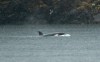
Customer traffic at the small Canada Post outlet at Zeballos, B.C., has been extra busy over the past two weeks as residents gather to talk about the drama unfolding in a nearby tidal lagoon where efforts are underway to rescue a trapped killer whale calf that was orphaned when its mother became stranded and died.
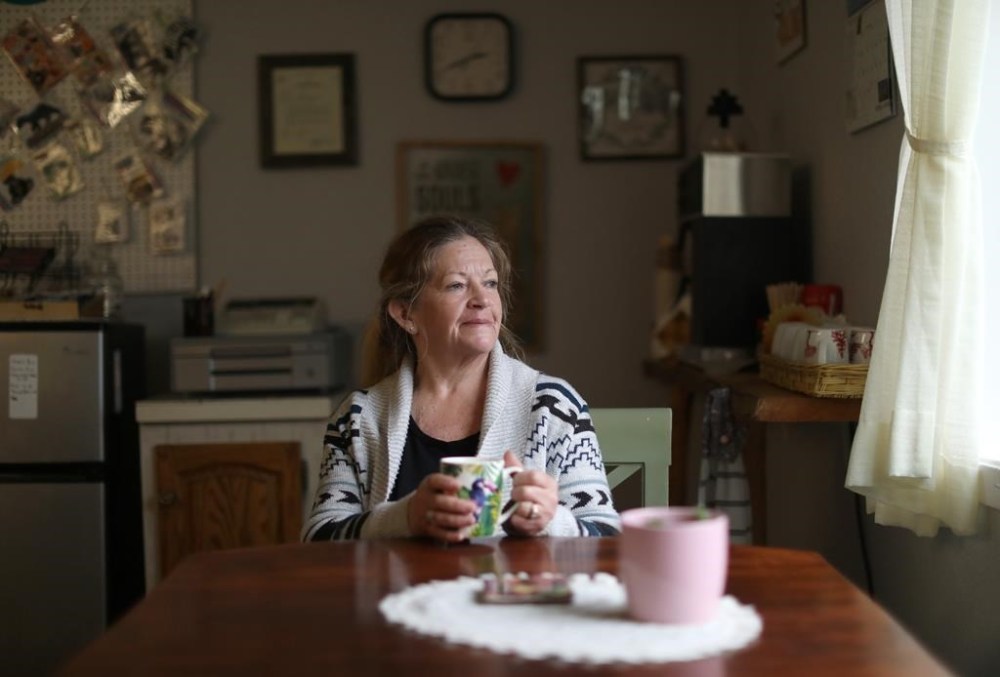
“This is incredible,” says Malanfant, the postmistress for the community of about 200 residents. “It’s pretty incredible what’s going on. It’s made the news every night.”
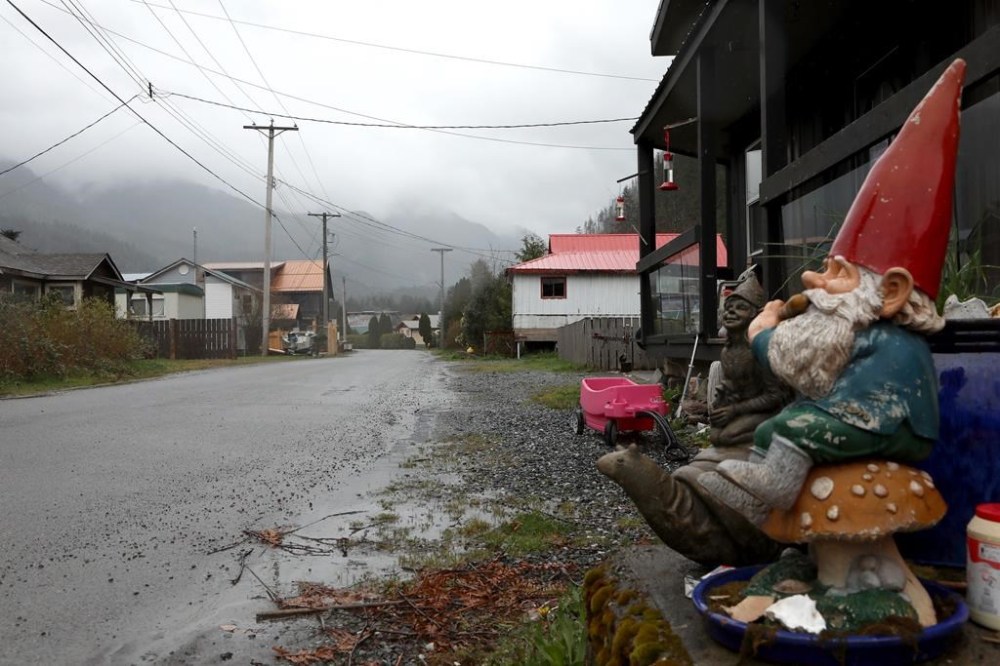
Zeballos, located at the end of a gravel logging road more than 450 kilometres northwest of Victoria, has fully invested itself in the unfolding rescue effort, which could occur this week.
Hunters, loggers, fishing guides and the area’s Indigenous and non-Indigenous residents all say they are deeply concerned about the plight of the two-year-old orca calf, left alone without its mother in Little Espinosa Inlet since March, and a rescue attempt can’t come soon enough.
“We are compassionate people,” said one resident who participated in earlier unsuccessful attempts to coax the two-year-old female calf to leave the lagoon through a narrow, swift-moving channel leading to the open ocean.
James Rothenburger makes his living on the waters surrounding Zeballos on northern Vancouver Island, and said despite the long-shot odds facing the young orca, every attempt should be made to get her out of the lagoon.
“If it’s going to die, you’ve got to do something,” he said. “They can’t let it die there.”
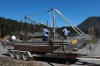
At the lagoon Thursday, an excavator was being used to prepare what looked like a reinforced landing zone. About 20 people were working in the area, some in jet boats and others on land arranging nets and clearing access in preparation for the rescue attempt.
Three people were at the other side of the lagoon using a hydrophone to record the orca calf’s calls.
Members of the Vancouver Aquarium were also at the lagoon and a flat-deck truck with a raised wooden bed structure to transport the calf had arrived at the site, carrying more nets.
Ehattesaht First Nation Chief Simon John said his people decided early on, after going through the heartbreak of trying to save the orca calf’s pregnant mother last month, that they must do what they can to save the calf.
He said the rescue attempt could occur within the next four or five days, but a definite date has not been set.
Federal Fisheries Department officials and Ehattesaht leaders have said the attempt will involve getting the orca calf to move to shallow water where the rescue team will attempt to place it in a sling and lift it into the specially outfitted transport vehicle.
It would then be released in the open ocean in the hope of a reunion with its extended family.
The mother orca died on March 23 when it became stranded on a rocky beach at low tide, despite efforts of local residents to save the whale.
“This is where reconciliation happens on the ground,” John said at a meeting with officials from the federal Fisheries Department.
The First Nation, which has about 100 people living at its Zeballos village site with another 400 members in other communities on Vancouver Island, decided it must do what it can to save the orca calf, said John.
“I’m trying to help people understand a perspective of where we are in this crossroads of actually having meaningful deliberations for the sake of the whale or even whales,” he said Wednesday. “This is a really important time and a crossroads related to our connections.”
John played a brief underwater recording the First Nation made of the whale making calls from the lagoon.
“We listen to her calls on the hydrophone, and they make you almost weep, they seem so filled with longing,” said a statement released by the First Nation earlier this week. “We have ancient stories of our whalers being at sea when their canoes fail and they are brought back home on the back of a killer whale. Maybe this is a modern story but in reverse.”
John said the First Nation, which is working with the Fisheries Department on a complex rescue plan, is providing funding and equipment for the effort to save the calf.
He said the First Nation considers the rescue situation a pivotal moment in its modern history.
The nation declared a state of emergency last February over the “unrelenting impact of drugs and alcohol” on its members, particularly children and youth.
It said six young people died from drug overdoses in the preceding months.
Zeballos, a mountainous area located at the head of Zeballos Inlet, bills itself as the gateway to Nootka Sound, an area well known for salmon fishing and kayaking opportunities.
The Zeballos village website says the inlet was named by Captain Alejandro Malaspina in 1792 after one of his lieutenants.
The discovery of gold in the nearby mountains created a gold rush that saw the building of a community of more than 1,500 people by 1938, complete with hotels, a laundromat, bakery, taxi service and a weekly newspaper.
But the outbreak of the Second World War saw many leave to join the fight, and by the early 1940s, the mines were closed, while forestry replaced mining as the village’s main employer.
Zeballos has a school, health unit and a hotel, as well as several bed and breakfast operations. However, the village does not have a coffee shop, restaurant or regular stores, other than a liquor outlet that opens only in the afternoons selling alcohol and limited food basics and snacks.

Residents say they travel to the nearby communities of Port McNeill, Port Hardy and Campbell River to get their groceries and other necessities.
Everyone appears ready and willing to help neighbours with offers of fresh fish or game, tips on who to call for home repairs and other handiwork, including the man who fixes flat tires, which are a regular occurrence on the gravel roads.
Malanfant says her job at the post office has become more than delivering and sending parcels, but she wouldn’t want to change her role as one of the village’s beacons of light during a time of deep concern.
“Are you guys good for coffee?” she asks. “I’m shutting her down until lunch.”
This report by The Canadian Press was first published April 11, 2024.
Related Articles
Chief says rescue effort for stranded orca calf four, five days away as plans ramp up




Advertisement Advertise With Us
Advertisement Advertise With Us