Report suggests little progress in first year of Alberta’s emissions reduction plan
Advertisement
Read this article for free:
or
Already have an account? Log in here »
To continue reading, please subscribe:

Digital Subscription
One year of digital access for only $205*
- Enjoy unlimited reading on winnipegfreepress.com
- Read the E-Edition, our digital replica newspaper
- Access News Break, our award-winning app
- Play interactive puzzles
*First annual payment billed as $205.00 + GST for one year. This annual subscription will automatically renew at $233.00 + GST every 52 weeks (10% off the regular annual price of $259.35). Offer available to new and qualified returning subscribers only. Cancel any time.
To continue reading, please subscribe:
Add Free Press access to your Brandon Sun subscription for only an additional
$1 for the first 4 weeks*
- Enjoy unlimited reading on winnipegfreepress.com
- Read the E-Edition, our digital replica newspaper
- Access News Break, our award-winning app
- Play interactive puzzles
*Your next Brandon Sun subscription payment will increase by $1.00 and you will be charged $17.95 plus GST for four weeks. After four weeks, your payment will increase to $24.95 plus GST every four weeks.
Read unlimited articles for free today:
or
Already have an account? Log in here »
Hey there, time traveller!
This article was published 19/04/2024 (894 days ago), so information in it may no longer be current.
EDMONTON – Alberta has done little to advance its plan to reduce greenhouse gas emissions a year after introducing it, an analysis suggests.
“Based on this lack of progress, it doesn’t appear that Alberta has an active climate plan,” Simon Dyer of the clean energy think tank Pembina Institute said Friday. “It’s a plan in name only.”
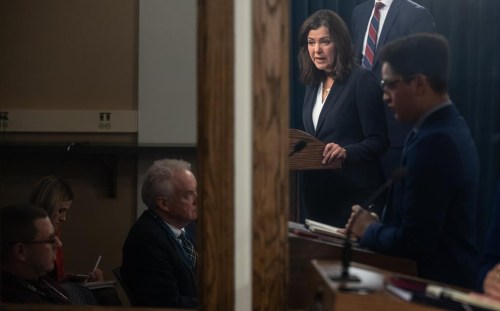
Environment Minister Rebecca Schulz said in a statement that Alberta is reducing emissions.
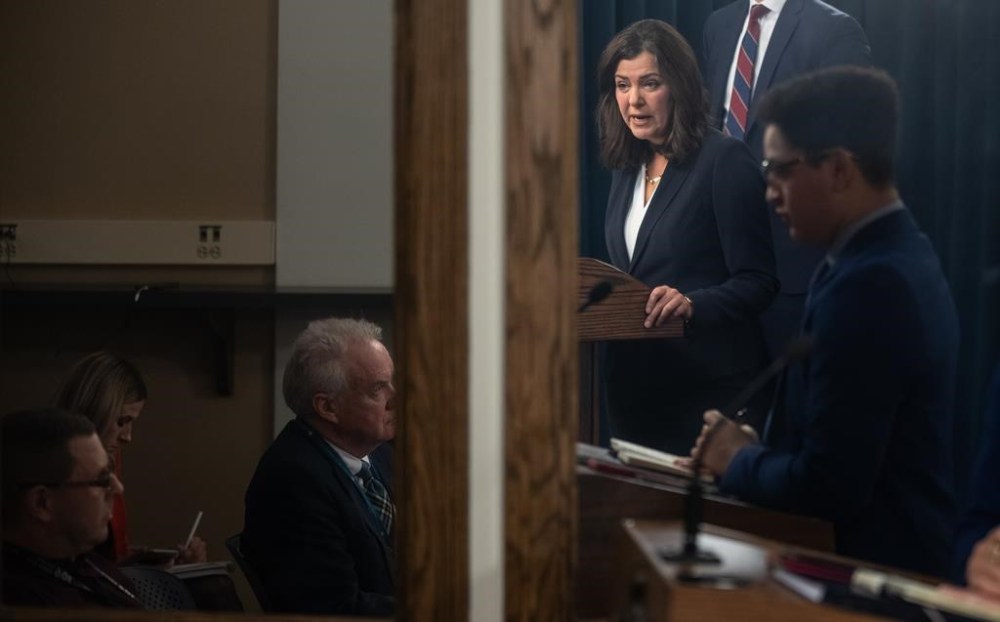
“I am confident that Alberta will continue to lead in responsible energy production for years to come,” Schulz said.
“We are taking a practical, effective approach that supports jobs, our growing economy and the demands of safe, reliable energy.”
On April 19, 2023, the United Conservative Party government released its Emissions Reduction and Energy Development plan. Its stated goal was to “enhance (Alberta’s) position as a global leader in emissions reductions, clean technology and innovation, and sustainable resource development.”
It included eight directions to reduce emissions while maintaining energy security.
“It seeks to accomplish this through collaboration and partnerships, clean technology and innovation, and finance and policy frameworks,” said a government document about the plan.
It was derided at the time as a plan to make a plan. According to Pembina’s analysis, that’s largely what it has remained.
The province’s oilpatch has already achieved a methane emissions reduction of about 45 per cent. The plan included a commitment to try to increase those reductions by up to 80 per cent.
“Alberta Environment and Protected Areas will engage stakeholders, Albertans and Indigenous organizations to assess potential pathways to achieve a provincial 75 to 80 per cent methane emissions reduction target,” the plan said.
Pembina points out that, since the plan was released, Alberta has opposed federal measures to achieve that goal.
“There’s no evidence that any work has taken place,” said Dyer.
Similarly, the plan proposed introducing regulations to implement its 100-megatonne emissions from the oilsands as well as lowering that threshold.
“Alberta will explore reducing the provincial legislated oilsands emission limit and implementing regulations,” it said.
There’s no indication of any move in that direction, the Pembina report concludes. “On the oilsands emissions limit, there is no publicly available evidence of progress.”
The report does praise the government’s creation of a grant program for carbon capture initiatives. It also notes increases in the percentage of money from its industrial carbon levy that goes to emissions reduction initiatives.
But the report maintains that necessary discussions regarding different sectors of the economy aren’t happening.
“(The government)said they were going to hire consultants to assess abatement opportunities for every individual sector,” Dyer said. “There’s no evidence that work has been done.
“There’s been no public consultation on elements of the plan.”
Promised forums for Indigenous and youth involvement haven’t materialized. Alberta remains the only jurisdiction in Canada that doesn’t allow utilities to provide energy efficiency programs.
As well, the report says Alberta’s plan to tighten the rate at which industrial facilities must reduce emissions under its carbon levy isn’t enough to prevent the market from being flooded with cheap carbon credits, undermining the economics for emissions reduction.
The province also hasn’t introduced any intermediate benchmarks to measure progress toward its goal of carbon neutrality by 2050.
Alberta’s carbon emissions have increased nine per cent since 2005, the baseline year for most international agreements. The gains the province has made have come from the phase-out of coal-powered electricity, now almost complete.
Oil and gas emissions have increased almost 40 per cent since 2005.
As well, the province has created uncertainty for carbon-reducing measures, such as renewable electricity, by imposing new restrictions.

The consequences of inaction on emissions reduction aren’t limited to Alberta, said Dyer.
“Canada will not be able to achieve its target, if Alberta is not an active participant. Alberta is clearly doing far less than its share toward meeting that national goal.”
Nor are the consequences limited to the environment, Dyer said.
“It damages Alberta’s brand as a modern and dynamic location, if we’re not seen as part of the solution.”
This report by The Canadian Press was first published April 19, 2024.