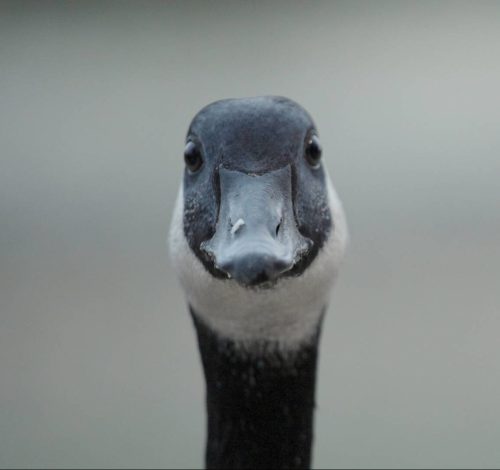
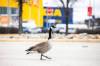
Flocking to the city With the giant Canada goose species no longer in danger of extinction, urban amenities offer the ideal habitat for the migrating birds
Read this article for free:
or
Already have an account? Log in here »
To continue reading, please subscribe:

Digital Subscription
One year of digital access for only $205*
- Enjoy unlimited reading on winnipegfreepress.com
- Read the E-Edition, our digital replica newspaper
- Access News Break, our award-winning app
- Play interactive puzzles
*First annual payment billed as $205.00 + GST for one year. This annual subscription will automatically renew at $233.00 + GST every 52 weeks (10% off the regular annual price of $259.35). Offer available to new and qualified returning subscribers only. Cancel any time.
To continue reading, please subscribe:
Add Free Press access to your Brandon Sun subscription for only an additional
$1 for the first 4 weeks*
- Enjoy unlimited reading on winnipegfreepress.com
- Read the E-Edition, our digital replica newspaper
- Access News Break, our award-winning app
- Play interactive puzzles
*Your next Brandon Sun subscription payment will increase by $1.00 and you will be charged $17.95 plus GST for four weeks. After four weeks, your payment will increase to $24.95 plus GST every four weeks.
Read unlimited articles for free today:
or
Already have an account? Log in here »
Hey there, time traveller!
This article was published 04/10/2024 (719 days ago), so information in it may no longer be current.
In the opening minutes of Karsten Wall’s short film, Modern Goose, a flock of geese arrives in a cacophony of honks, barks, cackles and splashes, as it touches down in a human-made pond behind an outlet mall. The ruckus blends with the hum of traffic as they waddle under the neon glow of billboards and parking lot lights, picking at patches of grass and dodging vehicles in the drive-thru lane.
It’s a scene that would feel familiar in most Canadian cities, where geese have become ubiquitous to daily life. As it happens, these geese are Winnipeggers, descendants of a historically significant flock once thought to have disappeared altogether.
Ian McCausland photo Modern Goose director Karsten Wall
Sitting at a bistro table outside a Winnipeg coffee shop, Wall gets a little bashful describing the 18 months he spent watching, recording and learning from the oft-misunderstood giant Canada goose.
“I got pretty obsessed with trying to tell their story,” he says. “I was trying to do the opposite of what a lot of nature documentaries do, where they bring wild animals to a human level, anthropomorphize them.
“I think the beauty of wild animals is the separation between us and them.”
Wall pitched Modern Goose to the National Film Board in early 2020. The timing was perfect. Much of the film industry had been slowed by COVID-19 pandemic restrictions, but Wall’s film could be shot as a one-person production.
Over the next year and a half, he would be up-close and personal with Winnipeg’s geese, developing a love and respect for the birds and their innate ability to not only survive, but to thrive in urban environments.
Modern Goose premièred at the Toronto International Film Festival in 2023, where it was nominated for a ShortCuts award. This summer, it took home best Manitoba short at the Gimli International Film Festival.
Across its short 23-minutes, Modern Goose offers an at-times triumphant, at-times distressing view of urban life — all through the inky-black eye of the goose.
Not everyone loves geese as much as Wall does. The five-kilogram birds, with their distinctive curved black necks, white chinstraps, two-metre wingspans and taloned feet are considered as much a symbol of Canadian identity as they are a nuisance.
Through the warmer months of the year, they amass at ponds, parks, golf courses, sports fields and parking lots, leaving more than a kilogram of slimy green droppings in their wake every day.
They’re seemingly unafraid of cars and frequently hold up traffic as they meander onto busy roads. (Wall’s film contains a digital recreation of a goose being struck by a car — a tragedy he witnessed during filming. “I saw some of their struggles,” he says.)
They can cause safety concerns at airports during takeoff and landing. Farmers frequently report geese decimating grain crops.
Not to mention, geese are particularly territorial during nesting season, known to charge, hiss and flap at anyone and anything that gets too close.
But they have their redeeming qualities. Wall is one of many Winnipeggers who flock to FortWhyte Alive, a local park and wildlife preserve, to watch geese form that characteristic “V” silhouette against the wide-open Prairie sky as they embark on their fall migration — a phenomenon he made sure to capture for the closing scenes of his film.
At points, Wall uses a visual effect to simulate the way geese are able to see magnetic fields, which researchers believe may be caused by a protein in their eyes that increases during migration.
JOHN WOODS / FREE PRESS Animal behaviourist and Manitoba goose expert Jim Shapiro: "When you see female geese, those are Winnipeggers just like us."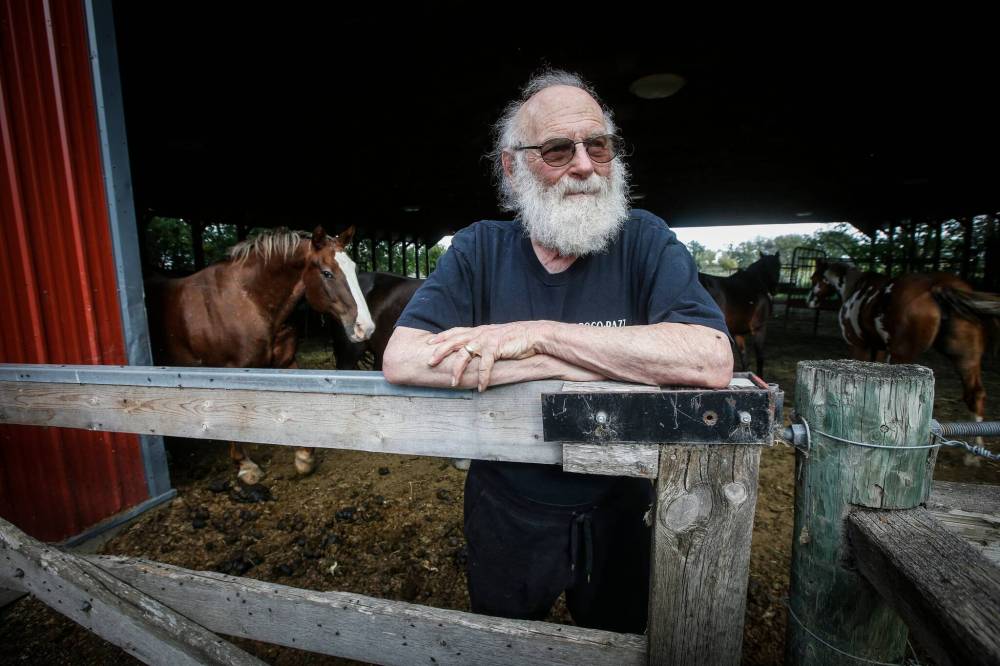
“A lot of people in the cities consider them pests, but then a lot of people go to FortWhyte to watch the migration,” he says. “It was important to me to just let people sit and appreciate their amazing flying abilities, their migration abilities and how well they’re actually doing.
“I want people to realize wild animals are tapped into forces beyond human comprehension.”
There are other aspects of goose life that are relatable to humans. They mate for life (with just a 15 per cent separation rate, according to a Canadian field-naturalist study titled Divorce in Canada Geese), raise their young together and migrate as a family. When female geese mature and find mates, they return to the place they were hatched to build nests of their own.
“When you see female geese, those are Winnipeggers just like us,” animal behaviourist and Manitoba goose expert Jim Shapiro says. “We have our own Winnipeg geese that come back because that’s their home.”
Shapiro taught at the University of Manitoba’s avian behaviour lab for nearly 50 years before his retirement in 2021, and over his career he became one of Manitoba’s leading experts on the oft-misunderstood Canada goose.
Sitting on a bench outside the barn where he’s cared for a stable of boarding horses for the last 45 years, Shapiro explains the geese seen in Winnipeg — mostly giant Canada geese, the largest of seven Canada goose subspecies — are largely locals.
“We have our own Winnipeg geese that come back because that’s their home.”–Jim Shapiro
Geese tend to follow the same migration paths year after year, generation after generation, organizing into flocks based on their migratory journeys, he explains. Manitoba has five such flocks, none of which migrates further than southern Illinois, he says.
Many of the geese seen in and around Winnipeg are part of the Interlake-Rochester flock, which travels about 750 kilometres, as the goose flies, to Rochester, Minn., when the ponds freeze over and their food supply becomes blanketed by snow.
According to Rodney Penner, the City of Winnipeg’s naturalist, there are an estimated 2,500 to 3,000 of these so-called “resident” geese.
But for a brief period in the spring and a longer stretch of the fall migration, they are joined by tens of thousands of migratory geese.
For years, city staff would choose a calm fall day to conduct a “blitz count” of migrating geese, sending more than a dozen people out to count the geese as they took an afternoon rest at ponds and watering holes across the city. At their peak, some 15 to 20 years ago, Winnipeg would see more than 100,000 visiting geese each fall. Nowadays, Penner says, they still average around 70,000 per year.
MIKAELA MACKENZIE / FREE PRESS files The fall migration attracts tens of thousands of geese to FortWhyte Alive. 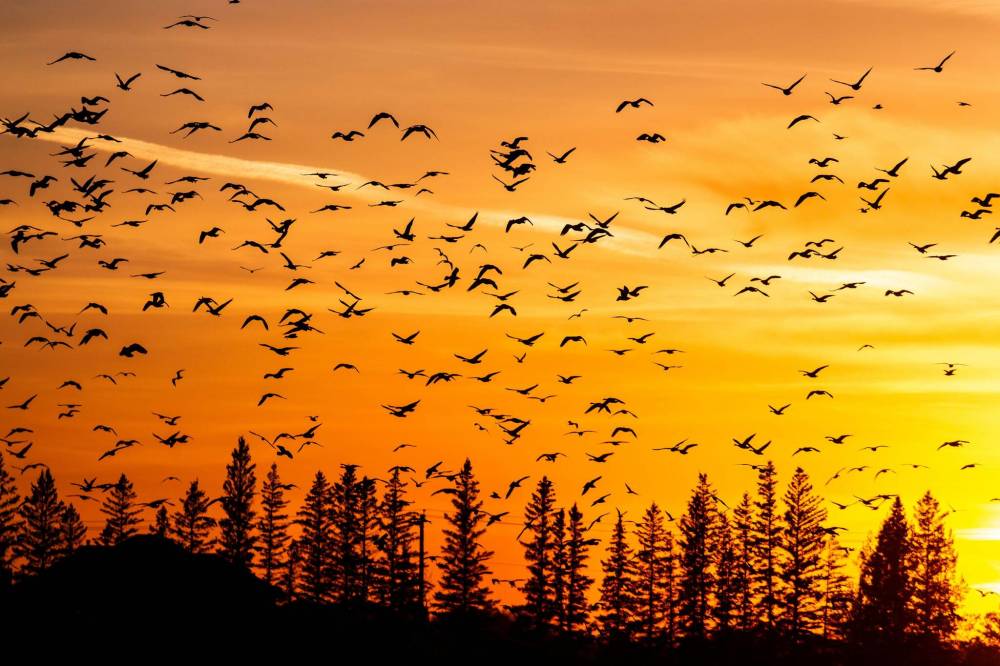
With today’s geese so abundant, it’s difficult to imagine a world without them.
But at the turn of the 20th century, unregulated hunting, egg collection and habitat erosion had nearly wiped out North America’s goose population and the giant Canada goose was thought to have disappeared altogether.
The Canadian Wildlife Service and U.S. Fish and Wildlife department stepped in with a joint conservation effort, the 1916 Migratory Birds Convention Act, which introduced hunting restrictions and other management measures for geese and other birds. The act was updated in the mid-1990s and early 2000s, but still prohibits killing or otherwise harming geese, their eggs or their nests without a permit.
National Film Board of Canada A goose in the short film Modern Goose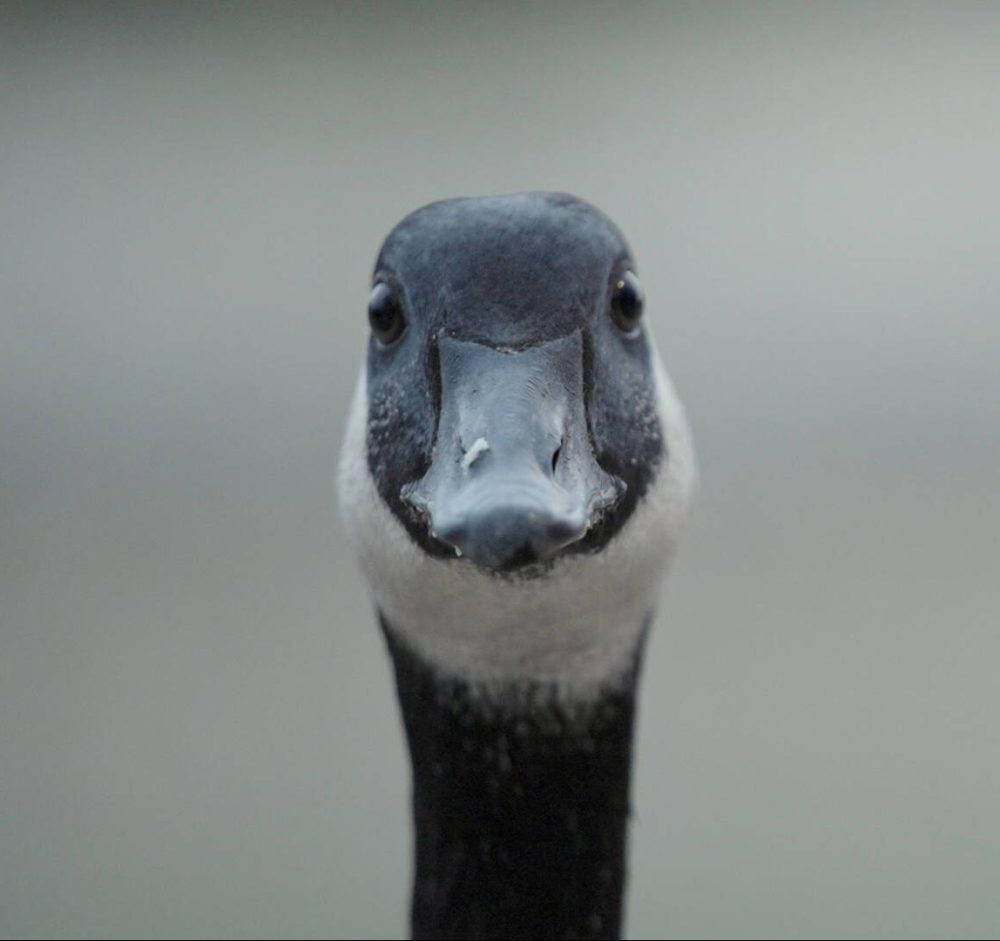
But experts thought it was too late for the giant Canada goose, which was listed as extinct in the 1950s. Outside of a handful of misidentified captive populations, the largest subspecies of North American goose would not be seen again until January 1962, when biologists discovered a small population wintering on Silver Lake in Rochester, Minn.
Scores of geese were drawn to the artificially warm water discharged from Rochester’s power plant, often gathering in the thousands during the migration season. In 1962, biologists calibrated their scales with bags of flour and sugar, weighed the largest of the birds and found, unmistakably, that the giant Canada goose was still around, after all.
Conservationists raced to revitalize the population, breeding the birds in protected regions and re-introducing them to their native habitat across the U.S. Midwest and Great Lakes region. The Rochester geese continued to migrate back and forth to Manitoba’s Interlake region.
“It was immensely successful, bringing back the Canada goose from near extinction to enormous numbers,” Shapiro says. “Now it’s gotten to the point that these geese are called nuisance geese because they are so abundant.”
Today it’s estimated there are more than 3.5 million giant Canada geese in North America. The last provincial count, taken in 2019, found an estimated 234,600 of the geese breeding across the southern part of the province. Under federal migratory-bird regulations, they’re now considered overabundant in Manitoba.
So what makes the geese so good at surviving in cities? According to Shapiro, that’s the wrong way to look at it.
“If you are a goose,” he says, “you want protection from predators, water to drink, water to stay in at night and food.”
Winnipeg, like many Prairie cities, created hundreds of retention ponds to mitigate overland flooding, built suburbs full of large, well-manicured lawns and dotted the concrete jungle with greenspaces and parks.
The ponds provide drinking water and a place to shelter from predators — which are fewer and farther between in the city. Freshly mown lawns are a buffet for herbivore geese, while the open sightlines in parks, golf courses, lawns and parking lots provide ideal nesting grounds.
JOHN WOODS / FREE PRESS Once nearly extinct, the giant Canada goose is now considered over-abundant in Manitoba.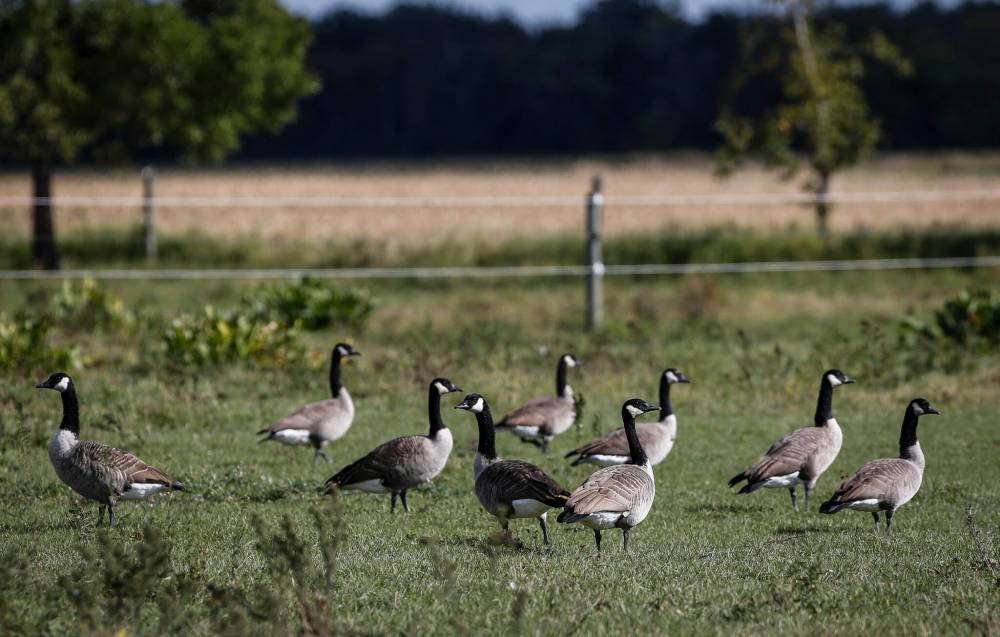
So it’s not so much that geese have adapted to better suit city life, it’s that cities have become more and more appealing to geese.
“Unwittingly, Winnipeg established the ideal home for migrating geese,” Shapiro says. “Over the years, the population of geese coming back to Winnipeg exploded.”
The City of Winnipeg is part of an urban-goose working group with representatives from the provincial and federal governments, Penner says. Over the years they’ve employed techniques like egg removal and egg addling (piercing the egg to prevent its development and returning it to the nest) to prevent geese from nesting along busy roadways and to try to keep the population under control.
Early in the filming process for Modern Goose, Wall captured a scene that serves as a sort of emotional climax for the unnarrated documentary.
Someone — he doesn’t know who — had left dozens of bags of expired bread products on the riverbank behind the Granite Curling Club, near the Manitoba Legislative Building, creating a “bread mountain.”
“The geese were going crazy,” he says.
With the geese distracted by the cornucopia, Wall could get in close with his camera. Against a backdrop of eerie, percussive music, the geese thrash their necks and flap their wings as they tear through plastic packaging, throwing bread skyward as they feast. He knew right away this scene would be important to the story.
“It said something about how nature and humans are clashing in these urban environments,” Wall says. “It also says a lot about how human structures are kind of nonsensical from the view of nature.”
National Film Board of Canada Winnipeg is home to an estimated 2,000 to 3,000 ‘resident’ geese. 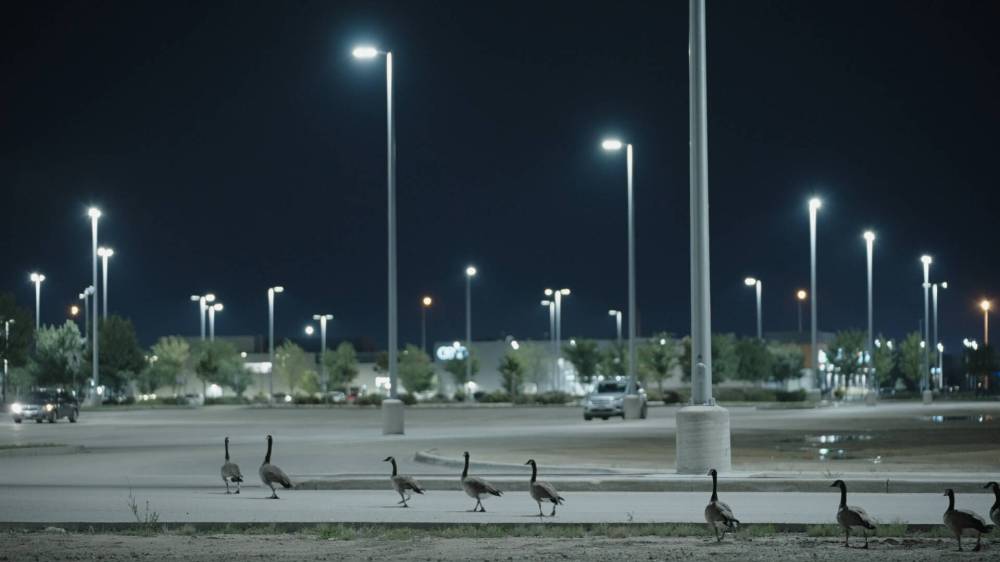
“What is a golf course to a wild animal? Just a strangely shaped forest.”–filmmaker Karsten Wall
Modern Goose is not a scientific film, he says. While he spoke with a couple of biologists and goose experts during the research process, there’s no narration to help contextualize the comical and tense interactions throughout the film.
Wall set out to capture the way geese experience the urban world, with all its conflicts, traumas and unexpected delights. Rather than making geese more relatable to humans, he wanted viewers to see Winnipeg — the urban environment — through the eye of the goose.
“Cities have become convenient for animals because we’ve deforested everything around the city — especially in the Prairies,” Wall says. “We’ve decimated their natural habitat and cities are the only greenspace they have.”
After all, he muses, “What is a golf course to a wild animal? Just a strangely shaped forest.”
Modern Goose is a National Film Board of Canada production, now available to stream for free across Canada on nfb.ca
julia-simone.rutgers@freepress.mb.ca

Julia-Simone Rutgers is an investigative reporter who joined the Free Press in 2020. Read more about Julia-Simone.
Every piece of reporting Julia-Simone produces is reviewed by an editing team before it is posted online or published in print — part of the Free Press‘s tradition, since 1872, of producing reliable independent journalism. Read more about Free Press’s history and mandate, and learn how our newsroom operates.
Our newsroom depends on a growing audience of readers to power our journalism. If you are not a paid reader, please consider becoming a subscriber.
Our newsroom depends on its audience of readers to power our journalism. Thank you for your support.
Related Articles
On the trail of a filmmaking Manitoba naturalist




History
Updated on Friday, October 4, 2024 5:34 PM CDT: Corrects typo