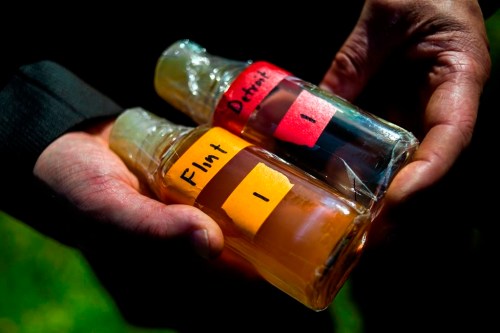
Biden sets 10-year deadline for US cities to replace lead pipes nationwide
Advertisement
Read this article for free:
or
Already have an account? Log in here »
To continue reading, please subscribe:

Digital Subscription
One year of digital access for only $205*
- Enjoy unlimited reading on winnipegfreepress.com
- Read the E-Edition, our digital replica newspaper
- Access News Break, our award-winning app
- Play interactive puzzles
*First annual payment billed as $205.00 + GST for one year. This annual subscription will automatically renew at $233.00 + GST every 52 weeks (10% off the regular annual price of $259.35). Offer available to new and qualified returning subscribers only. Cancel any time.
To continue reading, please subscribe:
Add Free Press access to your Brandon Sun subscription for only an additional
$1 for the first 4 weeks*
- Enjoy unlimited reading on winnipegfreepress.com
- Read the E-Edition, our digital replica newspaper
- Access News Break, our award-winning app
- Play interactive puzzles
*Your next Brandon Sun subscription payment will increase by $1.00 and you will be charged $17.95 plus GST for four weeks. After four weeks, your payment will increase to $24.95 plus GST every four weeks.
Read unlimited articles for free today:
or
Already have an account? Log in here »
Hey there, time traveller!
This article was published 08/10/2024 (727 days ago), so information in it may no longer be current.
WASHINGTON (AP) — A decade after the Flint, Michigan, water crisis raised alarms about the continuing dangers of lead in tap water, President Joe Biden on Tuesday set a 10-year deadline for cities across the nation to replace their lead pipes, finalizing an aggressive approach aimed at ensuring that drinking water is safe for all Americans.
Biden announced the final Environmental Protection Agency rule during a visit to the swing state of Wisconsin in the final month of a tight presidential campaign. The announcement highlights an issue — safe drinking water — that Kamala Harris has prioritized as vice president and during her presidential campaign. The new rule supplants a looser standard set by former President Donald Trump’s administration that did not include a universal requirement to replace lead pipes.
“Folks, what is a government for if it cannot protect the public health?” Biden asked a crowd of union members at a cavernous Department of Public Works warehouse in Milwaukee. The city has the fifth-highest number of lead pipes in the nation, according to the EPA.
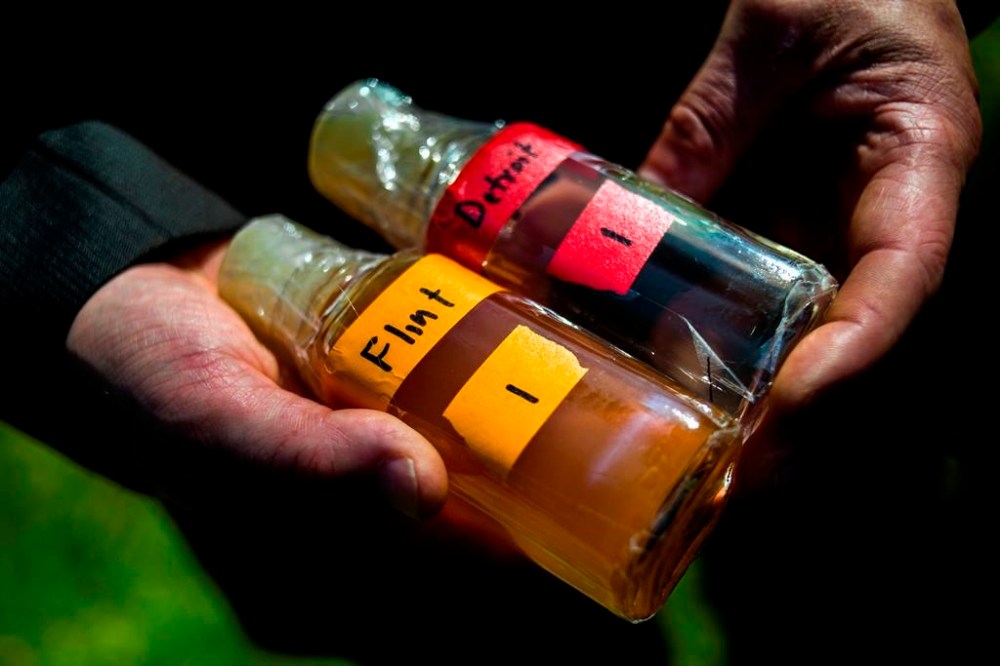
Decades after the dangers of lead pipes were clear, more than 9 million lead pipes remain in use, a fact Biden called shameful.
“We’re finally addressing an issue that should’ve been addressed a long time ago in this country,” he said. “We are showing up as a partner to get it done.”
EPA Administrator Michael Regan said Milwaukee is one of many cities across the country taking steps to remove lead pipes from their drinking water. Officials are using money from the federal infrastructure law to accelerate lead-pipe replacement work and meet a goal to remove all lead pipes within 10 years, down from an initial 60-year timeframe.
“Everyone wants this lead out,” Regan told reporters. “The science has been clear for decades — there is no safe level of lead in our drinking water.”
The new EPA rule is the strongest overhaul of lead-in-water standards in roughly three decades. Lead, a heavy metal used in pipes, paints, ammunition and many other products, is a neurotoxin that can cause a range of disorders from behavioral problems to brain damage. Lead lowers IQ scores in children, stunts their development and increases blood pressure in adults.
The EPA estimates the stricter standard will prevent up to 900,000 infants from having low birth weight and avoid up to 1,500 premature deaths a year from heart disease.
The new regulation is stricter than one proposed last fall and requires water systems to ensure that lead concentrations do not exceed an “action level” of 10 parts per billion, down from 15 parts per billion under the current standard. If high lead levels are found, water systems must inform the public about ways to protect their health, including the use of water filters, and take action to reduce lead exposure while concurrently working to replace all lead pipes.
Lead pipes often impact low-income urban areas the most. They are most commonly found in older, industrial parts of the country, including major cities such as Chicago, Cleveland, New York, Detroit and Milwaukee. The rule also revises the way lead amounts are measured, which could significantly expand the number of cities and water systems that are found to have excessive levels of lead, the EPA said.
To help communities comply, the agency is making available an additional $2.6 billion for drinking water infrastructure through the bipartisan infrastructure law. The agency also is awarding $35 million in competitive grants for programs to reduce lead in drinking water.
The 10-year timeframe won’t start for three years, giving water utilities time to prepare. A limited number of cities with large volumes of lead pipes may be given a longer timeframe to meet the new standard.
Lead pipes can corrode and contaminate drinking water; removing them sharply reduces the chance of a crisis. In Flint, a change in the source of the city’s drinking water source more than a decade ago made it more corrosive, spiking lead levels in tap water. Flint was the highest-profile example among numerous cities that have struggled with stubbornly high levels of lead, including Newark, New Jersey, Benton Harbor, Michigan, and Washington, D.C.
The original lead and copper rule for drinking water was enacted by the EPA more than 30 years ago. The rules have significantly reduced lead in tap water but have included loopholes that allowed cities to take little action when lead levels rose too high.
“EPA’s action today is a leap forward in protecting the health of tens of millions of Americans from this scourge,” said Erik Olson, a health and food expert at the nonprofit Natural Resources Defense Council.
Actually getting the lead pipes out of the ground will be an enormous challenge, however. The infrastructure law approved in 2021 provided $15 billion to help cities replace their lead pipes, but the total cost will be several times higher. The requirement also comes as the Biden administration proposes strict new drinking water standards for harmful “forever chemicals” called PFAS, or per- and polyfluoroalkyl substances. These standards will cost billions of dollars.
The American Water Works Association, which represents water utilities, said it supports EPA’s goals but warned that removal of lead pipes “poses cost challenges.” Ultimately, most of the costs will fall to consumers through higher water bills, said AWWA CEO David LaFrance.
Fifteen Republican attorneys general, led by Kris Kobach of Kansas, have criticized the EPA rule as “unworkable, underfunded and unnecessary.” The GOP officials said they are concerned that homeowners in some places might have to pay to replace pipe sections under their property – a requirement Kobach said Congress did not authorize. Federal grants worth billions of dollars will help communities replace their pipes, the EPA said, but cost decisions ultimately are up to local utilities.
Regan said the benefits of the rule far outweigh the costs. “We believe we’ve done it in a very strategic way — a legally sound way — supported by the science,” he said.
Another hurdle is finding the lead pipes. Initial pipe inventories are due this month, and many cities have said they don’t know what substances their pipes are made of. Without knowing their location, it is hard to efficiently replace them, according to Eric Schwartz, co-founder of BlueConduit, a company formed in response to the Flint crisis that helps cities find their lead pipes.
Avenel Joseph, interim executive vice president of the Robert Wood Johnson Foundation, called access to safe, affordable water a basic human right.
“For generations, lead exposure has silently robbed millions of children — especially those living in communities of color — of this right,” she said. “With this regulation in place, our country finally says: no more.”
___
Phillis reported from St. Louis. Associated Press writer Aamer Madhani in Milwaukee contributed to this story.
___
The Associated Press receives support from the Walton Family Foundation for coverage of water and environmental policy. The AP is solely responsible for all content. For all of AP’s environmental coverage, visit https://apnews.com/hub/environment