Climate solution: Form Energy secures $405M to speed development of long-awaited 100-hour battery
Advertisement
Read this article for free:
or
Already have an account? Log in here »
To continue reading, please subscribe:

Digital Subscription
One year of digital access for only $205*
- Enjoy unlimited reading on winnipegfreepress.com
- Read the E-Edition, our digital replica newspaper
- Access News Break, our award-winning app
- Play interactive puzzles
*First annual payment billed as $205.00 + GST for one year. This annual subscription will automatically renew at $233.00 + GST every 52 weeks (10% off the regular annual price of $259.35). Offer available to new and qualified returning subscribers only. Cancel any time.
To continue reading, please subscribe:
Add Free Press access to your Brandon Sun subscription for only an additional
$1 for the first 4 weeks*
- Enjoy unlimited reading on winnipegfreepress.com
- Read the E-Edition, our digital replica newspaper
- Access News Break, our award-winning app
- Play interactive puzzles
*Your next Brandon Sun subscription payment will increase by $1.00 and you will be charged $17.95 plus GST for four weeks. After four weeks, your payment will increase to $24.95 plus GST every four weeks.
Read unlimited articles for free today:
or
Already have an account? Log in here »
Hey there, time traveller!
This article was published 09/10/2024 (708 days ago), so information in it may no longer be current.
Form Energy, a company that is beginning to produce a longer-lasting alternative to lithium batteries, hit a milestone Wednesday with an announcement of $405 million in funding.
The money will allow Form to speed up manufacturing at its first factory in Weirton, West Virginia and continue research and development.
Manufacturing long-duration energy storage at a commercial scale is seen as essential for lowering carbon emissions that are causing climate change, because it makes clean energy available when the sun isn’t shining or the wind isn’t blowing.
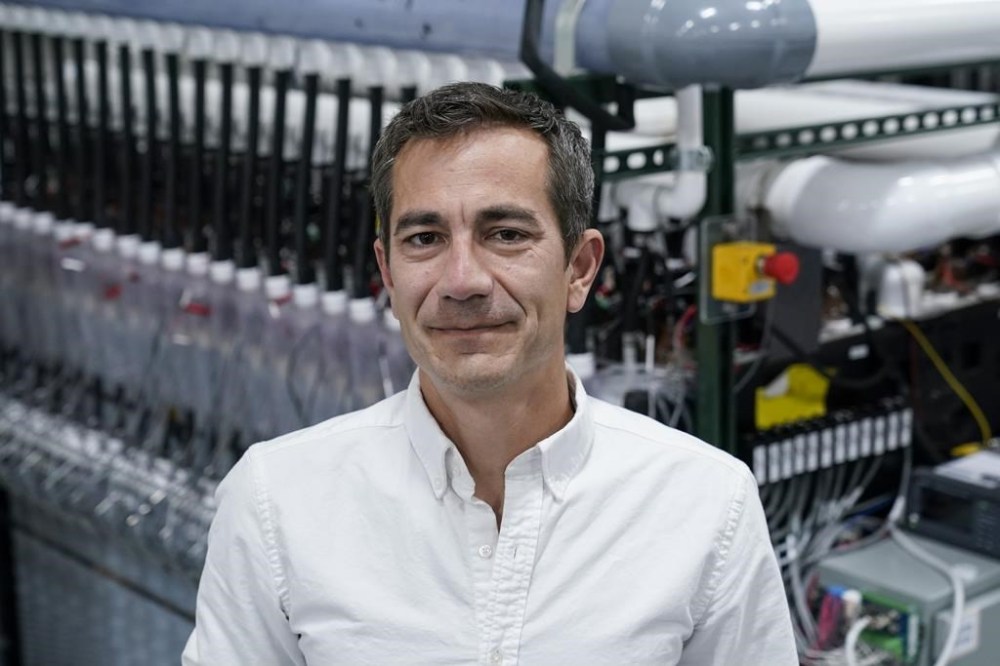
“I’m incredibly proud of how far our team has come in scaling our iron-air battery technology,” Mateo Jaramillo, CEO of Form Energy, said via email.
Investment company T. Rowe Price led the funding. GE Vernova, a spin-off of General Electric’s energy businesses, and several venture capital firms were also involved.
“With this new funding … we’re ready to accelerate multi-day battery deployments to meet the rising demand for a cleaner, and more reliable grid. I’m grateful for our team’s hard work and the trust our partners have placed in us as we push toward our mission of building energy storage for a better world.”
Lithium batteries typically last four hours. Form is one of many companies pursuing entirely different chemistries. Its batteries use iron, water and air and are able to store energy for 100 hours, meaning if they work at scale, they could bridge a period of several days without sunlight or wind. Iron is also one of the most abundant elements on Earth, which the company says helps make this technology affordable and scalable.
In collaboration with Great River Energy, the company broke ground on its first commercial battery installation in Cambridge, Minnesota in August. It’s expected to come online in 2025 and will store extra energy that can be used during times of higher electricity demand.
Other Form Energy batteries in Minnesota, Colorado and California are expected to come online next year. There are projects in New York, Georgia and Virginia set for 2026.
To date, Form Energy has raised more than $1.2 billion from investors.
_____
The last line of this story has been corrected to reflect that the $1.2 billion raised so far is only from investors, not from any government entities.
____
The Associated Press’ climate and environmental coverage receives financial support from multiple private foundations. AP is solely responsible for all content. Find AP’s standards for working with philanthropies, a list of supporters and funded coverage areas at AP.org.