UN climate talks to focus on money to help poor nations cut carbon pollution
Advertisement
Read this article for free:
or
Already have an account? Log in here »
To continue reading, please subscribe:

Digital Subscription
One year of digital access for only $205*
- Enjoy unlimited reading on winnipegfreepress.com
- Read the E-Edition, our digital replica newspaper
- Access News Break, our award-winning app
- Play interactive puzzles
*First annual payment billed as $205.00 + GST for one year. This annual subscription will automatically renew at $233.00 + GST every 52 weeks (10% off the regular annual price of $259.35). Offer available to new and qualified returning subscribers only. Cancel any time.
To continue reading, please subscribe:
Add Free Press access to your Brandon Sun subscription for only an additional
$1 for the first 4 weeks*
- Enjoy unlimited reading on winnipegfreepress.com
- Read the E-Edition, our digital replica newspaper
- Access News Break, our award-winning app
- Play interactive puzzles
*Your next Brandon Sun subscription payment will increase by $1.00 and you will be charged $17.95 plus GST for four weeks. After four weeks, your payment will increase to $24.95 plus GST every four weeks.
Read unlimited articles for free today:
or
Already have an account? Log in here »
Hey there, time traveller!
This article was published 10/11/2024 (696 days ago), so information in it may no longer be current.
BAKU, Azerbaijan (AP) — A complex international two-week-long game of climate change poker is convening. The stakes? Just the fate of an ever-warming world.
Curbing and coping with climate change’s worsening heat, floods, droughts and storms will cost trillions of dollars and poor nations just don’t have it, numerous reports and experts calculate. As United Nations climate negotiations started Monday in Baku, Azerbaijan, the chief issue is who must ante up to help poor nations and especially how much.
The numbers are enormous. The floor in negotiations is the $100 billion a year that poor nations — based on a categorization made in the 1990s — now get as part of a 2009 agreement that was barely met. Several experts and poorer nations say the need is $1 trillion a year or more.
“It’s a game with high stakes,” said Climate Analytics CEO Bill Hare, a physicist. “Right now the fate of the planet depends very much on what we’re able to pull off in the next five or 10 years.”
But this year’s talks, known as COP29, won’t be as high-profile as last year’s, with 48 fewer heads of state scheduled to speak. The leaders of the top two carbon polluting countries — China and the United States — will be absent. But if money negotiations fail in Baku, it will handicap 2025’s make-or-break climate negotiations, experts say.
Not only is dealing with money always a touchy subject, but two of the rich countries that are expected to donate money to poor nations — the United States and Germany — are in the midst of dramatic government changes. Even though the United States delegation will be from Biden Administration, the reelection of Donald Trump, who downplays climate change and dislikes foreign aid, makes U.S. pledges unlikely to be fulfilled.
The overarching issue is climate finance. Without it, experts say the world can’t get a handle on fighting warming, nor can most of the nations achieve their current carbon pollution-cutting goals or the new ones they will submit next year.
“If we don’t solve the finance problem, then definitely we will not solve the climate problem,” said former Colombian deputy climate minister Pablo Vieira, who heads the support unit at NDC Partnership, which helps nations with emissions-cutting goals.
Nations can’t cut carbon pollution if they can’t afford to eliminate coal, oil and gas, Vieira and several other experts said. Poor nations are frustrated that they are being told to do more to fight climate change when they cannot afford it, he said. And the 47 poorest nations only created 4% of the heat-trapping gases in the air, according to the U.N.
About 77% of the heat-trapping gas in the atmosphere now comes from the G20 rich nations, many of whom are now cutting back on their pollution, something that is not happening in most poor nations or China.
“The countries that are rich today have become rich by polluting the Earth,” said Ani Dasgupta, president of World Resources Institute.
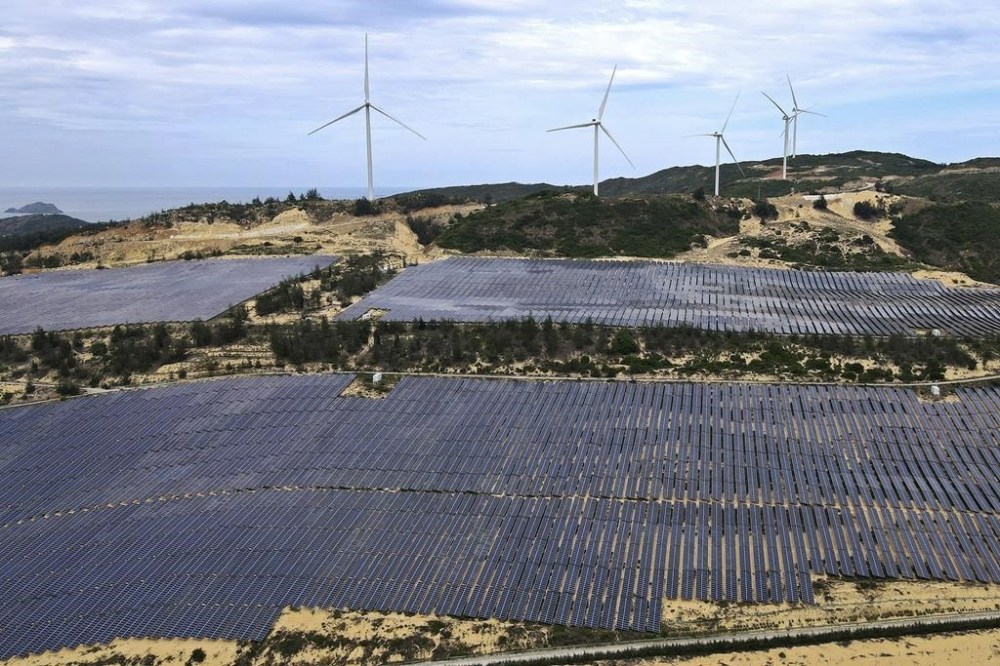
The money being discussed is for three things: Helping poor nations switch from dirty fossil fuels to clean energy; helping them adapt to the impacts of a warming world such as sea level rise and worsening storms; and compensating vulnerable poor nations for climate change damage.
“Should the global community fail to reach a (finance) goal, this is really just signing the death warrant of many developing countries,” said Chukwumerije Okereke, director of the Center for Climate Change and Development in Nigeria.
Michael Wilkins, a business professor who heads Imperial College’s Centre for Climate Finance and Investment in the U.K., said since 2022 total climate finance has been nearly $1.5 trillion. But only 3% of that is actually geared toward the least developed countries, he said.
“The Global South has been repeatedly let down by unmet pledges and commitments,” said Sunita Narain, director general of New Delhi-based Centre for Science and Environment.
“Finance is really the key component that compels all types of climate action,” said Bahamian climate scientist Adelle Thomas, adaptation director at the Natural Resources Defense Council. “Without that finance, there’s simply not much that developing countries in particular can do.”
It’s an issue of both self-interest and justice, Thomas and others said. It’s not charity to help poor nations decarbonize because rich nations benefit when all countries cut emissions. After all, a warming world hurts everyone.
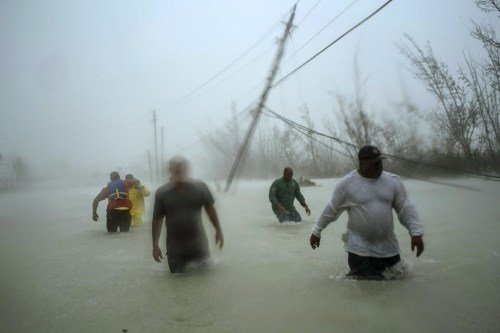
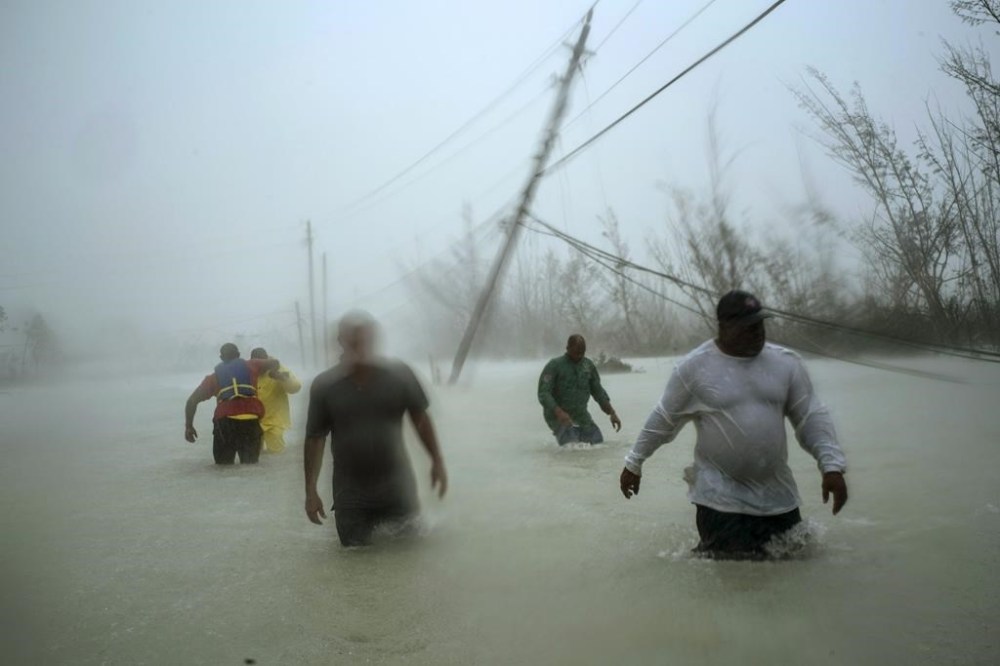
Compensating for climate damage and helping nations prepare for future harm is a matter of justice, Thomas said. Even though they didn’t create the problem, poor nations — especially small island nations — are particularly vulnerable to climate change’s rising seas and extreme weather. Thomas mentioned how 2019’s Hurricane Dorian smacked her grandparents home and “the only thing left standing was one toilet.”
The trillion-dollar figure on the table is about half of what the world spends annually on the military. Others say global fossil fuel subsidies could be redirected to climate finance; estimates of those subsidies range from the International Energy Agency’s $616 billion a year to the International Monetary Fund’s $7 trillion a year.
“When we need more for other things, including conflict, we seem to find it,” United Nations Environment Programme Executive Director Inger Andersen said. “Well, this is probably the largest conflict of all.”
A U.N. climate finance committee report looked at the need from 98 countries and estimated it as ranging from $455 billion to $584 billion per year.
The money isn’t just direct government aid from one nation to another. Some of it comes from multinational development finance banks, like the World Bank. There’s also private investment that will be considered a large chunk. Developing nations are seeking relief from their $29 trillion global debt.
Andersen said at least a sixfold increase in investment would be required to get on the path to limit future warming to just another two-tenths of a degree Celsius (0.4 degrees Fahrenheit) from now, which is the overarching goal the world adopted in 2015.
Andersen’s agency calculated that with nations’ current emissions-curbing targets, the difference between well-financed and current efforts translates to half a degree Celsius (0.9 degrees Fahrenheit) less future warming. Experts say stepped-up efforts that could reduce future warming even more also costs more.
Who will pay is another sticking point. Climate talks for decades have used 1992 standards to categorize two groups of nations, essentially rich and poor, deciding that rich nations like the U.S. are the ones to financially help poor ones. Financial circumstances have changed. China, the world’s top carbon polluter, has increased its per capita GDP by more than 30 times since then. But neither China nor some rich oil nations are obligated to help in climate finance.
Developed nations want those countries that couldn’t afford to give before, but now can, included in the next round of donors. But those nations don’t want those obligations, said E3G analyst Alden Meyer, a climate negotiations veteran.
“It’s a very fraught landscape to think about huge scale-up of existing climate finance,” Meyer said.
___
Associated Press reporter Sibi Arasu contributed to this report from Bengaluru, India.
___

Read more of AP’s climate coverage at http://www.apnews.com/climate-and-environment
___
Follow Seth Borenstein on X at @borenbears
___
The Associated Press’ climate and environmental coverage receives financial support from multiple private foundations. AP is solely responsible for all content. Find AP’s standards for working with philanthropies, a list of supporters and funded coverage areas at AP.org.
Related Articles
Earth's biggest polluters aren't sending leaders to UN climate talks in a year of weather extremes
Advertisement Advertise With Us
Advertisement Advertise With Us