Europe posts record year for clean energy use as Trump pulls US toward fossil fuels
Advertisement
Read this article for free:
or
Already have an account? Log in here »
To continue reading, please subscribe:

Digital Subscription
One year of digital access for only $205*
- Enjoy unlimited reading on winnipegfreepress.com
- Read the E-Edition, our digital replica newspaper
- Access News Break, our award-winning app
- Play interactive puzzles
*First annual payment billed as $205.00 + GST for one year. This annual subscription will automatically renew at $233.00 + GST every 52 weeks (10% off the regular annual price of $259.35). Offer available to new and qualified returning subscribers only. Cancel any time.
To continue reading, please subscribe:
Add Free Press access to your Brandon Sun subscription for only an additional
$1 for the first 4 weeks*
- Enjoy unlimited reading on winnipegfreepress.com
- Read the E-Edition, our digital replica newspaper
- Access News Break, our award-winning app
- Play interactive puzzles
*Your next Brandon Sun subscription payment will increase by $1.00 and you will be charged $17.95 plus GST for four weeks. After four weeks, your payment will increase to $24.95 plus GST every four weeks.
Read unlimited articles for free today:
or
Already have an account? Log in here »
Hey there, time traveller!
This article was published 22/01/2025 (623 days ago), so information in it may no longer be current.
A record 47% of the European Union’s electricity now comes from solar and other renewables, a report Thursday said, in yet another sign of the growing gap between the bloc’s push for clean energy and the new U.S. administration’s pursuit of more fossil fuels.
Nearly three-quarters of the EU’s electricity doesn’t emit planet-warming gases into the air — with 24% of electricity in the bloc coming from nuclear power which also doesn’t release greenhouse gases, a report released by the climate energy think tank Ember found. This is far higher than in countries like the United States and China, where nearly two-thirds of their energy is still produced from carbon-polluting fossil fuels like coal, oil and gas.
Experts say they’re encouraged by Europe’s fossil fuel reductions, particularly as the U.S. looks set to increase its emissions as its new president pledges cheaper gas prices, has halted leases for wind projects and pledged to revoke Biden-era incentives for electric vehicles.
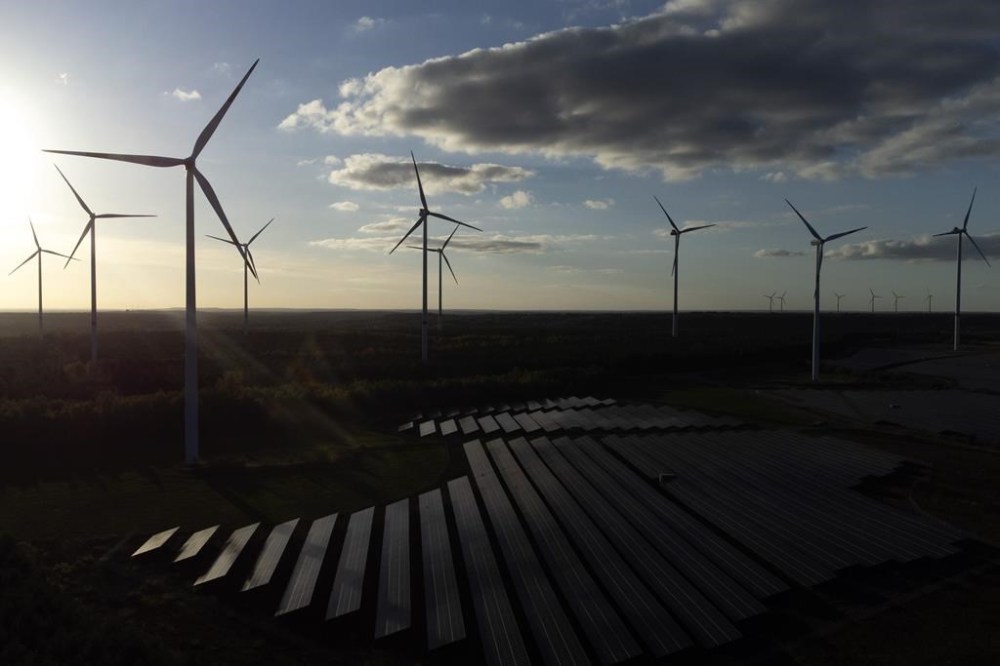
“Fossil fuels are losing their grip on EU energy,” said Chris Rosslowe, an energy expert at Ember. In 2024, solar power generated 11% of EU electricity, overtaking coal which fell below 10% for the first time. Clean wind power generated more electricity than gas for the second year in a row.
2024 data wasn’t available for all countries. Ember’s data for the world’s largest generators of electricity for 2023 show Brazil with the largest share of its electricity from renewables, almost 89%, with much of that coming from hydroelectric power. Canada had about 66.5%, China 30.6%, France 26.5%, the U.S. 22.7% and India 19.5%.
Green policies and war drive clean energy growth
One reason for Europe’s clean power transition moving at pace is the European Green Deal, an ambitious policy passed in 2019 that paved the way for climate laws to be updated. As a result of the deal, the EU made their targets more ambitious, aiming to cut 55% of the region’s emissions by the end of the decade. The policy also aims to make Europe climate neutral — reducing the amount of additional emissions in the air to practically zero — by 2050.
Hundreds of regulations and directives in European countries to incentivize investment in clean energy and reduce carbon pollution have been passed or are in the process of being ratified across Europe.
“At the start of the Deal, renewables were a third and fossil fuels accounted for 39% of Europe’s electricity,” Rosslowe said. “Now fossils generate only 29% and wind and solar have been driving the clean energy transition.” The amount of electricity generated by nuclear energy has remained relatively stable in the bloc.
Russia’s invasion of Ukraine has also spurred the move to clean energy in Europe. Gas prices skyrocketed — with much of Europe’s gas coming from Russia becoming unviable — forcing countries to look for cheaper, cleaner alternatives. Portugal, Netherlands and Estonia witnessed the highest increase in clean power in the last five years.
Europe cements its place as a clean energy leader
The transition to clean power helped Europe avoid more than $61 billion worth of fossil fuel imports for generating electricity since 2019.
“This is sending a clear message that their energy needs are going to be met through clean power, not gas imports,” said Pieter de Pous, a Brussels-based energy analyst at European think tank E3G. De Pous said the EU’s origins were “as a community of coal and steel because those industries were so important,” but it is now rapidly becoming a “community of solar and wind power, batteries and smart technologies.”
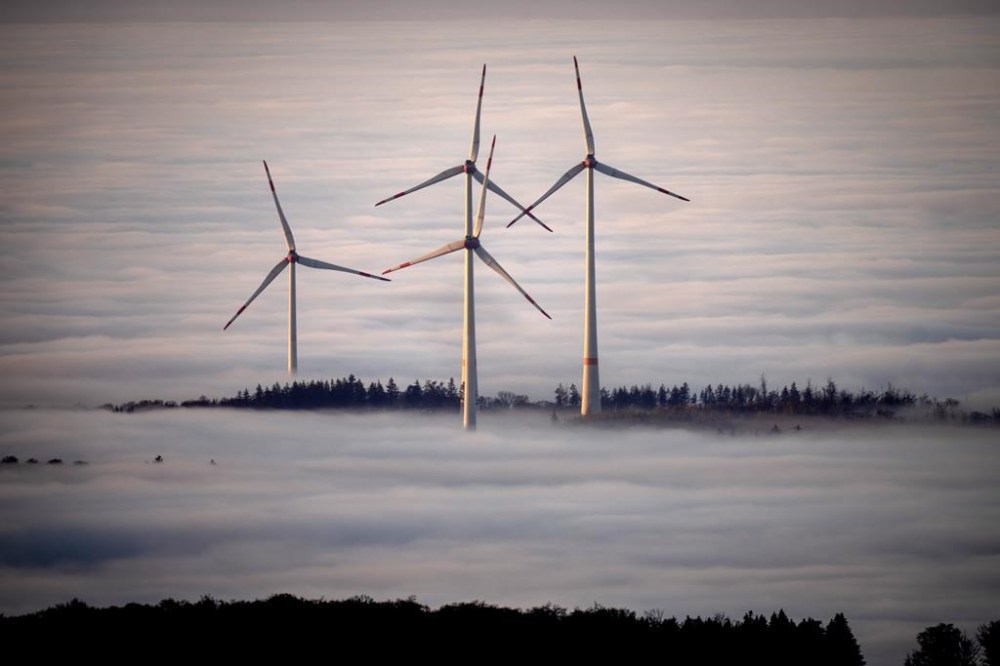
Nuclear growth in the bloc, meanwhile, has slowed. Across the European Union, retirements of nuclear plants have outpaced new construction since around the mid-2000s, according to Global Energy Monitor.
As President Trump has pulled the United States out of the Paris Agreement aimed at curbing warming and is pursuing a “drill, baby, drill” energy policy, Rosslowe said the EU’s leadership in clean power becomes all the more important. “It’s about increasing European energy independence, and it’s about showing this climate leadership,” he said.

On Tuesday, EU chief Ursula von der Leyen said: “Europe will stay the course, and keep working with all nations that want to protect nature and stop global warming.”
___
Data journalist Mary Katherine Wildeman contributed from Hartford, Connecticut. ___
Follow Sibi Arasu on X at @sibi123 ___
The Associated Press’ climate and environmental coverage receives financial support from multiple private foundations. AP is solely responsible for all content. Find AP’s standards for working with philanthropies, a list of supporters and funded coverage areas at AP.org.