Liberal, Conservative platforms don’t say if they’ll meet Canada’s emissions target
Advertisement
Read this article for free:
or
Already have an account? Log in here »
To continue reading, please subscribe:

Digital Subscription
One year of digital access for only $205*
- Enjoy unlimited reading on winnipegfreepress.com
- Read the E-Edition, our digital replica newspaper
- Access News Break, our award-winning app
- Play interactive puzzles
*First annual payment billed as $205.00 + GST for one year. This annual subscription will automatically renew at $233.00 + GST every 52 weeks (10% off the regular annual price of $259.35). Offer available to new and qualified returning subscribers only. Cancel any time.
To continue reading, please subscribe:
Add Free Press access to your Brandon Sun subscription for only an additional
$1 for the first 4 weeks*
- Enjoy unlimited reading on winnipegfreepress.com
- Read the E-Edition, our digital replica newspaper
- Access News Break, our award-winning app
- Play interactive puzzles
*Your next Brandon Sun subscription payment will increase by $1.00 and you will be charged $17.95 plus GST for four weeks. After four weeks, your payment will increase to $24.95 plus GST every four weeks.
Read unlimited articles for free today:
or
Already have an account? Log in here »
Hey there, time traveller!
This article was published 26/04/2025 (522 days ago), so information in it may no longer be current.
OTTAWA – Neither the Liberals nor the Conservatives have laid out how — or even if — their policy platforms will work to have Canada meet its greenhouse gas emissions targets under the global Paris climate pact.
Emissions in Canada fell from 700 million tonnes in 2022 to 694 million tonnes in 2023, representing the first drop in emissions since the COVID-19 pandemic.
The decline put Canada 8.5 per cent below 2005 levels, but the current national target is to be at least 40 per cent below that benchmark by 2030, and emissions would have to fall another 239 million tonnes to get there. That’s the equivalent of what more than 55 million passenger vehicles emit over the course of a year.
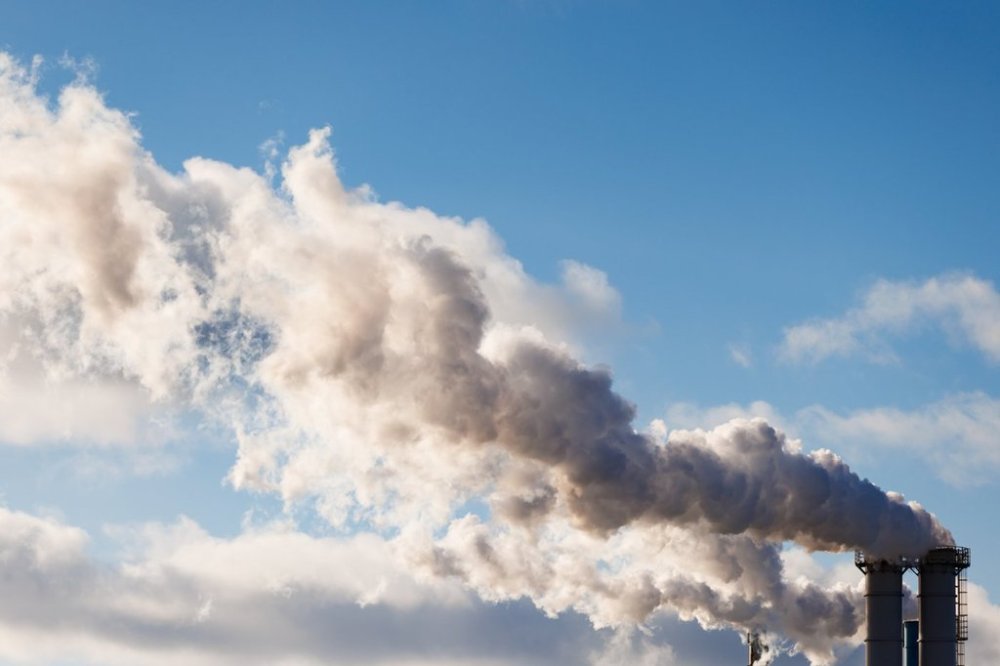
The Liberal party’s platform mentions emissions 17 times — a departure from the 49 mentions in the 2021 document — and highlights initiatives to put a climate lens on government operations, expand on industrial carbon pricing, and enhance oil and gas methane regulations.
But the platform doesn’t lay out how any of the climate measures would affect Canada’s target. It provides no specifics about how Liberal Leader Mark Carney would strengthen industrial carbon pricing and is missing any sign of the green “incentives” Carney promised during the party’s leadership race, when he said he would kill the consumer carbon price.
During his leadership campaign, he promised incentives to reward Canadians for making greener choices, such as purchasing an energy efficient appliance, electric vehicle or improved home insulation.
Eliminating the emissions levy on individuals and smaller businesses was Carney’s first move as prime minister, but he hasn’t said how he’d make up the estimated 19 to 22 million tonnes of emissions the consumer price was projected to eliminate.
When asked for details on Carney’s plans for changes to industrial carbon pricing, a Liberal party spokesman offered little new information.
“A Liberal government led by Mark Carney will ensure that big polluters pay more, through a more robust and expanded industrial carbon pricing system and climate-aligned financial tools like transition bonds,” wrote Guillaume Bertrand.
“These tools are designed to cut emissions, spur investment from the private sector, and drive innovation in every region of the country.”
Environment and Climate Change Canada updated its emissions scenarios in March, showing that with all climate policies in place as of August 2024, emissions were on track to hit 597 million tonnes in 2030. That included the consumer carbon levy.
If it factored in the impact of policies announced but was not implemented, like the emissions cap on oil and gas production, the trajectory could fall further to 514 million tonnes.
Both were still well above the 455 million tonnes targeted under the Paris agreement.
The Conservative Party platform mentions emissions 10 times — three of which are in reference to repealing the oil and gas cap — while two other references are repetitions of the same policy in different places in the platform.
Conservative Leader Pierre Poilievre also promises to use provisions within the Paris Agreement known as Article 6 to reduce global emissions by selling cleaner Canadian energy — specifically liquefied natural gas to replace coal power overseas.
For Canada to include those emissions cuts in its totals, the countries importing Canadian energy would have to agree to give away its credit for reducing its own emissions to ensure those reductions wouldn’t be counted by both countries.
The Conservative platform also proposes to reform investment tax credits to “reward clean Canadian manufacturing and production to help lower emissions and fight climate change.”
The previous Liberal government created multiple tax credits for companies to transition to net-zero emissions, including investments in carbon capture and storage systems, hydrogen and clean electricity.
The Conservative platform offers no details on how it would look to reform those tax credits.
The platform, however, does promise to repeal several of the Liberal government’s climate action initiatives, such as the electric vehicle mandate and the clean fuel standard.
The Conservatives claim the moves will bring in more than $26 billion in revenue, including from additional fossil fuel production.
The party did not respond to multiple requests for comment on whether a Conservative government would remain in the Paris Agreement — although the commitment to enforce Article 6 of the deal may be an indication of Poilievre’s plans — and whether it would maintain Canada’s 2030 emission reduction targets.
Neither the Liberals nor the Conservatives included an assessment in their platforms of the impact their policies will have on Canada’s overall emissions.

But two British Columbia climate researchers, who looked at the policies from both parties before the full platforms dropped, concluded neither party is likely to hit Canada’s target but the Liberals will be much closer.
Katya Rhodes, a climate policy professor at the University of Victoria, and Emma Starke, a PhD candidate on climate and energy policy at Simon Fraser University, said emissions are expected to be around 680 million tonnes this year.
They said the Conservative policies would increase Canada’s emissions to more than 720 million tonnes in 2035. With the Liberal policies, the two found emissions would fall to about 600 million tonnes in 2035, but only if Carney makes good on his pledge to strengthen industrial carbon pricing.
Rhodes told The Canadian Press the platforms themselves did not contain anything materially different on emissions than what she and Starke used in their analysis.
This report by The Canadian Press was first published April 26, 2025
Related Articles
Liberals win 4th mandate as NDP vote collapses and Singh announces he will resign












Advertisement Advertise With Us
Advertisement Advertise With Us