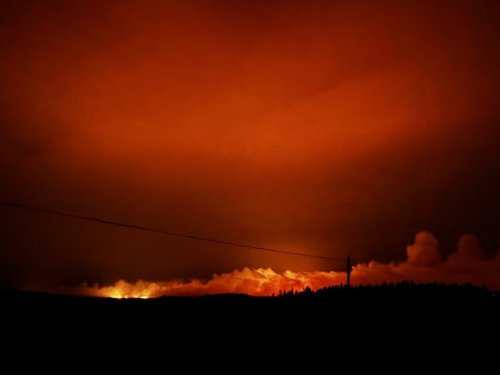
Volunteer firefighters missing work to battle roaring wildfire in rural Newfoundland
Advertisement
Read this article for free:
or
Already have an account? Log in here »
To continue reading, please subscribe:

Digital Subscription
One year of digital access for only $205*
- Enjoy unlimited reading on winnipegfreepress.com
- Read the E-Edition, our digital replica newspaper
- Access News Break, our award-winning app
- Play interactive puzzles
*First annual payment billed as $205.00 + GST for one year. This annual subscription will automatically renew at $233.00 + GST every 52 weeks (10% off the regular annual price of $259.35). Offer available to new and qualified returning subscribers only. Cancel any time.
To continue reading, please subscribe:
Add Free Press access to your Brandon Sun subscription for only an additional
$1 for the first 4 weeks*
- Enjoy unlimited reading on winnipegfreepress.com
- Read the E-Edition, our digital replica newspaper
- Access News Break, our award-winning app
- Play interactive puzzles
*Your next Brandon Sun subscription payment will increase by $1.00 and you will be charged $17.95 plus GST for four weeks. After four weeks, your payment will increase to $24.95 plus GST every four weeks.
Read unlimited articles for free today:
or
Already have an account? Log in here »
Hey there, time traveller!
This article was published 22/07/2025 (443 days ago), so information in it may no longer be current.
ST. JOHN’S – The mayor of a rural Newfoundland town is among the volunteer firefighters missing work to battle a raging wildfire in a part of Canada where unpaid town councils and first responders are shouldering increasing numbers of emergencies.
Jason Chaulk was supposed to fly out on Monday for Saskatchewan, where he is a rotational worker at a mine. But the volunteer mayor and deputy fire chief in Musgrave Harbour, N.L., along the northeast coast of Newfoundland, said he stayed home to fight the out-of-control wildfire threatening his community.
Crews from volunteer fire departments in about a dozen other neighbouring communities have also pitched in, working alongside provincial firefighters, he said. Meanwhile, volunteer search and rescue teams helped residents leave safely after officials ordered an evacuation on Sunday.
“I got guys here that flew in (Monday) morning that were away on turnarounds, guys that work on supply boats off the island, guys that work in construction in Ontario. Everybody came home, came together,” Chaulk said in a telephone interview.
“We have our own jobs and our own families that we have to be concerned about,” he added. “But we’re taking on that responsibility for protecting the town as well.”
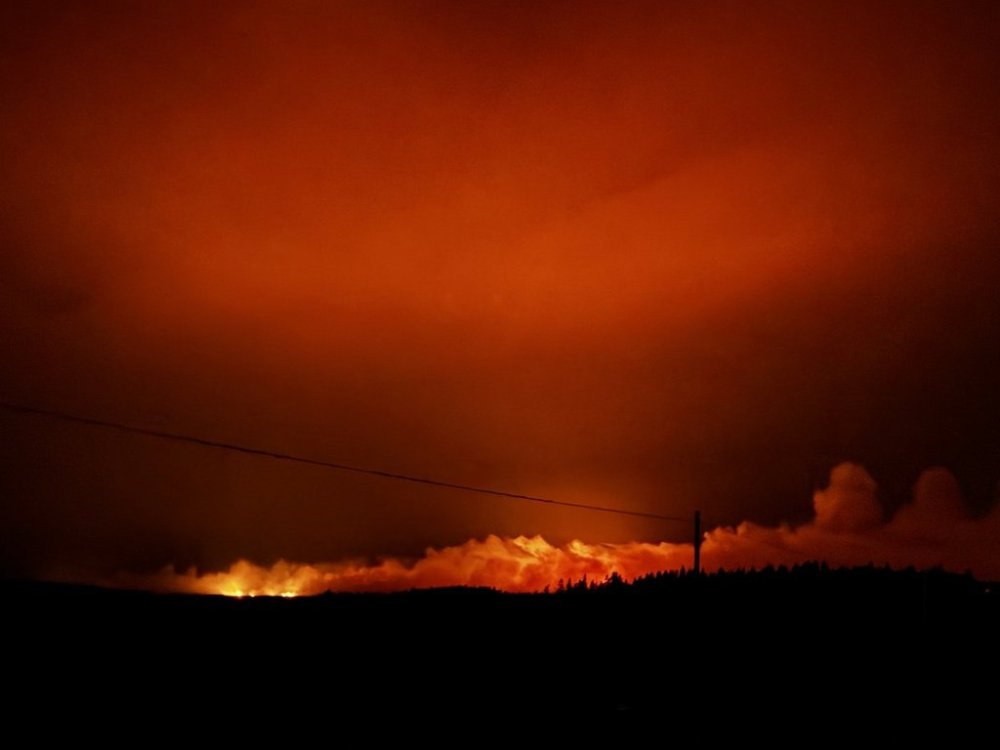
The fire near Musgrave Harbour ignited on Saturday evening during a spate of hot, dry weather. On Sunday, officials ordered the community’s some 950 residents to evacuate as the flames crept within a kilometre of the town.
Chaulk and his 30-member volunteer firefighting crew have been working since the blaze began, he said. They set up air mattresses in the firehall so they can take shifts sleeping.
The work means a lot to him. He grew up in Deadman’s Bay, about 25 km southeast of Musgrave Harbour, where two children died in a fire, he said. The town didn’t have a fire department to respond, Chaulk said.
“From that day on, I took it upon myself that if there was any way I could help a community and be a firefighter, I would.”
The 16-square-kilometre wildfire in Musgrave Harbour was one of five burning in the province on Tuesday. A larger fire — 18 square km — burned about 100 km away in the Chance Harbour area. As of Tuesday morning, both were out of control.
The Chance Harbour fire began last week and burnt several cabins to the ground along Bonavista Bay. It was the second wildfire this year to destroy structures. In May, a fire in the Adam’s Cove area, located about 90 km to the south, demolished about a dozen homes.
Craig Pollett, a consultant and former chief executive of Municipalities Newfoundland and Labrador, worries that too much is being asked of small volunteer councils and fire departments, especially as more storms and wildfires are expected as the climate changes.
“I would imagine the impact on the human beings doing this work is incredible, whether they are volunteer firefighters or professional firefighters,” said Pollett, vice-president of Strategic Steps, which advises organizations on governance. “It’s got to be even more so when you actually have another job that you have to do.”
Newfoundland and Labrador has about 274 municipalities across a population of roughly 540,000. Three-quarters of those towns are home to fewer than 1,000 people, and many have a few hundred residents, he noted.
Unlike much of the rest of Canada, Newfoundland and Labrador doesn’t have regional governments, which could help towns pool their scarce resources and better plan for emergencies such as wildfires, he said. This lack of upper-tier governments puts a large burden on small volunteer-led towns — some with fewer than 100 people — when disaster strikes, Pollett said.
Mike Tiller is a volunteer firefighter and mayor in New-Wes-Valley, which is about 45 km southeast of Musgrave Harbour, where he was on Sunday helping out, along with other members from the New-Wes-Valley crew.
Tiller wondered if there was some way for the federal government to create a program to compensate unpaid first responders working for days or weeks in an emergency.
“When you have volunteers that are turning down money to stay home and protect their town, I mean, that’s huge,” he said in an interview. “This is something that needs to be looked at. Because the next generation is coming up and who knows what you’re going to get for volunteers?”
This report by The Canadian Press was first published July 22, 2025.
Related Articles
Winnipeg-based agency deploys resources from here and around the world to wildfires across Canada
Advertisement Advertise With Us
Advertisement Advertise With Us