In the eye of the firestorm As wildfires continue to rage across Canada, a Winnipeg-based agency carries out a complicated operation of deploying resources from here and around the world
Read this article for free:
or
Already have an account? Log in here »
To continue reading, please subscribe:

Digital Subscription
One year of digital access for only $205*
- Enjoy unlimited reading on winnipegfreepress.com
- Read the E-Edition, our digital replica newspaper
- Access News Break, our award-winning app
- Play interactive puzzles
*First annual payment billed as $205.00 + GST for one year. This annual subscription will automatically renew at $233.00 + GST every 52 weeks (10% off the regular annual price of $259.35). Offer available to new and qualified returning subscribers only. Cancel any time.
To continue reading, please subscribe:
Add Free Press access to your Brandon Sun subscription for only an additional
$1 for the first 4 weeks*
- Enjoy unlimited reading on winnipegfreepress.com
- Read the E-Edition, our digital replica newspaper
- Access News Break, our award-winning app
- Play interactive puzzles
*Your next Brandon Sun subscription payment will increase by $1.00 and you will be charged $17.95 plus GST for four weeks. After four weeks, your payment will increase to $24.95 plus GST every four weeks.
Read unlimited articles for free today:
or
Already have an account? Log in here »
Hey there, time traveller!
This article was published 25/07/2025 (435 days ago), so information in it may no longer be current.
When a fast-moving wildfire roared towards Flin Flon on May 27, coming within a few kilometres of the northern Manitoba city, its 29 firefighters headed to the front lines to battle flames the likes of which they’d never encountered.
A day later, when the department realized it was ill-equipped to beat back the fire, the province sent in reinforcements and resources. In all, 194 firefighters from 53 municipal departments assisted with the gruelling battle in Flin Flon, along with 15 members from the fire commissioner’s office, which transported 18 fire trucks, 29 apparatuses and five boats to the scene.
The city was spared from damage, but the experience underscored the need to bolster resources for volunteer departments — Flin Flon firefighters are considered to be volunteers though they are paid while on-call — in the coming years as wildfires are expected to increase in number and threaten more communities.
MIKAELA MACKENZIE / FREE PRESS FILES “There’s a lot of stuff we’re going to be reviewing over the next little bit in terms of what we need,” said Flin Flon fire chief Jason Kuras.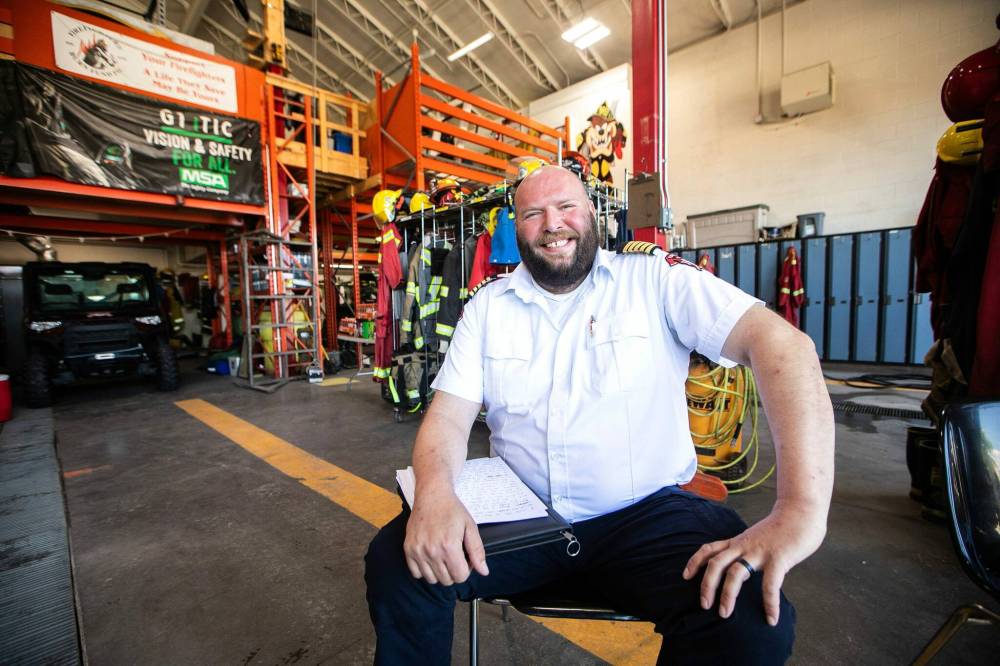
“These were municipal, structural firefighters doing an impossible task of putting out a fire without the proper equipment that would be necessary to fight a wildfire,” fire Chief Jason Kuras recounted a month later.
“They didn’t have the proper equipment. That’s through no fault of their own, but they just didn’t have it… there’s a lot of stuff we’re going to be reviewing over the next little bit in terms of what we need.”
The Manitoba Wildfire Service has 58 full-time and 339 seasonal fire rangers at its disposal, deploying 40 initial attack crews, in five-person teams, across the province.
However, as the climate changes, resulting in hotter weather, increased drought conditions and more volatile fire scenarios, crews will need far more resources.
Manitoba, which is currently experiencing its worst wildfire season in 30 years, will have to contend with increasingly catastrophic wildfire seasons; the need for interprovincial and international aid will only rise.
In a dimly lit operations room, in an unassuming commercial building near Winnipeg’s airport on a recent weekday, Stephen Tulle orchestrates an international wildfire rescue mission.
Under the glow of red lights that display time zones, and multiple TV screens flashing weather forecasts and a tally of fires burning that day, Tulle, a duty officer for the Canadian Interagency Forest Fire Centre, monitors his computer, where he checks the status of a plane leaving Chile, with 60 firefighters on board, who are headed to Edmonton to assist Alberta’s wildfire battle.
The charter will make a pit stop in Mexico to pick up 40 specialized firefighters who will land in Saskatoon to aid Saskatchewan’s battle against the flames.
Stephen Tulle, national duty officer of the Canadian Interagency Forest Fire Centre, stands in the operations centre in a building on Ellice Avenue, near the airport.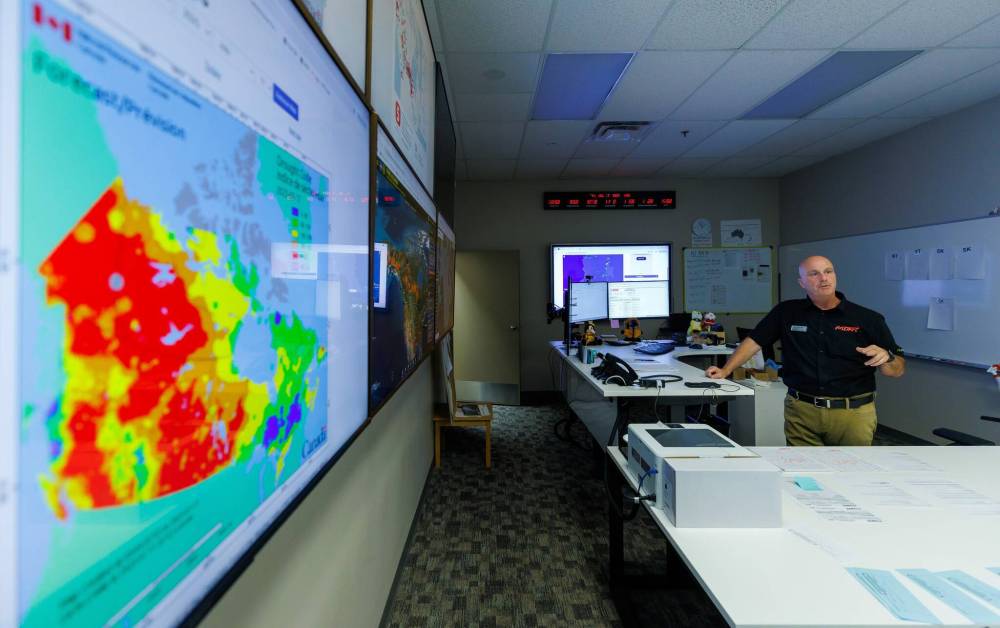
Since the beginning of the 2025 wildfire season, Tulle has been on the front lines of the logistical attack by co-ordinating 1,250 international firefighters, more than 700 domestic firefighters and myriad resources to be deployed to hundreds of fires that have already scorched nearly 60,000 square kilometres of land across Canada.
“When you see these types of catastrophes or natural disasters, people want to help,” Tulle says from behind his desk, where he’ll monitor incoming requests for assistance from provincial and territorial officials.
The interagency centre, a federal not-for-profit corporation that was established in 1982, is responsible for wildland fire management in Canada. It rose from the ashes of resource-strapped fire seasons from 1979 to 1981, which highlighted the need for an office to co-ordinate resources across the country. Its mandate includes “managing mutual aid resource sharing within Canada and internationally.”
As he points to a map on one of the screens, Tulle comments about the red pattern that blankets much of Manitoba, an indicator of the high fire risk posed by the weather conditions.
In the 15 years he’s worked at the centre, he says this is one of the worst wildfire seasons in Manitoba.
“They’re going to need a lot of help in the next little bit.”–Stephen Tulle
“There are a lot of challenges out there, a lot of fire in the landscape,” Tulle says. “They’re going to need a lot of help in the next little bit.”
When provincial governments are on the verge of depleting their resources, they will reach out to the centre and ask for assistance from any other jurisdiction that has spare equipment and staff.
While provincial officials understand the complex nature of fighting fires, the public may think it’s a case of needing more boots on the ground and planes in the sky.
“I can’t tell you how many people have said, ‘just go buy 1,000 water bombers and put the fire out.’ None of that matters if it’s too unsafe to fly over it, there are humans in those aircraft. Sometimes, it doesn’t matter what you do,” said Mike McCulley, the associate director of operations.
In late May, the Manitoba government held a news conference to advise the public several communities were on the verge of evacuation due to rapidly spreading wildfire.
During the announcement, Premier Wab Kinew thanked firefighters from across Canada who were coming to Manitoba’s aid. Kinew would later say the province would need to fortify its firefighting capacity to be prepared to respond to future wildfire seasons.
McCulley said he is often asked why Canada doesn’t train more wildland firefighters and why can’t municipal departments send their own emergency personnel into the bush.
“I think what gets lost in the story is how dangerous and challenging wildland firefighting is. It’s not just running out there to put wet stuff on the hot stuff. It’s not like that at all,” McCulley said.
Mike McCulley, associate director of operations, says Manitoba needs a fleet that meets its needs. 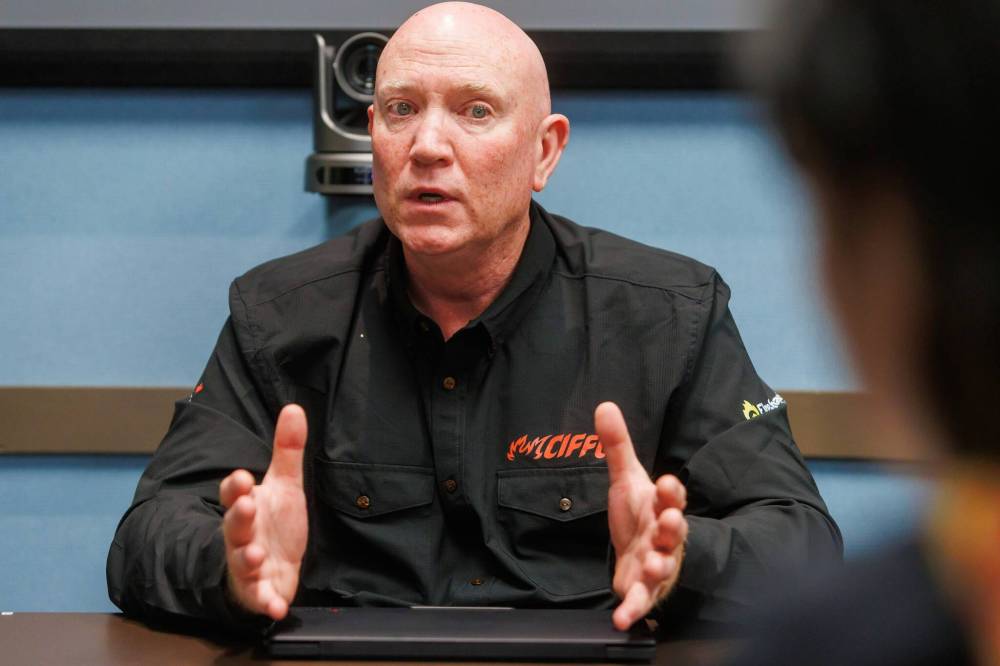
Type 1 wildland firefighters, the men and women usually on the front lines, have a background in forestry and are specially trained to understand how forests ignite, what fuels the flames and how to control their burn.
They must be Olympic-level fit, pass multiple internationally recognized tests and be able to fend for themselves for days on end in the wilderness.
“Wildfires are a workplace and there are regulations we need to abide by,” McCulley said. “So when people ask ‘why don’t we just send more people out there?’ It’s simply not that easy.”
“So when people ask ‘why don’t we just send more people out there?’ It’s simply not that easy.”–Mike McCulley
One important factor is the compatibility of a crew with the jurisdiction that needs them: do crews have the proper footwear as is required in Alberta? Do they abide by the same tree-felling standards as British Columbia? Do crews from non-English-speaking countries have proper translators?
“It’s about people’s safety and well-being. You want people to come home safely. Trees grow every day, we can build homes again, but people’s well-being is No. 1,” Tulle says from the operations room.
Once Canadian resources have been exhausted, international partners are called upon.
International firefighters take from seven to 10 days to arrive, so jurisdictions need to think ahead about their resources.
“We have forecasters and meteorologists giving us long-range predictions, so we can kind of see what’s going on and take a little bit of a guess at what might be coming. Then we can start to ‘pre-order’ that a little bit,” McCulley said.
Latin American partnerships are valuable because they’re in the same time zones and logistics are more aligned, but countries south of the equator are just as valuable because their wildfire season is opposite to Canada’s. During our off-season, we can send our resources south to return the favour.
Alfredo Morales previously managed Mexico’s fire management program.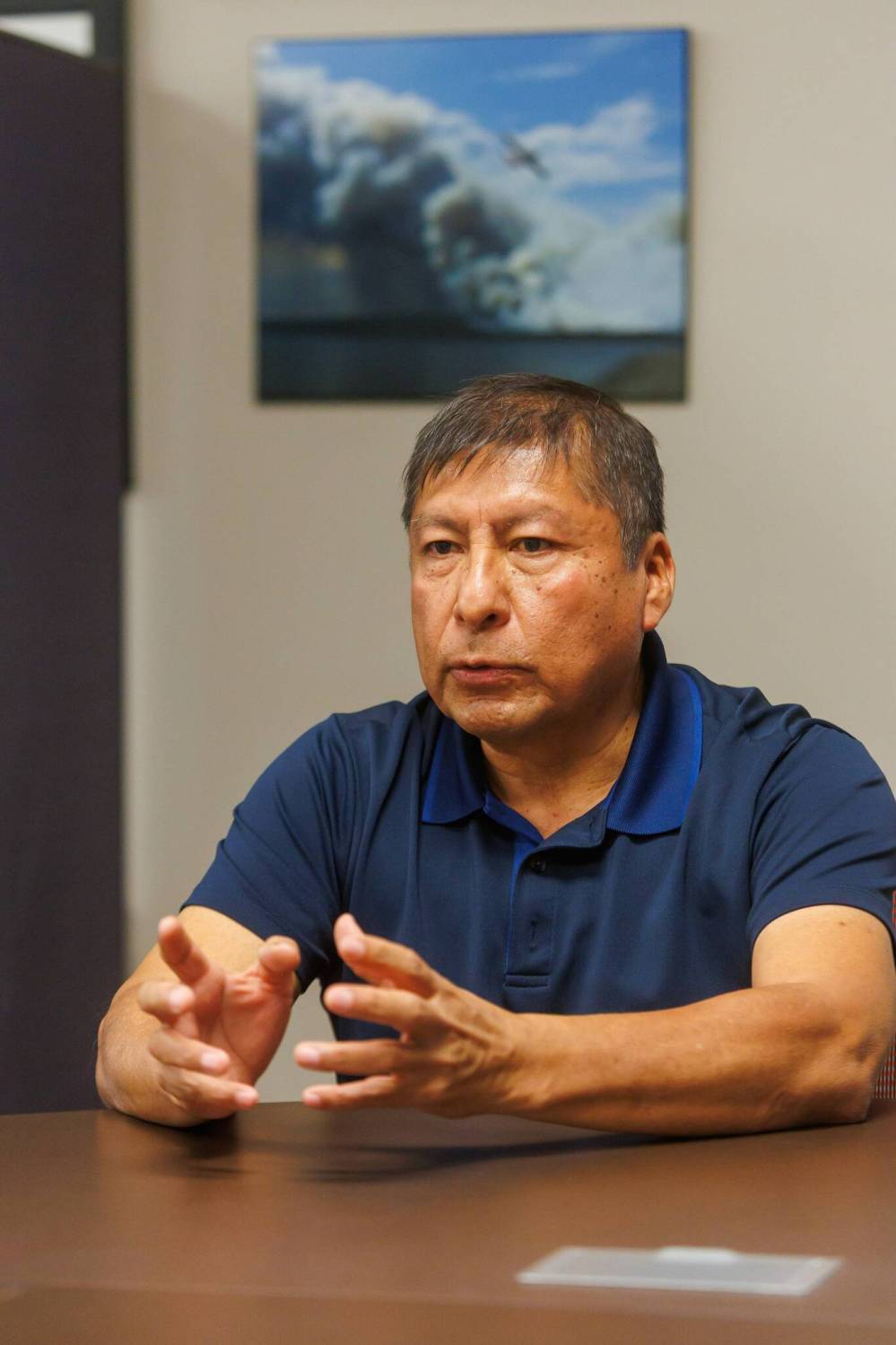
In a corner of the interagency office, Alfredo Morales is busy checking on the 200 men and women he currently has deployed across Canada and the 40 who will arrive later in the day.
He talks to representatives from other countries to see if they would be interested in forming a resource-sharing partnership with Canada.
“There’s a challenge around the world regarding wildfires. You know, because of climate change, things are different,” he said.
“Countries are trying to develop other alternatives to support each other in times of need. So that’s why the international relationships became a very strong alternative now for the countries to support each other.”
Crews in Latin American countries jump to support Canada because it gives them a chance to improve their own national fire programs using resources that are typically more sophisticated than theirs.
“The governments get to ensure that this kind of equipment could be useful for their programs, and they make those arrangements to have this kind of equipment and improve their program,” he said.
Back in Flin Flon, reinforcements didn’t arrive soon enough and the blaze swallowed Denare Beach, just across the border in Saskatchewan. More than 200 homes burned down.
Kuras said the province needs to give volunteer departments, such as his in Flin Flon, more equipment for ground crews; and make urban wildland firefighting courses currently offered through the Office of the Fire Commissioner more readily available to enhance the wildfire response.
“It’s a fantastic program, but I think they need to run that course more often. I think that that stuff needs to get out more. They’re working on it, it’s just crews and departments that can take advantage of it,” he said.
“I get asked all the time if we have enough domestic capacity. Well, what is enough? Are you planning for the worst day or the best day? It’s got to be somewhere in between.”–Mike McCulley
A provincial spokesperson said there is an opportunity to add staff to the province’s fleet, if needed, through the casual hire emergency firefighters program.
Yet, despite having all the manpower available to them, McCulley says the province needs to balance its fleet with its needs.
“I get asked all the time if we have enough domestic capacity. Well, what is enough? Are you planning for the worst day or the best day? It’s got to be somewhere in between.
“You’re never going to have enough for the worst day. That would be terrible planning and an inefficient way to spend time and money, right? You have to figure out what the medium is, but the problem is the median is shifting with climate change.”

nicole.buffie@freepress.mb.ca

Nicole Buffie
Multimedia producer
Nicole Buffie is a reporter for the Free Press city desk. Born and bred in Winnipeg, Nicole graduated from Red River College’s Creative Communications program in 2020 and worked as a reporter throughout Manitoba before joining the Free Press newsroom as a multimedia producer in 2023. Read more about Nicole.
Every piece of reporting Nicole produces is reviewed by an editing team before it is posted online or published in print — part of the Free Press‘s tradition, since 1872, of producing reliable independent journalism. Read more about Free Press’s history and mandate, and learn how our newsroom operates.
Our newsroom depends on a growing audience of readers to power our journalism. If you are not a paid reader, please consider becoming a subscriber.
Our newsroom depends on its audience of readers to power our journalism. Thank you for your support.
Related Articles
Snow Lake prepares as wildfire races closer