When heat and drought stress trees, the consequences can be tragic
Advertisement
Read this article for free:
or
Already have an account? Log in here »
To continue reading, please subscribe:

Digital Subscription
One year of digital access for only $205*
- Enjoy unlimited reading on winnipegfreepress.com
- Read the E-Edition, our digital replica newspaper
- Access News Break, our award-winning app
- Play interactive puzzles
*First annual payment billed as $205.00 + GST for one year. This annual subscription will automatically renew at $233.00 + GST every 52 weeks (10% off the regular annual price of $259.35). Offer available to new and qualified returning subscribers only. Cancel any time.
To continue reading, please subscribe:
Add Free Press access to your Brandon Sun subscription for only an additional
$1 for the first 4 weeks*
- Enjoy unlimited reading on winnipegfreepress.com
- Read the E-Edition, our digital replica newspaper
- Access News Break, our award-winning app
- Play interactive puzzles
*Your next Brandon Sun subscription payment will increase by $1.00 and you will be charged $17.95 plus GST for four weeks. After four weeks, your payment will increase to $24.95 plus GST every four weeks.
Read unlimited articles for free today:
or
Already have an account? Log in here »
Hey there, time traveller!
This article was published 23/08/2025 (403 days ago), so information in it may no longer be current.
Sometimes it happens without any more warning than the sound of cracking.
A tree physiologist said that several years of repeated drought in British Columbia mixed with heat stress increased the likelihood of branches breaking off, and this could even happen on a “perfectly calm day” without any breeze.
The consequences can be tragic — on July 31, a mother and her five-month-old son were killed by a falling tree on the beach at Cumberland Lake Park campground on Vancouver Island.
Then on Aug. 10, a woman was badly injured when part of a large tree fell on her at Pipers Lagoon in Nanaimo, also on the island.
Peter Constabel, a professor in the biology department at the University of Victoria, said he had seen photos of that tree, and he thought it looked like there was some rot inside it.
“It’s the drought that specifically causes this, and somehow it stresses the tree and drops the branch, or the branch falls. If you get cumulative droughts, of course, it’s gonna weaken the tree overall,” said Constabel, who specializes in the tree health.
British Columbia has suffered years of repeated drought, although conditions are currently rated normal on Vancouver Island, which received heavy rain last weekend.
Constabel said he had seen branches of maple trees and oak trees falling off on the University of Victoria campus, even on a windless day.
“It’s just hot and dry for a long time, and the branch just breaks off. It’s really kind of counterintuitive,” said Constabel, adding that the water in the cell walls in the wood helps stabilize a weakened tree.
Simon Fraser University biological sciences professor Jim Mattsson said he had recently witnessed big branches fall from a Douglas fir on Burnaby Mountain.
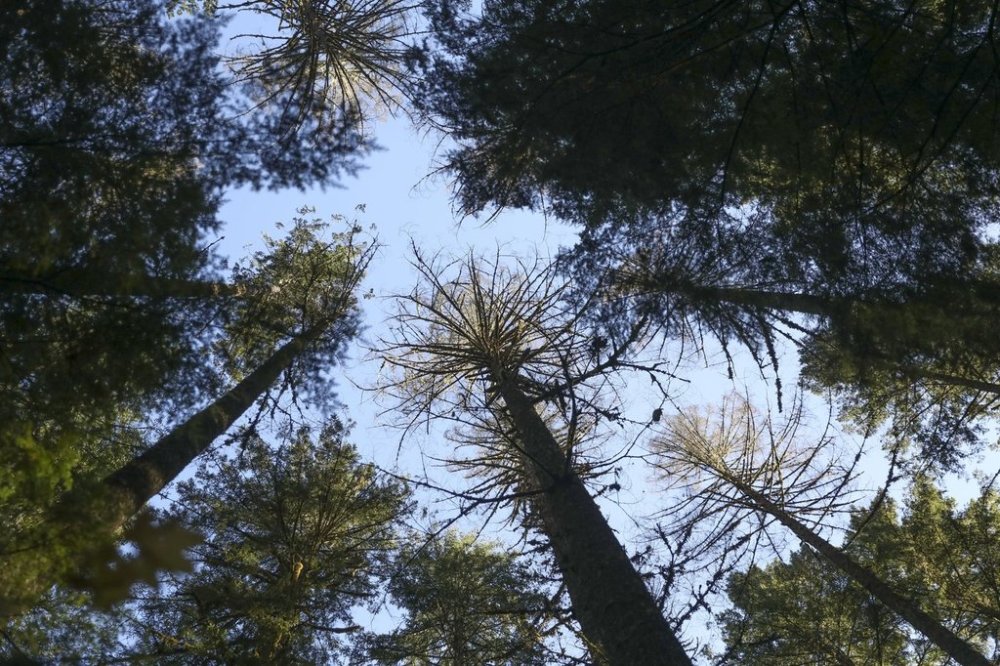
“If someone had been hit by that, that could be quite serious,” said Mattsson, adding that a prolonged period of drought can wear down even a Douglas fir, which is usually very drought-resistant.
Dry spells can leave trees in a weakened state, Mattsson said, reducing photosynthesis and growth, cutting their energy or sugar reserves, and lowering production of chemical defenses.
All of these can cause a chain reaction increasing trees’ susceptibility to insects and fungal diseases, causing trees to rot inside, weaken and potentially topple over, said Mattsson.
“When you have seasons of repeated drought, and people may not even notice that they have several years of drought stress, they will drop the leaves, they drop the needles, and so on.”
Mattsson has frequently visited Vancouver Island for his research and said western red cedars that are common on the island are quite susceptible to drought, with roots fairly close to the surface.
As summer get hotter, more stress is added to these trees.
“So, that can be enough to kill them in a year or two,” said Mattsson, “Just because they’re dead doesn’t mean that they’re going to fall over right away. They usually have to be weakened by rot, primarily insects and fungal rot.”
Constabel said maple trees and western cedar are not very drought-tolerant, and hikers should be cautious while passing them.
Trees in an urban setting are particularly vulnerable, as they are more likely to be exposed to the sun, with soil compacted and their root systems might not be as healthy as trees in a natural environment.
“That makes it harder for the tree to stay healthy, and also could potentially weaken the tree, then it would drop a branch in a drought,” said Constabel.
Constabel said people should try to identify signs of disease among the trees. For example, splitting bark or fungi growing on a tree could be a sign of stress, and such trees should be avoided.
“But it is really difficult. Even professional arborists sometimes can’t predict. They can’t tell,” said Constabel.
This report by The Canadian Press was first published Aug. 23, 2025.