How climate change is changing the way athletes train ahead of the Winter Olympics
Advertisement
Read this article for free:
or
Already have an account? Log in here »
To continue reading, please subscribe:

Digital Subscription
One year of digital access for only $205*
- Enjoy unlimited reading on winnipegfreepress.com
- Read the E-Edition, our digital replica newspaper
- Access News Break, our award-winning app
- Play interactive puzzles
*First annual payment billed as $205.00 + GST for one year. This annual subscription will automatically renew at $233.00 + GST every 52 weeks (10% off the regular annual price of $259.35). Offer available to new and qualified returning subscribers only. Cancel any time.
To continue reading, please subscribe:
Add Free Press access to your Brandon Sun subscription for only an additional
$1 for the first 4 weeks*
- Enjoy unlimited reading on winnipegfreepress.com
- Read the E-Edition, our digital replica newspaper
- Access News Break, our award-winning app
- Play interactive puzzles
*Your next Brandon Sun subscription payment will increase by $1.00 and you will be charged $17.95 plus GST for four weeks. After four weeks, your payment will increase to $24.95 plus GST every four weeks.
Read unlimited articles for free today:
or
Already have an account? Log in here »
Hey there, time traveller!
This article was published 29/10/2025 (342 days ago), so information in it may no longer be current.
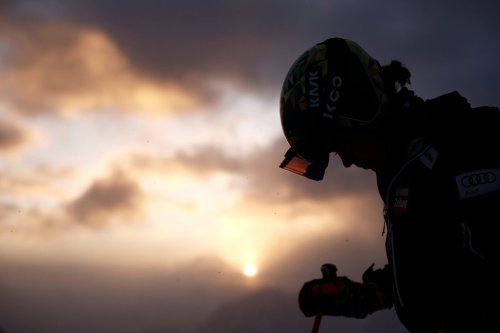
A live camera pans in every direction along the Rettenbach glacier in Soelden, Austria — a way to show the snow status at the resort in the Alps. Instead of blankets of snow everywhere leading into a season-opening World Cup ski race, the images reflected a light dusting — thanks to a recent snowfall — over the rocks, rubble and dirt.
The notable exception was the majestic ribbon of mainly manufactured snow in place for the race last weekend. Granted, it’s early in the season in Soelden. But this sort of minimal-snow scene is playing out all over the planet. The current images at Copper Mountain in Colorado, which is hosting a series of races next month, show only a light coating of snow.
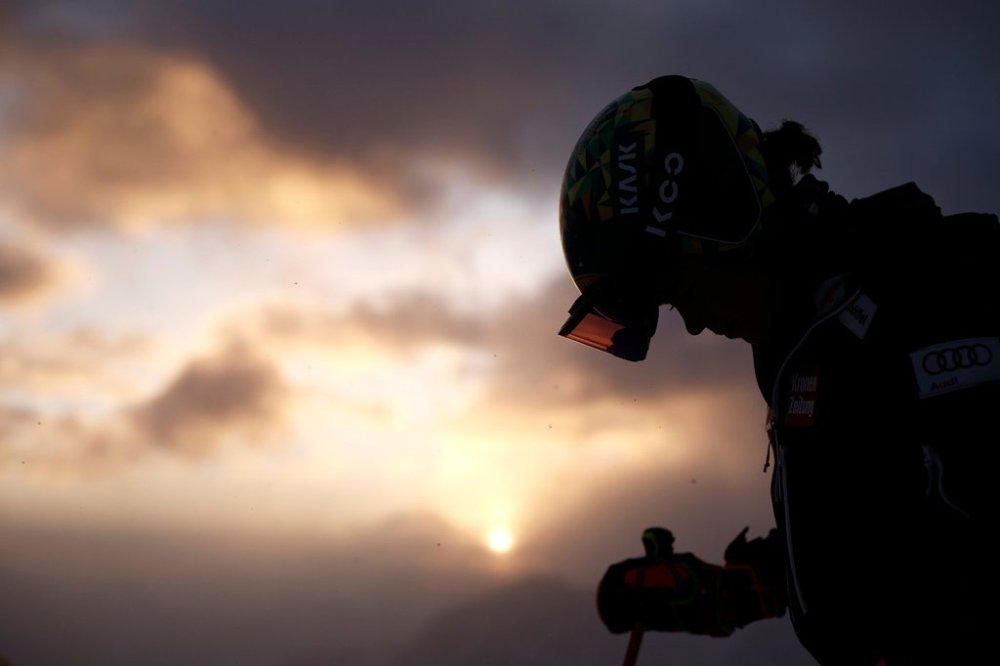
As Earth warms at a record rate, winters are shorter and milder and there is less snow globally, creating clear challenges for winter sports that depend on cold, snowy conditions. With 100 days until the Milan-Cortina Winter Olympic Games begin, many athletes say climate change is shaping their training and perhaps even the future of their sport.
As snowboarder Bea Kim is focused on earning a spot to represent Team USA at the Winter Olympics, she’s also thinking about how long she will be able to do what she loves.
“I’m worried,” Kim said, “for the future of winter.”
Chasing the snow
Canadian freestyle skier Marion Thénault trains in the mountains close to her team’s home base in Quebec City. Two seasons ago, they couldn’t jump there until late in the season because there wasn’t enough snow. In January, they instead trained in Park City, Utah.
“We’re chasing the snow,” she said. “One of the things that is sad is we’re increasing our environmental impact by chasing the snow, so we’re also contributing to the problem.”
Air travel is a significant contributor to climate change because burning jet fuel releases carbon dioxide. Carbon dioxide traps heat in the atmosphere, warming the planet.
Thénault has reduced her own environmental impact by taking buses and trains instead of short flights, not flying home in between competitions and biking all summer. She is working with her sponsor, engineering firm WSP, on a proposal for clustering competitions geographically to reduce air travel.
“At this rate right now, we are not moving in the right direction,” she said. “But we can do something about it.”
Dealing with smoke and slush
When smoke from Canadian wildfires poured into the United States this summer, American cross country skier Julia Kern trained in a gym instead of roller skiing outside.
Climate change is increasing the frequency and intensity of wildfires around the world. As an elite athlete who relies on her lung strength to compete, Kern couldn’t risk breathing in unhealthy air.
“People often just think about the winter and the snowpack,” she said. “But we’re seeing impacts now in our sport also while we’re training in the summer.”
In the winter, Kern is purposefully training more often in slushy conditions because recent world championships have been warm and slushy. She has cut off the sleeves of her uniform at the start of races because it was warmer than she was acclimated to.
Kern uses her platform to advocate for climate action.
“Everyone has a chance to change our future for the better,” she said.
Having a backup plan
Southern Europe, where athletes, coaches and spectators will gather in 100 days, is one of the fastest warming regions. The amount the average winter temperature has risen there since 2000 is comparable to the amount of temperature increase in the Arctic, which is “eyepopping,” said Judah Cohen, a visiting scientist at the Massachusetts Institute of Technology who specializes in winter weather and forecasting.
The dramatic changes in the Arctic are complicating the impact of climate change elsewhere, Cohen added. Some places are now experiencing more severe winter weather with more snow because the rapid warming in the Arctic disrupts the polar vortex, sending frigid air south.
The inconsistent weather makes it more challenging to prepare athletes to compete at major events like the Olympics, said Sophie Goldschmidt, CEO of U.S. Ski & Snowboard, who added that backup plans are needed.
“We’re having to be more flexible, which ultimately costs more money to make sure that our athletes can get the right and best conditions to train on at different points in the year,” she said. “And that means often changing plans and moving locations.”
The future of these sports is “directly tied to the health of our planet,” Goldschmidt added.
Fine line
Norwegian ski racer Aleksander Aamodt Kilde wants to make a difference with climate change. But the two-time Olympic medalist also realizes he races in a sport that travels the world to compete and uses tons of water to manufacture snow for races.
“I am deep down there for a climate specialist or activist. They probably look at me, saying, ‘You are not doing anything. You are a bad role model,’” Kilde said. “I wish I could do way more.”
“I am not an expert,” he added. “I am not a politician. I don’t know much about climate. I know what I do is skiing and that needs snow.”
On the home front
Growing up in Anchorage, Alaska, cross-country skier Gus Schumacher’s playground was always his backyard. He’d click into his skis and venture out into the snowy wilderness.
Last January, when he went home, there was barely any trace of snow. He said it was “pretty depressing.”
Schumacher is part of “Protect Our Winters,” an athlete-driven environmental group. He also spoke in March 2024 at a Senate hearing on climate change and its impact on outdoor recreation, an experience he found gratifying yet intimidating.
He notices climate change around Europe but especially in his Anchorage backyard.
“It’s pretty easy to tell where (glaciers) used to be by the vegetation growth and the rock,” Schumacher said. “That’s a pretty stark reminder.”
Rolling along
To train before the snow falls, members of the U.S. ski mountaineering squad rely on skis on wheels. There’s a paved canyon road in Utah the team uses for cardio work that’s about 2,500 feet (762 meters) of elevation gain.
Ski mountaineering, which makes its Olympic debut this winter, combines trekking uphill before transitioning to skiing downhill. It’s a race that sends the heart pounding.
That’s why Sarah Cookler, the head of sport for U.S. ski mountaineering, provides a shuttle service to transport members of the team to the bottom of the road. She picks them up at the top.
Anything to stay in tip-top shape given that reliable snow conditions are becoming less dependable. Same goes for race day, which is why competitions may need to be held at higher elevations.
In December, a World Cup ski-mountaineering event will be held at Solitude Mountain Resort in Utah. The elevation of the mountain’s base is 7,994 feet (2,437 meters) — higher than typical European races. To get acclimated, several international teams plan to arrive into Utah two weeks early.
“That’s just where we may have to go,” Cookler said. “There’s no (consistent) snow at low elevations anymore.”
Off and running
Of course, there’s always just going for a run. American ski mountaineer Cam Smith is doing more of that these days as a way to stay in endurance shape over the winter — just in case he can’t train on snow.
He’s noticed a difference at competitions in the Alps and Pyrenees.

“Being closer to the oceans, it’s been a huge difference there because they’ve gotten way more mid-winter rain,” Smith explained. “Not only is there less snow falling but then that’s washing away the snow already on the ground. It’s been really stark and noticeable.”
___
AP Sports Writer Andrew Dampf and Associated Press Writer Eric Willemsen contributed.
___
The Associated Press’ climate and environmental coverage receives financial support from multiple private foundations. AP is solely responsible for all content. Find AP’s standards for working with philanthropies, a list of supporters and funded coverage areas at AP.org.
Related Articles
IOC and Saudi Arabia cancel their 12-year deal to host video gaming Esports Olympics in Riyadh



Advertisement Advertise With Us
Advertisement Advertise With Us