Seabirds that look like pint-sized penguins blown ashore in Newfoundland after storms
Advertisement
Read this article for free:
or
Already have an account? Log in here »
To continue reading, please subscribe:

Digital Subscription
One year of digital access for only $205*
- Enjoy unlimited reading on winnipegfreepress.com
- Read the E-Edition, our digital replica newspaper
- Access News Break, our award-winning app
- Play interactive puzzles
*First annual payment billed as $205.00 + GST for one year. This annual subscription will automatically renew at $233.00 + GST every 52 weeks (10% off the regular annual price of $259.35). Offer available to new and qualified returning subscribers only. Cancel any time.
To continue reading, please subscribe:
Add Free Press access to your Brandon Sun subscription for only an additional
$1 for the first 4 weeks*
- Enjoy unlimited reading on winnipegfreepress.com
- Read the E-Edition, our digital replica newspaper
- Access News Break, our award-winning app
- Play interactive puzzles
*Your next Brandon Sun subscription payment will increase by $1.00 and you will be charged $17.95 plus GST for four weeks. After four weeks, your payment will increase to $24.95 plus GST every four weeks.
Read unlimited articles for free today:
or
Already have an account? Log in here »
Hey there, time traveller!
This article was published 31/12/2025 (282 days ago), so information in it may no longer be current.
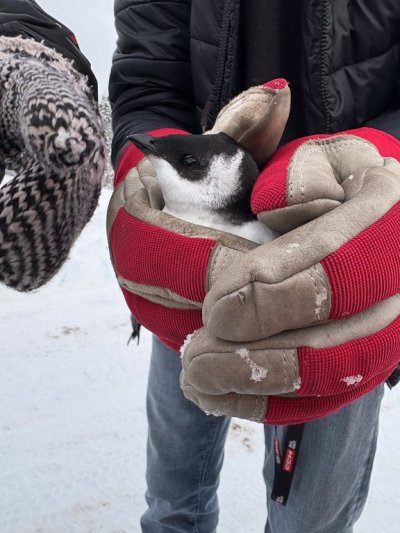
ST. JOHN’S – Scores of tiny seabirds that look like pint-sized penguins have been blown ashore by back-to-back storms in Newfoundland and Labrador.
Dovekies are part of the auk family and live in the cold ocean waters, typically migrating from the Arctic to the North Atlantic Ocean around Newfoundland and Labrador.
But residents have been surprised to find dovekies on local wharfs, front lawns and even on highways, according to social media posts over the past few days.
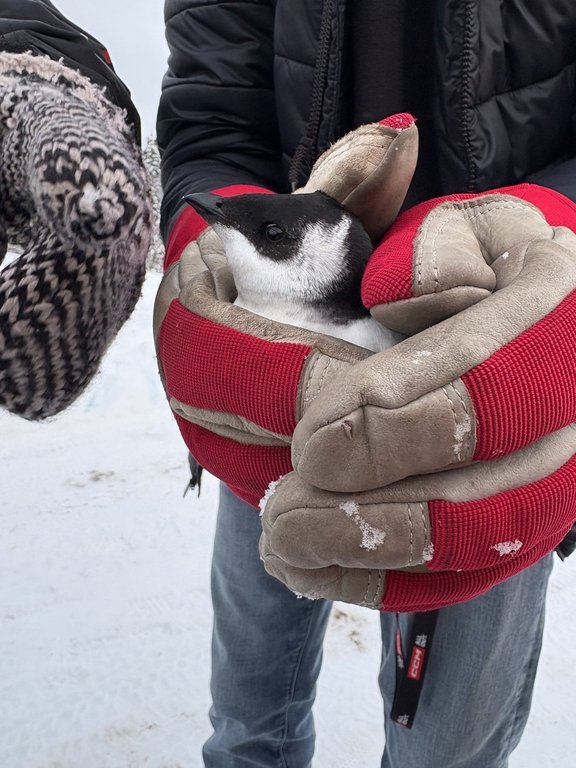
Karen Brown-Gosse with The Rock Wildlife Rescue said she has never seen so many reports at once about wayward dovekies. Her group near St. John’s has received at least 50 calls about them in the past few weeks, she said.
They’re tough little birds, but many have been no match for the howling winds and blowing snow that have pounded the province this month, she said. “They’re exhausted,” Brown-Gosse said. “They can’t withstand that long, fighting these winds and trying to find somewhere to land.”
“They need to get back to the water, and the only way to the water is us,” she added.
Dovekies are divers, and they feed in cracks in the sea ice called leads, Brown-Gosse said. To a dovekie flying over Newfoundland in a storm, a sudden stretch of black highway among the white blowing snow might look like an ice lead.
“So all of a sudden, in this exhaustion and rain and snow and everything else, they just they land,” Brown-Gosse said. “And then they’re shocked by pavement and cars.”
The birds are built to paddle in the ocean, with their legs set back on their bodies toward their tails. That makes it impossible for them to take flight once they’ve touched on land, she said.
Anyone who sees a dovekie — and can safely stop to retrieve it — should gently pick up the bird and put it in a box or even a reusable shopping bag and then take it to the ocean to place in the water, she said.
“They’ll just paddle and go, and then they can take off once they’re where they need to be,” she said.
This report by The Canadian Press was first published Dec. 31, 2025.