How will climate change reshape the Winter Olympics? The list of possible host sites is shrinking
Advertisement
Read this article for free:
or
Already have an account? Log in here »
To continue reading, please subscribe:

Digital Subscription
One year of digital access for only $205*
- Enjoy unlimited reading on winnipegfreepress.com
- Read the E-Edition, our digital replica newspaper
- Access News Break, our award-winning app
- Play interactive puzzles
*First annual payment billed as $205.00 + GST for one year. This annual subscription will automatically renew at $233.00 + GST every 52 weeks (10% off the regular annual price of $259.35). Offer available to new and qualified returning subscribers only. Cancel any time.
To continue reading, please subscribe:
Add Free Press access to your Brandon Sun subscription for only an additional
$1 for the first 4 weeks*
- Enjoy unlimited reading on winnipegfreepress.com
- Read the E-Edition, our digital replica newspaper
- Access News Break, our award-winning app
- Play interactive puzzles
*Your next Brandon Sun subscription payment will increase by $1.00 and you will be charged $17.95 plus GST for four weeks. After four weeks, your payment will increase to $24.95 plus GST every four weeks.
Read unlimited articles for free today:
or
Already have an account? Log in here »
Hey there, time traveller!
This article was published 13/01/2026 (269 days ago), so information in it may no longer be current.
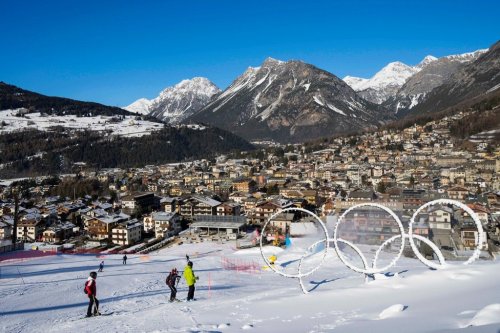
Belgian biathlete Maya Cloetens can’t help but think about the future of winter sports as she trains for next month’s Olympic Games in Milan and Cortina, Italy.
Evidence of climate change is all around her in the mountains above Grenoble, France, where the 24-year-old fell in love with the sport that combines cross-country skiing and shooting.
Grenoble hosted the 1968 Winter Olympics, but its winters are shorter and milder nowadays, and with less consistent heavy snowfall. When the games return to the French Alps in 2030, Grenoble won’t be the focal point.

“I grew up there, and I really see the difference of snow,” Cloetens said. “In 15 years, it has completely changed.”
With the Earth warming at a record rate, the list of locales that could reliably host a Winter Games will shrink substantially in the coming years, according to researchers. The situation is serious enough that the International Olympic Committee is considering rotating the games among a permanent pool of suitable locations and holding them earlier in the season because March is getting too warm for the Paralympic Games, said Karl Stoss, who chairs the games’ Future Host Commission.
Dwindling hosts
Out of 93 mountain locations that currently have the winter sports infrastructure to host elite competition, only 52 should have the snow depth and sufficiently cold temperatures to be able to host a Winter Olympics in the 2050s, according research conducted by University of Waterloo professor Daniel Scott and University of Innsbruck associate professor Robert Steiger that the IOC is using. The number could drop to as low as 30 by the 2080s, depending on how much the world curbs carbon dioxide pollution.
And, the IOC prioritizes locations with at least 80% existing venues, making the pool of potential hosts significantly smaller.
The situation is bleaker for the Paralympic Winter Games, which are typically held at the same venues two weeks after the Winter Olympics conclude. However, Scott said he and Steiger found that starting both sets of games about three weeks earlier would almost double the number of reliable locations for the Paralympic Games. Their modeling presumes advanced snowmaking, finding that there are almost no locations that could reliably host the snow sports without snowmaking by mid-century.
Grenoble isn’t the only past host that the researchers believe won’t be “climate reliable” enough to do it again by the 2050s. Chamonix, France, Garmisch-Partenkirchen, Germany, and Sochi, Russia, also didn’t make the cut, while past venues in Vancouver, Canada; Palisades Tahoe, California; Sarajevo, Bosnia-Herzegovina; and Oslo, Norway, would be “climatically risky.”
“Climate change is going to change the geography of where we can hold the Winter Olympics and the Paralympics. There’s no question,” Scott said. “The only question is, how much?”
Relying on snowmaking, for now
Manufactured snow was first used for the Winter Games in 1980 in Lake Placid, New York. Beijing was the first to rely almost entirely on snowmaking in 2022.
For these Olympics, the organizing committee plans to make nearly 2.4 million cubic meters (3.1 million cubic yards) of snow. In contrast, when Cortina hosted the 1956 Olympics, no manufactured snow was used, though the Italian army did transport truckloads of snow down from the Dolomites.
The Italian company supplying nearly all of the new snowmaking systems, TechnoAlpin, developed technology to make snow in temperatures well above freezing. The company said it sent its “SnowFactory” to Antholz — the biathlon site — to guarantee sufficient snow cover.
Davide Cerato oversees snowmaking operations at several Olympic venues. With the newest systems, he said, they can make a lot of snow, efficiently, even at marginal snowmaking temperatures— for the moment.
“But I don’t know in the future,” he said.
Northern Italy is known for its cold, snowy winters. But seasonal snowfall has reduced considerably throughout the Alpine region, with the sharpest declines mainly over the last 40 years due to the temperature increase.
Italian climatologist Luca Mercalli recalls looking at the Alps from his home in Turin, Italy, 50 years ago and seeing the mountains white with snow from late October until June. Now, he often sees gray.
Snowmaking has its limits
One of the foremost experts on building a ski racing course is Wyoming rancher Tom Johnston. To him, manufactured snow is preferable over what Mother Nature can deliver – with one caveat.
“I need her colder temps,” Johnston said.
Traditional snowmaking equipment requires cold temperatures and low humidity. Europe is the fastest-warming continent.
It takes an immense about of energy and water to make snow. That can make climate change worse if the electricity is supplied by burning fossil fuels, and can exacerbate water issues in regions where it’s scarce. For Milan Cortina, electricity partner Enel is guaranteeing entirely renewable and certified electricity.
The organizing committee estimates needing 250 million gallons (946 million liters) of water, the equivalent of nearly 380 Olympic swimming pools, for snowmaking. It carved out new high-elevation water reservoirs, or lakes, to store it.
“Without water, there are no Games,” said Carmen de Jong, a University of Strasbourg hydrology professor.
She is critical of building reservoirs that alter the natural ecosystem, though sees no solution— the appetite for artificial snow will only increase due to climate change.
Planning for the future
Events like the Olympics draw participants and fans from around the world and have always contributed to climate change. Many people fly there, new venues are built and a lot of electricity is used to power them, emitting vast amounts of carbon pollution.
Recognizing this, the IOC is requiring hosts to minimize their water and electricity use and avoid unnecessary construction. It may need to eventually reduce the number of sports, athletes and spectators who attend, said Stoss, the Future Host Commission chair.
As the leading organization for sport, Stoss said, it’s the IOC’s responsibility to show how to protect winter sports for the long term.
The IOC picked the French Alps for the 2030 Winter Olympics and Salt Lake City, Utah for 2034. It’s talking exclusively with Switzerland about 2038. Stoss said he likes Switzerland because of its existing infrastructure and excellent public transportation.

He said this is the future, choosing countries with good conditions and high standards for protecting the climate. He praised Milan-Cortina for using mostly existing venues and reducing the games’ environmental impact.
Diana Bianchedi, the organizing committee’s chief strategy, planning and legacy officer, said that from the very beginning, they sought to model a more sustainable future, both for the Olympic movement and for larger social transformation.
“This is the point,” she said, “where we have to change.”
___
The Associated Press’ climate and environmental coverage receives financial support from multiple private foundations. AP is solely responsible for all content. Find AP’s standards for working with philanthropies, a list of supporters and funded coverage areas at AP.org.
Related Articles
Tiger's lost tooth in Cortina. Bode's 1-ski show in Bormio. Olympic Alpine slopes filled with tales




Advertisement Advertise With Us
Advertisement Advertise With Us