Rising coal demand overshadows Southeast Asia’s transition to renewable energy
Advertisement
Read this article for free:
or
Already have an account? Log in here »
To continue reading, please subscribe:

Digital Subscription
One year of digital access for only $205*
- Enjoy unlimited reading on winnipegfreepress.com
- Read the E-Edition, our digital replica newspaper
- Access News Break, our award-winning app
- Play interactive puzzles
*First annual payment billed as $205.00 + GST for one year. This annual subscription will automatically renew at $233.00 + GST every 52 weeks (10% off the regular annual price of $259.35). Offer available to new and qualified returning subscribers only. Cancel any time.
To continue reading, please subscribe:
Add Free Press access to your Brandon Sun subscription for only an additional
$1 for the first 4 weeks*
- Enjoy unlimited reading on winnipegfreepress.com
- Read the E-Edition, our digital replica newspaper
- Access News Break, our award-winning app
- Play interactive puzzles
*Your next Brandon Sun subscription payment will increase by $1.00 and you will be charged $17.95 plus GST for four weeks. After four weeks, your payment will increase to $24.95 plus GST every four weeks.
Read unlimited articles for free today:
or
Already have an account? Log in here »
Hey there, time traveller!
This article was published 21/01/2026 (258 days ago), so information in it may no longer be current.
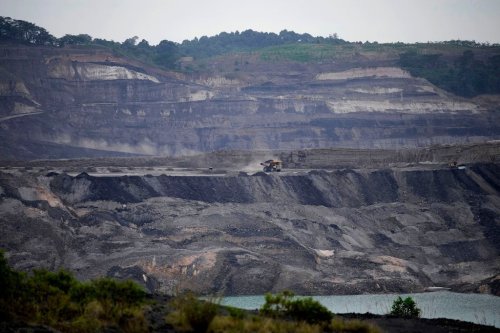
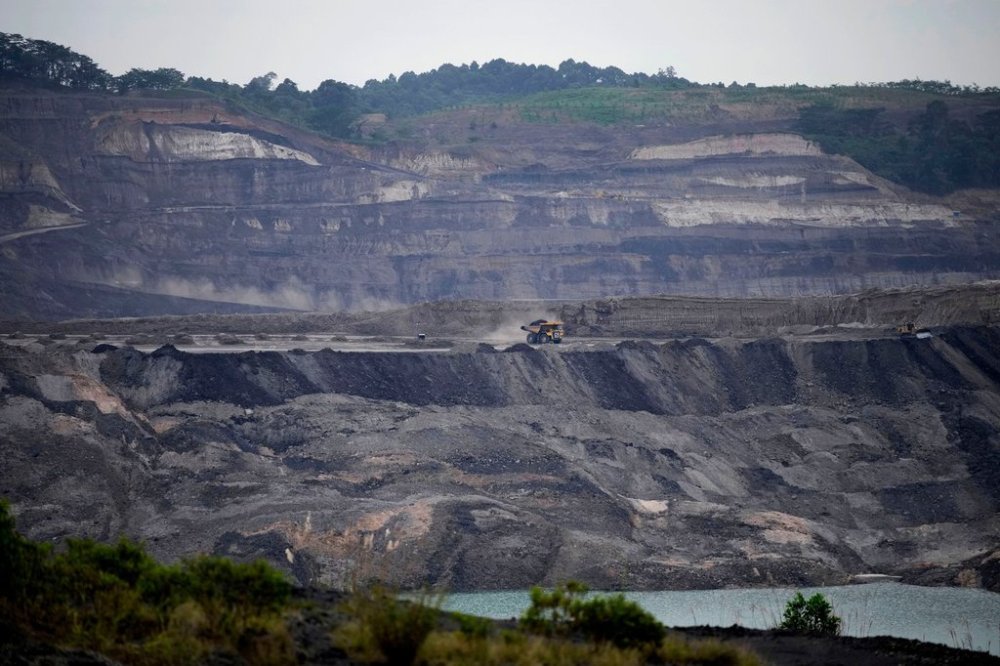
HANOI, Vietnam (AP) — Southeast Asia’s demand for coal is growing faster than anywhere else in the world, undermining efforts to lower carbon emissions that contribute to global warming.
Regional coal demand will rise by more than 4% a year through the end of the decade, driven by rising needs for electricity as economies grow across the region of more than 600 million, according to a recent International Energy Agency report. Indonesia, a nation of about 285 million people, will account for more than half of that, followed by Vietnam.
The trends raise questions over the $15.5 billion-dollar deals both countries signed in 2022 in Just Energy Transition Partnerships, or JETP, to help fund their renewable energy transitions. Moves under U.S. President Donald Trump to reverse policies meant to address climate change add to the challenges.
This is a decisive decade for Southeast Asia as the region bears much of the burden of extreme weather and other impacts from climate change.
“We’re standing on two opposite grounds — wanting to build clean energy, but not letting go entirely of coal,” said Katherine Hasan, an analyst with the Centre for Research on Energy and Clean Air, a Finland-registered think tank.
Coal emits more planet heating emissions than other fossil fuels like oil and gas when it is burned. Pollution from coal also adds to toxic haze that often blankets many Southeast Asian cities.
Southeast Asia’s coal dependence lingers
Coal supplies just over a third of Southeast Asia’s electricity, the IEA says, making it the third-largest coal-consuming region in the world after India and China.
Global coal demand is expected to plateau as alternatives expand and major coal buyers like South Korea cut back.
But Southeast Asia is headed in the opposite direction. The two main factors driving that trend are cost and energy security.
“Nobody burns coal for fun,” said Paul Baruya of FutureCoal, a group backed by the fossil fuel industry, formerly known as the World Coal Association.
“Coal still underpins a level of energy security that the region needs,” he said, noting that coal cutbacks would mean writing off billions of dollars’ worth of fossil fuel-related infrastructure including power plants and mines.
A recent regional survey by Singapore’s ISEAS–Yusof Ishak Institute found a growing public preference for delaying giving up coal until 2030 or even 2040, as concerns over adequate power supplies and costs counter worries about climate change.
Governments across the region are echoing that logic.
“What is important is that our government is firm in its stance that there will be no phase-out of fossil fuels,” said Hashim Djojohadikusumo, brother to Indonesian President Prabowo Subianto and the country’s special climate envoy, last month.
“We’ve rejected that; we’re sticking with a phase-down,” he said. “Indonesia’s economy, especially its industry and electricity sector, will continue to rely on fossil fuels.”
Indonesia backtracks on coal phase out
Indonesia is the world’s largest coal exporter and Southeast Asia’s biggest carbon emitter making it vital for the region ’s energy transition.
“If Indonesia cannot transition away from coal, then why would other developing countries?” said Dinita Setyawati, with the United Kingdom-registered think tank Ember. “For Indonesia, it’s not so much a fear of the unknown, but a reluctance to change and the inertia of change.”
A years-long effort to retire a coal plant in West Java fell through last month, highlighting Indonesia’s struggle to move beyond coal.
Indonesia’s updated climate pledge, which dropped a promise to phase out coal by 2040, was rated “critically insufficient” by Climate Action Tracker, which said the country’s aims don’t align with the Paris Climate Agreement.
Currently, Indonesia is considering re-opening the door for future construction of new coal plants.
This is despite mounting costs from climate change. Last year more than 700 people were killed in deadly floods and landslides associated with extreme weather worsened by climate change.
Continued coal use will also likely worsen Indonesia’s air pollution, especially in cities like Jakarta.
Vietnam reaches energy crossroads
Vietnam has stood out in fossil fuel-dependent Southeast Asia, expanding its solar generating capacity from 4 megawatts in 2015 to 16 gigawatts a decade later. It has plans to grow that to as much as 73.4 gigawatts by 2030 and up to 295 gigawatts by 2050.
Yet coal use is still rising.
Vietnam hit a record-high in 2025 with the import of more than 65 million metric tonnes of coal, which was up 2.6% by volume from a year earlier, according to the latest data from Vietnam’s customs department.
That partly reflects caution over generating capacity following power shortages in 2023, when a drought sapped hydropower output, causing about $1.4 billion in losses, according to the World Bank.
In order to sustain GDP growth of around 10% a year through 2030, Vietnam aims to increase electricity sales to the point that they are equivalent to Germany’s current annual energy consumption.
It has allowed large companies like Danish toymaker LEGO and South Korean manufacturer Samsung, to buy electricity directly from Vietnamese wind and solar power producers to meet their climate targets. This could potentially double Vietnam’s renewable energy share from about 19% to 42%, Ember says.
However, Vietnam’s power grid is already under strain from the rapid, uneven rollout of renewables and years of underinvestment in transmission equipment. The government estimates it needs about $18 billion by 2030 to upgrade the system. But progress has been slow, and funding committed so far covers only a fraction of the need.
A pushback on clean energy transitions
The momentum for JETP-backed projects in Indonesia and Vietnam is unlikely to pick up this year, according to Putra Adhiguna, with the Jakarta-based think tank, the Energy Shift Institute.
Indonesia’s cancellation of the early retirement of the West Java coal plant, and the 2025 U.S. withdrawal from JETP under the Trump administration, has shaken faith in the rollout of tangible projects in 2026.
Expectations for the billion-dollar JETP deals were set too high, Adhiguna said.

“JETP was basically a brute force attempt to do a transition,” he said. “Governments were trying to bulldoze through … But fundamentally there are things that take a bit of time and political commitment to happen.”
___
Delgado reported from Bangkok. Associated Press writer Edna Tarigan in Jakarta contributed to this report.
___
The Associated Press’ climate and environmental coverage receives financial support from multiple private foundations. The AP is solely responsible for all content. Find AP’s standards for working with philanthropies, a list of supporters and funded coverage areas at AP.org.