Federal government needs more desk space as public servants return to office: PSPC

Advertisement

Advertise with us

OTTAWA - In less than three months, the federal government's order requiring most public servants to attend the office four days a week — up from the current benchmark of three days — takes effect.

Read this article for free:


or

Already have an account? Log in here »

To continue reading, please subscribe:

Subscribe and receive a limited-edition Free Press branded hat or tote.

Digital Subscription

One year of digital access for only $205*

  • Enjoy unlimited reading on winnipegfreepress.com
  • Read the E-Edition, our digital replica newspaper
  • Access News Break, our award-winning app
  • Play interactive puzzles

*First annual payment billed as $205.00 + GST for one year. This annual subscription will automatically renew at $233.00 + GST every 52 weeks (10% off the regular annual price of $259.35). Offer available to new and qualified returning subscribers only. Cancel any time.

To continue reading, please subscribe:

Add Free Press access to your Brandon Sun subscription for only an additional

$1 for the first 4 weeks*

  • Enjoy unlimited reading on winnipegfreepress.com
  • Read the E-Edition, our digital replica newspaper
  • Access News Break, our award-winning app
  • Play interactive puzzles
Start now

*Your next Brandon Sun subscription payment will increase by $1.00 and you will be charged $17.95 plus GST for four weeks. After four weeks, your payment will increase to $24.95 plus GST every four weeks.

OTTAWA – In less than three months, the federal government’s order requiring most public servants to attend the office four days a week — up from the current benchmark of three days — takes effect.

There’s just one hitch. It doesn’t have room for all of them.

Michèle LaRose, a spokesperson for Public Services and Procurement Canada, said the department’s analysis shows certain departments will need more workstations or more space in certain locations to accommodate the shift to in-office work four days a week.

A person works on a spreadsheet in a photo illustration made in Toronto, on Monday, Sept. 22, 2025. THE CANADIAN PRESS/Sammy Kogan

LaRose said she couldn’t say which buildings are short of workstations or how many more spaces are needed.

“We are currently working with departments to define their specific operational requirements,” she said. “Because this collaborative process is still underway, we are unable to provide exact figures regarding the four-day on-site presence requirement over the next several months.”

LaRose said the department is working with other departments and agencies to find solutions by identifying underutilized space and renewing existing leases, and possibly by acquiring additional space.

“PSPC uses its operating budget to invest in maintenance, ensuring that buildings remain safe and suitable for employees as on‑site work requirements increase,” she said.

Core federal employees have been working three days in-office since September 2024, after the standard increased from two days. In March 2020, most public servants were told to work remotely as the COVID-19 pandemic began.

The new directive officially applies only to public servants working in the core departments and agencies under Treasury Board, though some separate agencies — like the Canada Revenue Agency and the National Research Council — have said they intend to follow the same approach.

Under the directive, executives in the public service will be required to be in the office full-time as of May 4.

The government says it doesn’t anticipate any problems finding space for the executives — but that’s not the case for most workers.

Since 2020, when remote work began, the public service has grown by more than 57,000 people — an increase of almost 20 per cent. Some of those staffers have never worked full-time in a federal office.

Meanwhile, Ottawa has been trying to off-load office space.

Budget 2024 committed Public Services and Procurement Canada to reducing its stock of office space by 50 per cent over 10 years through sales or leases.

The department said earlier this year that target will be adjusted to reflect the fact that public servants will be spending more time in the office.

In a recent memo to federal employees, the department said it’s keeping several co-working spaces across the country open for six months beyond March 31.

There are about a dozen such spaces, known as “GCcoworking sites,” in the National Capital Region and in cities across the country, including Dartmouth, N.S., and Vancouver. Some of those spaces opened in 2019.

The memo said one site in Gatineau, Que., is closing in June.

“This extension will help ensure decisions are informed, sustainable and aligned with the newly announced four-day in-office direction,” said the memo.

The memo said the co-working sites provide additional workspace options and are not meant to replace departmental workplaces. It said staff needing a workspace for hybrid work requirements should contact their supervisor or departmental workplace authority.

Federal unions have warned that many departments have struggled even the current three-days-a-week return-to-office rules because of a lack of space.

Public servants have said that, in some departments, employees need to book desk space a month in advance, with different staff using the same desks on different days.

Sharon DeSousa, national president of the Public Service Alliance of Canada, said in an email the union has warned from the start there isn’t enough office space or workstations to support a four-day in-office mandate.

“Under the current policy, shared desks are already fully booked in many departments,” she said.

“This is to say nothing of the deplorable state of many government buildings, where workers are dealing with workplaces infested with bedbugs, mice and even bats.”

Pests were spotted in federal buildings across the country more than 960 times between April and November 2025. Public Services and Procurement Canada said late last year the pests included — but were “not limited to” — bats, birds, ants, bedbugs, bees, wasps and other small insects, mice and other rodents.

Public Services and Procurement Canada said 58 per cent of Crown-owned office buildings were assessed as being in “fair or better condition” as of March 2025.

The department said that includes buildings undergoing major long-term rehabilitation, like Place du Portage III in Gatineau, Que., and the Lester B. Pearson Building in Ottawa.

This report by The Canadian Press was first published April 15, 2026. 

Report Error Submit a Tip

More Stories

Manitoba mineral production set to triple, premier says

Carol Sanders 5 minute read Preview

Manitoba mineral production set to triple, premier says

Carol Sanders 5 minute read Updated: Yesterday at 5:19 PM CDT

Premier Wab Kinew said Tuesday Manitoba plans to triple mineral production in the next five years “to unlock a new era of wealth creation and growth.”

“We’re going to make sure that opportunity is spread throughout the province,” he told a news conference at the Canada investment summit in Toronto.

The province is working with industry and Indigenous governments to send a message to investors that “we’re going to do mining right in Manitoba,” the premier said.

For too long, Manitoba has lagged behind neighbouring provinces, Kinew said.

Read
Updated: Yesterday at 5:19 PM CDT

Transit safety drives first mayoral debate

Morgan Modjeski 4 minute read Preview

Transit safety drives first mayoral debate

Morgan Modjeski 4 minute read Yesterday at 2:01 AM CDT

The safety of Winnipeg Transit drivers was front and centre Monday as the first mayoral debate of the 2026 election focused on public transit.

Kevin Klein, the most experienced of the 10 candidates at the Amalgamated Transit Union 1505-hosted debate, said the time for partial safety shields has passed.

“The partial shields have failed drivers. That’s why we need change,” the former PC MLA and city councillor said, adding driver safety is not a staffing issue, but a “protection failure.”

If elected, Klein said he will bring in full-shield implementation across the city within two years and start a nine-bus pilot project immediately.

Read
Yesterday at 2:01 AM CDT

What to watch as puck drops on Jets training camp

Mike McIntyre and Ken Wiebe 10 minute read Preview

What to watch as puck drops on Jets training camp

Mike McIntyre and Ken Wiebe 10 minute read 2:44 PM CDT

Welcome to a Winnipeg Jets training camp like no other — one where the on-ice storylines and battles threaten to be trumped by what’s happening away from the rink.

Yes, the dark cloud that is the Connor Hellebuyck situation looms over the organization as it prepares to try and turn the page on a terrible 2025-26 campaign which ended with a 26th-overall finish.

It’s not going to be easy, especially in a highly competitive Central Division and Western Conference and with such a major unresolved issue.

But the work starts now, and Free Press hockey writers Mike McIntyre and Ken Wiebe get you set for what to expect ahead of the 84-game regular season, which begins Oct. 2.

Read
2:44 PM CDT

Teenage e-scooter driver in critical condition after crash

Chris Kitching 6 minute read Preview

Teenage e-scooter driver in critical condition after crash

Chris Kitching 6 minute read Updated: 5:50 PM CDT

A teenager riding an e-scooter suffered life-threatening injuries when he was struck by an SUV in southwest Winnipeg on Monday night.

Witnesses provided first aid to the injured rider, who police said is under 18, after the collision happened at Waverley Street and Arbour Meadow Gate/Lake Crest Road at about 9:30 p.m.

“It feels like it happened in slow motion,” said driver Audrey Vanderspek, who was waiting at a red light when she witnessed the incident. “Maybe it’s because you’re helpless, that it just feels like everything slows down in the moment.”

Police said the electric scooter rider was crossing Waverley and was hit by a southbound 2010 Honda CR-V. The posted speed limit on that stretch of Waverley is 70 kilometres per hour.

Read
Updated: 5:50 PM CDT

Federal government needs more desk space as public servants return to office: PSPC

Catherine Morrison, The Canadian Press 5 minute read Preview

Federal government needs more desk space as public servants return to office: PSPC

Catherine Morrison, The Canadian Press 5 minute read Friday, Apr. 17, 2026

OTTAWA - In less than three months, the federal government's order requiring most public servants to attend the office four days a week — up from the current benchmark of three days — takes effect.

There's just one hitch. It doesn't have room for all of them.

Michèle LaRose, a spokesperson for Public Services and Procurement Canada, said the department's analysis shows certain departments will need more workstations or more space in certain locations to accommodate the shift to in-office work four days a week.

LaRose said she couldn't say which buildings are short of workstations or how many more spaces are needed.

Read
Friday, Apr. 17, 2026

Federal Court awards OCN $27M, 62 years after construction of hydro dam

Nicole Buffie 5 minute read Preview

Federal Court awards OCN $27M, 62 years after construction of hydro dam

Nicole Buffie 5 minute read Updated: 12:02 PM CDT

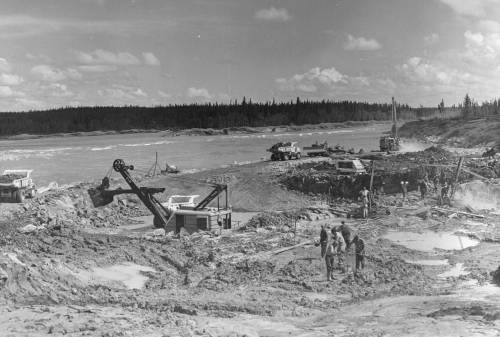
The Federal Court has ordered Ottawa pay Opaskwayak Cree Nation $27 million over damages suffered due to the construction of the Grand Rapids hydro dam in the 1960s.

In a decision dated Sept. 3, Federal Court Justice Sébastien Grammond says the federal government had a fiduciary duty to protect the community from the impacts of the dam.

“When the Crown exercises a discretionary power over an Indigenous interest, it has a fiduciary duty and it must exercise the discretion in the best interests of the Indigenous group,” the ruling said. “Canada breached its fiduciary duty to OCN because it approved the (project) without ensuring that the impacts of the Grand Rapids dam on OCN’s traditional way of life were mitigated or compensated.”

The First Nation took the federal government to court in February over impacts on the community after the dam, located about 145 kilometres southeast of Opaskwayak Cree Nation, was installed on the Saskatchewan River in 1964. The case was heard over 14 days in a judge-alone trial in Winnipeg.

Read
Updated: 12:02 PM CDT