Fishermen prepared for the longest red snapper season in recent memory. A court order stopped it
Advertisement
Read this article for free:
or
Already have an account? Log in here »
To continue reading, please subscribe:

Digital Subscription
One year of digital access for only $205*
- Enjoy unlimited reading on winnipegfreepress.com
- Read the E-Edition, our digital replica newspaper
- Access News Break, our award-winning app
- Play interactive puzzles
*First annual payment billed as $205.00 + GST for one year. This annual subscription will automatically renew at $233.00 + GST every 52 weeks (10% off the regular annual price of $259.35). Offer available to new and qualified returning subscribers only. Cancel any time.
To continue reading, please subscribe:
Add Free Press access to your Brandon Sun subscription for only an additional
$1 for the first 4 weeks*
- Enjoy unlimited reading on winnipegfreepress.com
- Read the E-Edition, our digital replica newspaper
- Access News Break, our award-winning app
- Play interactive puzzles
*Your next Brandon Sun subscription payment will increase by $1.00 and you will be charged $17.95 plus GST for four weeks. After four weeks, your payment will increase to $24.95 plus GST every four weeks.
Read unlimited articles for free today:
or
Already have an account? Log in here »
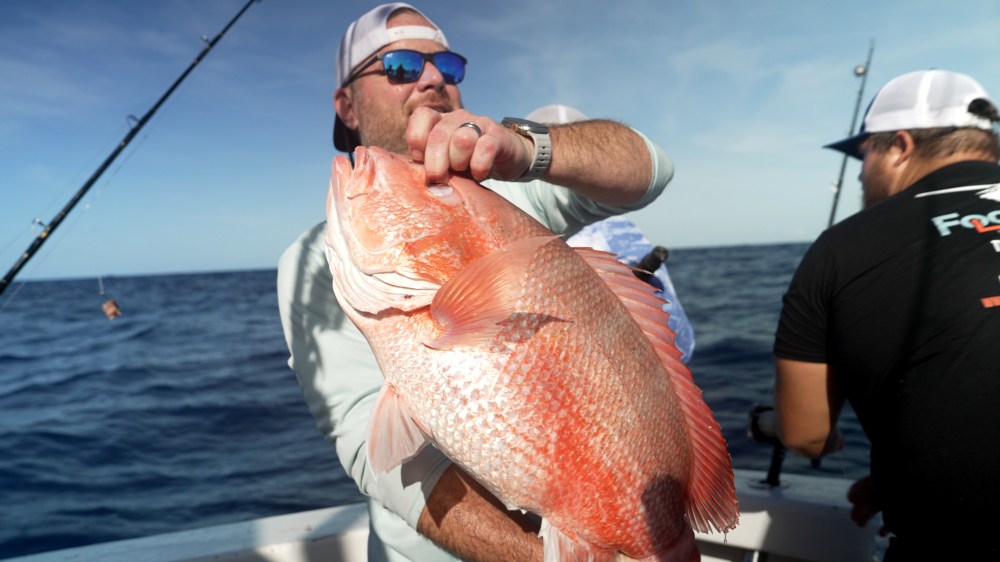
ST. AUGUSTINE, Fla. (AP) — Miles from shore, Chris Kemp pumps and reels as he battles a fish 150 feet below. Eventually, it gives up, and the 10-pound red snapper is hauled aboard the Jodie Lynn II.
There’s barely time to rejoice. As Kemp raises his trophy for a picture, the charter boat’s captain rushes over and then drives a knifelike tool into the fish’s gas-filled bladder. The procedure, required by federal law, is intended to improve the fish’s chances of survival after release.
“Send it overboard,” orders the captain. And with that, Kemp’s hopes of bringing the fish home to eat was lost.
Recreational fishermen like Kemp are pitched against commercial fishermen and environmentalists in a legal dispute that has halted what was expected to be the longest snapper season in years, reflecting broader tensions over the Trump administration’s efforts to loosen fishing rules and deregulate the seas.
As part of those efforts, the National Oceanic and Atmospheric Administration in May exempted states from some restrictions under the Magnuson-Stevens Act, the landmark law that guides fisheries management. But the decision was halted at the last minute by a federal judge in Washington who blocked the plan.
The Atlantic red snapper is known for both its fighting ability and popularity at the dinner table. After decades of overfishing, regulators in 2010 restricted recreational fishing to only a handful of days each year — when not banned altogether.
Starting last year, Florida Gov. Ron DeSantis led a charge with officials in Georgia, North Carolina and South Carolina to take over management of the recreational Atlantic snapper fishery, casting the effort as guaranteeing anglers’ “God-given right to fish.”
In May, NOAA issued special permits exempting the states from some legal requirements to protect fish. Instead of imposing wholesale fishing bans on bottom fishing each winter, as NOAA had proposed last year, the agency set up an Atlantic snapper season in four states ranging from 39 to 62 days, allowing anglers to keep one fish per day.
“We were excited,” said Kemp, who booked a charter to coincide with the season’s opening day.
Court battle pits recreational anglers against commercial fishermen
The conflict landed in court just before the season was about to begin May 22, and U.S. District Judge Rudolph Contreras issued an injunction based in part on environmental concerns. He relied on estimates from the nonprofit Ocean Conservancy suggesting recreational catches could reach up to 485,000 in Florida alone during the expanded season — 20 times the number of landed catch allowed.
Kemp learned about the judge’s order from a text message sent by a friend while driving to the marina.
“Originally we thought it was a joke, given the severity,” said Kemp.
The ruling sparked immediate backlash. Florida wildlife officials denounced the decision as the work of a “rogue federal judge,” while some fishermen involved in the lawsuit reported receiving threats after DeSantis falsely accused them of trying to commandeer the quota all for themselves.
One of the plaintiffs, North Carolina fisherman Jeff Oden, said commercial fishermen are struggling to survive amid rising costs and competition from imported seafood. He worries that expanded recreational harvests could leave too few snapper available when the commercial season begins later this year.
“We’re vanishing,” Oden said. “You as a consumer, you’re the loser.”
Stock is rebounding but scientists urge caution
The dispute stems in part from disagreements over the health of the fishery. NOAA estimates that roughly one-quarter of released red snapper die, despite techniques designed to improve their survival like puncturing the bladder to reduce gases that build up in their bladder when pulled up, hindering them from returning to the ocean’s depths where they live.
Yet many fishermen argue the stock is thriving. Kemp’s group hooked about a dozen fish within 40 minutes of arriving to a reef off Florida’s coast.
“To be completely honest, we have never seen an unhealthy stock,” said Haley Stephens, who with her husband operates the Sea Spirit, a charter boat in Ponce Inlet, Florida.
Scientists counter that the abundance of younger fish is misleading and point to biological sampling that indicates most fish being caught haven’t reached the peak of their reproductive maturity.
“It’s tricky because this is a rebuilding fish stock,” said Meredith Moore, a program director at Ocean Conservancy. “So people out in the water are seeing more of the fish than they have seen in a long time, and so that gives them the sense that everything is great.”
NOAA declined to comment on the snapper dispute, citing ongoing litigation. However, it said that it is working with fisheries managers across the country “to better prioritize work around existing resources, explore efficiencies, and streamline operations” in accordance with the “Restoring American Seafood Competitiveness” executive order signed last year by President Donald Trump.
The judge, in his ruling, faulted Florida and the other states for declining to provide their own harvest projections. Officials, however, argued that existing federal estimates were unreliable and would eventually be replaced with improved state-collected data.
Oden said he understands the frustrations of recreational anglers but believes everyone must share the burden of conservation.
“There’s only so many fish to go around,” he said.
___
Wieffering reported from Washington. Serginho Roosblad contributed from Washington.
—-
The Associated Press receives financial support from multiple private foundations. AP is solely responsible for all content. Find AP’s standards for working with philanthropies, a list of supporters and funded coverage areas at AP.org.