This air conditioning strategy is the sweet spot for saving energy and money, experts say
Advertisement
Read this article for free:
or
Already have an account? Log in here »
To continue reading, please subscribe:

Digital Subscription
One year of digital access for only $205*
- Enjoy unlimited reading on winnipegfreepress.com
- Read the E-Edition, our digital replica newspaper
- Access News Break, our award-winning app
- Play interactive puzzles
*First annual payment billed as $205.00 + GST for one year. This annual subscription will automatically renew at $233.00 + GST every 52 weeks (10% off the regular annual price of $259.35). Offer available to new and qualified returning subscribers only. Cancel any time.
To continue reading, please subscribe:
Add Free Press access to your Brandon Sun subscription for only an additional
$1 for the first 4 weeks*
- Enjoy unlimited reading on winnipegfreepress.com
- Read the E-Edition, our digital replica newspaper
- Access News Break, our award-winning app
- Play interactive puzzles
*Your next Brandon Sun subscription payment will increase by $1.00 and you will be charged $17.95 plus GST for four weeks. After four weeks, your payment will increase to $24.95 plus GST every four weeks.
Read unlimited articles for free today:
or
Already have an account? Log in here »
Having air conditioning at home is a luxury that keeps people comfortable during the hottest months of the year, and it’s debated whether the AC should stay blasting or be turned off when people head to work during the day.
Some swear that turning off the AC when they’re gone for a few hours is the most energy-efficient, cost-saving method. Others say it’s better to leave it running continuously, preventing the system from straining to rapidly cool the house down after the home has gotten warmer throughout the day.
Three experts interviewed by The Associated Press agreed that setting the thermostat a few degrees higher than normal while you’re away is generally the best way to balance energy efficiency against comfort and humidity.
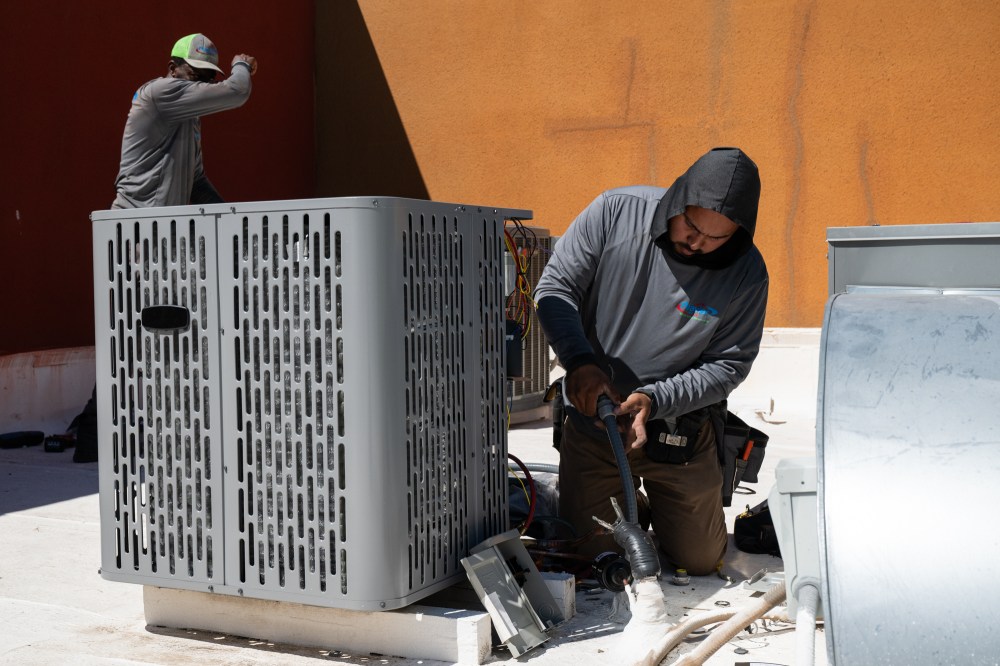
While turning an AC unit off for several hours and turning it back on can save money and energy compared to continuously running it, that approach can lead to mold problems in humid environments as well as wear and tear that can cause more frequent repairs. The equation can also vary depending on other factors including comfort level, AC unit type and building insulation.
Air conditioning strategies differ in humid or dry climates
According to the U.S. Department of Energy, adjusting your thermostat by 7-10 degrees Fahrenheit (4-6 degrees Celsius) for eight hours a day can save up to 10% a year on heating and cooling.
Experts say there are a lot of factors to consider when deciding what AC habits save the most energy and money.
“If you’re gone for like 15 minutes to go to the grocery store, you don’t get any gain” by turning off your AC, said Elizabeth Hewitt, professor and urban planning expert at Stony Brook University.
But as a general rule, “if you’re going for your work day, say for eight hours or so, you’ll almost always save more energy and money by turning things off,” she said.
In some climates, however, turning off the AC might not be feasible, so residents can set back their AC a few degrees instead of blasting cold air all day.
In dry places like Arizona, you can let the home warm up more by raising the thermostat a few degrees higher. But in humid climates like Florida, air inside the home can become damp and harder to cool, and turning the AC off for long periods can increase the risk of mold since the system helps control indoor moisture.
Bumping up the thermostat by 1 degree Fahrenheit (0.6 degrees Celsius) yields about a 3% savings in cooling costs, said Patrick Phelan, mechanical engineering professor at Arizona State University.
Phelan also said leaving your AC off for hours and then turning it back on could lead to wear that results in more frequent repairs. That is because it can take AC systems 15 to 30 minutes after they are turned on to perform most efficiently.
How much energy and money you can save depends on the kind of home you live in, said Gregor Henze, an architectural engineering professor at the University of Colorado Boulder.
Homes built with heavy materials like concrete or brick hold in cool air longer, while older, draftier houses heat up faster. In less insulated homes, Henze said, it makes sense to adjust the thermostat even if you’re stepping out for just a few hours, because the indoor temperature can rise quickly.
Some AC units save more energy than others
Whether you have a window unit, a smart thermometer or central air could influence your savings.
Window units are generally less efficient because they’re installed in an open window, making it difficult to seal out hot air completely, said Hewitt. She added that spraying “cheap foam spray insulation in open windows or areas that are drafty is a really low-hanging fruit that doesn’t cost a lot of money and really helps retain the indoor temperature in your home.”
Phelan says smart thermostats are a handy tool to remove the mental burden of tinkering with your manual thermostat multiple times a day. Smart thermostats “learn” by monitoring the occupancy with a sensor and raise the temperature when no one is home to conserve energy and lower it when people return.
“If you’re going from just an ordinary manual thermostat to installing a smart one like a Nest, then you can expect something like 10% savings,” said Phelan.
How to cool your home without air conditioning
Each expert said simple steps like blocking sunlight can go a long way in keeping homes cool.
Henze pointed to “time-honored strategies” such as opening windows at night when it’s cooler. In dry climates, that night air doesn’t add much moisture, but in humid regions it can bring in dampness the AC will later need to remove.
Hewitt added that closing your blinds can make a difference of several degrees.

Phelan also noted that some blinds are designed to reflect sunlight and said tinted window films are another option.
___
O’Malley is a former Associated Press reporter.
___
The Associated Press’ climate and environmental coverage receives financial support from multiple private foundations. AP is solely responsible for all content. Find AP’s standards for working with philanthropies, a list of supporters and funded coverage areas at AP.org.