Quebec reports birth of more than a dozen new caribou fawns in captivity

Advertisement

Advertise with us

MONTREAL - The number of caribou in captivity in Quebec has grown since May following the birth of more than a dozen new fawns, the provincial government announced this week.

Read this article for free:


or

Already have an account? Log in here »

To continue reading, please subscribe:

Subscribe and receive a limited-edition Free Press branded hat or tote.

Digital Subscription

One year of digital access for only $205*

  • Enjoy unlimited reading on winnipegfreepress.com
  • Read the E-Edition, our digital replica newspaper
  • Access News Break, our award-winning app
  • Play interactive puzzles

*First annual payment billed as $205.00 + GST for one year. This annual subscription will automatically renew at $233.00 + GST every 52 weeks (10% off the regular annual price of $259.35). Offer available to new and qualified returning subscribers only. Cancel any time.

To continue reading, please subscribe:

Add Free Press access to your Brandon Sun subscription for only an additional

$1 for the first 4 weeks*

  • Enjoy unlimited reading on winnipegfreepress.com
  • Read the E-Edition, our digital replica newspaper
  • Access News Break, our award-winning app
  • Play interactive puzzles
Start now

*Your next Brandon Sun subscription payment will increase by $1.00 and you will be charged $17.95 plus GST for four weeks. After four weeks, your payment will increase to $24.95 plus GST every four weeks.

MONTREAL – The number of caribou in captivity in Quebec has grown since May following the birth of more than a dozen new fawns, the provincial government announced this week.

The Quebec environment ministry says two of the three captive herds welcomed 16 new fawns this season, bringing the total number of caribou in captivity to 75.

Officials from the environment ministry oversee three herds of caribou in captivity as part of efforts to help protect the species. Woodland caribou are threatened in Canada, mainly due to habitat destruction caused by human activity.
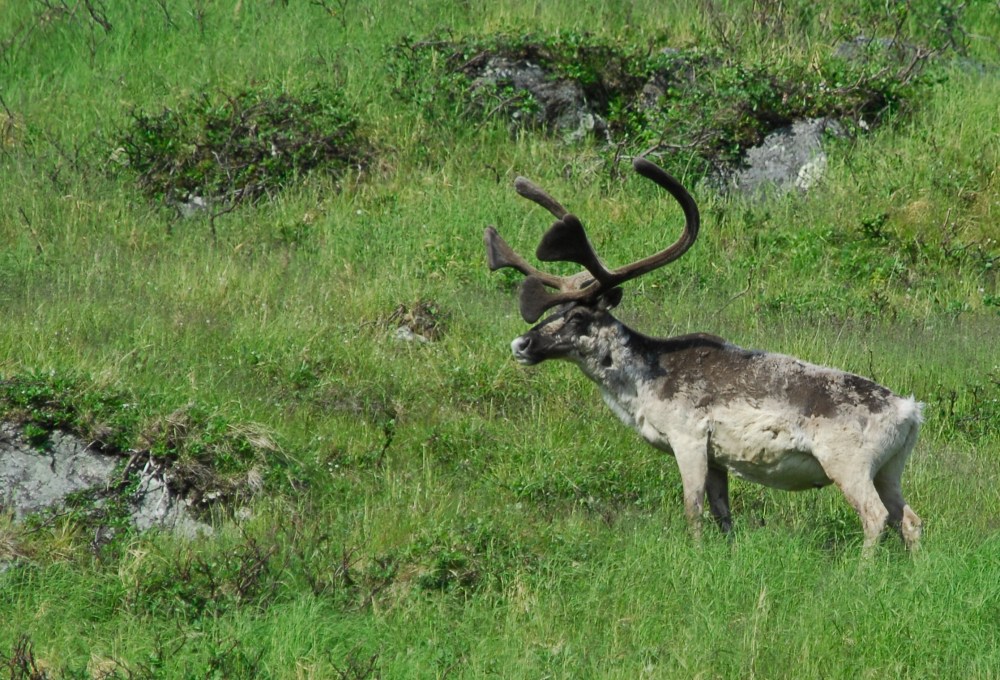
A caribou grazes on Baffin Island in a 2008 file photo. THE CANADIAN PRESS/AP-Kike Calvo via AP Images

“The overall health of the fawns and their mothers is good,” wrote the ministry in a press release, adding that their team remained on the field to intervene in case the animals needed extra care.

Pier-Olivier Boudreault, director of conservation at the Quebec branch of the environmental protection group Canadian Parks and Wilderness Society, says these statistics paint a mixed picture.

Despite some growth, the herds remain vulnerable, he explained.

“If we have one year in which things don’t go well, we could get really close to losing the entire herd,” he said. 

In the Charlevoix herd, eleven fawns survived out of fourteen births, growing the size of the herd to 48 caribou. 

Five fawns were born in Gaspésie, while two pregnant female caribou died. In June, the environment ministry had announced it had freed seven caribou from captivity to join the 14 wild caribou. The captive herd in the region now consists of 20 caribou.

The Val-d’Or herd, which is located about 500 kilometres northwest of Montreal and is the smallest herd at only seven caribou, did not grow this year. 

Boudreault said the slow growth of the herds may show how difficult it is to rely on captive herds to protect the species.

The herds have been in captivity since 2020 in the case of Val-d’Or, 2022 in Charlevoix and 2023 in Gaspésie. The Quebec environment ministry has described this as a temporary protection measure.

Boudreau describes the practice as an “extreme conservation measure,” noting that herds in captivity are more vulnerable to illnesses. He also said that losing two females can have a big impact on fertility.

Ultimately, the herds’ natural habitat needs to be restored so that they can reintegrate, he argues.

“What we’re doing right now is that we’re putting a bandage on a hemorrhage, because these populations are not in good shape,” said Boudreault.

The solution, he says, is to restore the boreal forest by closing forestry roads, planting new trees and protecting old growth.

Caribou are known as an “umbrella species”: because they thrive in vast habitats of old forest, their well-being is directly tied to that of their ecosystem. And right now, that ecosystem is struggling, points out Boudreault.

“If we reintegrate them right now, it wouldn’t be of much use. It would be like putting water back in a leaking bathtub,” he said. 

He adds that forest conservation measures should be implemented in partnership with the forestry industry to reach a compromise between protecting the caribou and protecting local economies. 

A $25-million agreement between Quebec and Ottawa announced in late June to fund caribou conservation initiatives drew a mixed response from environmentalists. While they praised the collaboration between governments on this issue, they also feared the funding might not lead to concrete and impactful change.

The federal government also announced $15 million to Indigenous communities in Quebec who are implementing their own programs.

This report by The Canadian Press was first published July 21, 2026.

Report Error Submit a Tip

More Stories

Khan’s abrupt departure presents desperate Tories with a valuable opportunity

Tom Brodbeck 5 minute read Preview

Khan’s abrupt departure presents desperate Tories with a valuable opportunity

Tom Brodbeck 5 minute read Yesterday at 1:06 PM CDT

If the Manitoba Progressive Conservatives are serious about getting out of the political wilderness, they should start by electing a progressive conservative leader.

Read
Yesterday at 1:06 PM CDT

Puzzles Palace

1 minute read Monday, Jul. 27, 2026

To solve our puzzles, please subscribe with this special offer: |

Michael Douglas comes to terms with fears, fame, father

Hillel Italie 6 minute read Preview

Michael Douglas comes to terms with fears, fame, father

Hillel Italie 6 minute read 2:01 AM CDT

NEW YORK — Michael Douglas, the award-winning actor and producer, recently turned 82. He is a cancer survivor, a recovered addict, a married man, the father and son of actors.

He is also an author, who begins his memoir with a message of thanks to his family — past and present and future — for the “sense of immortality.”

“Many times my father was asked, ‘Kirk, are you jealous of your son?’” he said during a recent interview at a Manhattan hotel, referring to his late father, fellow actor and sometime combatant Kirk Douglas.

“And he said, ‘Jealous?’ This is a sense of immortality, a continuity of generations.’”

Read
2:01 AM CDT

Manitoba Federation of Labour calls for independent review of Workers Compensation Board

Gabrielle Piché 5 minute read Preview

Manitoba Federation of Labour calls for independent review of Workers Compensation Board

Gabrielle Piché 5 minute read Yesterday at 9:54 PM CDT

A major labour association is calling for an independent Workers Compensation Board review as Manitoba leads the country in workplace injury rates.

Last year, 2.5 employees in every 100 reported a workplace injury serious enough to take time off, WCB tracking shows. The number is higher than any other province — just as it has been for the past three years, according to the Manitoba Federation of Labour.

(In 2025, the next highest time loss injury rate was in British Columbia: 2.04 people for every 100.)

“Our prevention work in Manitoba is failing Manitobans,” said Kevin Rebeck, president of the Manitoba Federation of Labour. “We need an independent review to help shine a light on, ‘What is happening on the prevention front of WCB?’”

Read
Yesterday at 9:54 PM CDT

Amazon in the weeds over damage to tall grass reserve

Eva Wasney 7 minute read Preview

Amazon in the weeds over damage to tall grass reserve

Eva Wasney 7 minute read Yesterday at 6:00 AM CDT

Patricia Dutchak was devastated when she first saw the wide swaths of crushed grass and upturned soil at Winnipeg’s Rotary Prairie Nature Park, a municipal heritage site.

“This is a very rare ecosystem, a remnant of tall grass prairie, there’s barely any left in the world, and to come here and see all this damage was heartbreaking,” Dutchak, chair of the Transcona Rotary Club’s parks committee, says.

The club is responsible for maintaining the protected green space, which was significantly damaged this summer when a fence between the park and the neighbouring Amazon distribution centre was relocated.

The 20-acre nature preserve is situated on a narrow tract of land on Regent Avenue West in the commercial heart of Transcona. The park received its municipal heritage designation in 1992 and is, today, surrounded by high-traffic streets, industrial warehouses and car dealerships.

Read
Yesterday at 6:00 AM CDT

Man who exploited teen sentenced to 11 years in prison

Erik Pindera 4 minute read Preview

Man who exploited teen sentenced to 11 years in prison

Erik Pindera 4 minute read Yesterday at 2:00 AM CDT

A man who picked up a vulnerable 17-year-old child-welfare ward on the streets of Winnipeg and coerced her into providing sexual services for several months has been sent to prison for more than a decade.

After a trial, Hassan Kargbo, who’s in his early 30s, was found guilty of sexual exploitation, making child sexual abuse and exploitation material, receiving a material benefit from sexual services provided by a person under 18, procuring a person under 18 and advertising sexual services.

Provincial court Judge Julie Frederickson sentenced him to 11 years behind bars late last month.

“Mr. Kargbo picked up a young Indigenous girl walking over the Osborne Street bridge and quickly got her involved in drug use and escorting,” Frederickson said in a written decision.

Read
Yesterday at 2:00 AM CDT