Former judge recommends Hydro-Québec waive unpaid bills in Indigenous communities
Advertisement
Read this article for free:
or
Already have an account? Log in here »
To continue reading, please subscribe:

Digital Subscription
One year of digital access for only $205*
- Enjoy unlimited reading on winnipegfreepress.com
- Read the E-Edition, our digital replica newspaper
- Access News Break, our award-winning app
- Play interactive puzzles
*First annual payment billed as $205.00 + GST for one year. This annual subscription will automatically renew at $233.00 + GST every 52 weeks (10% off the regular annual price of $259.35). Offer available to new and qualified returning subscribers only. Cancel any time.
To continue reading, please subscribe:
Add Free Press access to your Brandon Sun subscription for only an additional
$1 for the first 4 weeks*
- Enjoy unlimited reading on winnipegfreepress.com
- Read the E-Edition, our digital replica newspaper
- Access News Break, our award-winning app
- Play interactive puzzles
*Your next Brandon Sun subscription payment will increase by $1.00 and you will be charged $17.95 plus GST for four weeks. After four weeks, your payment will increase to $24.95 plus GST every four weeks.
Read unlimited articles for free today:
or
Already have an account? Log in here »
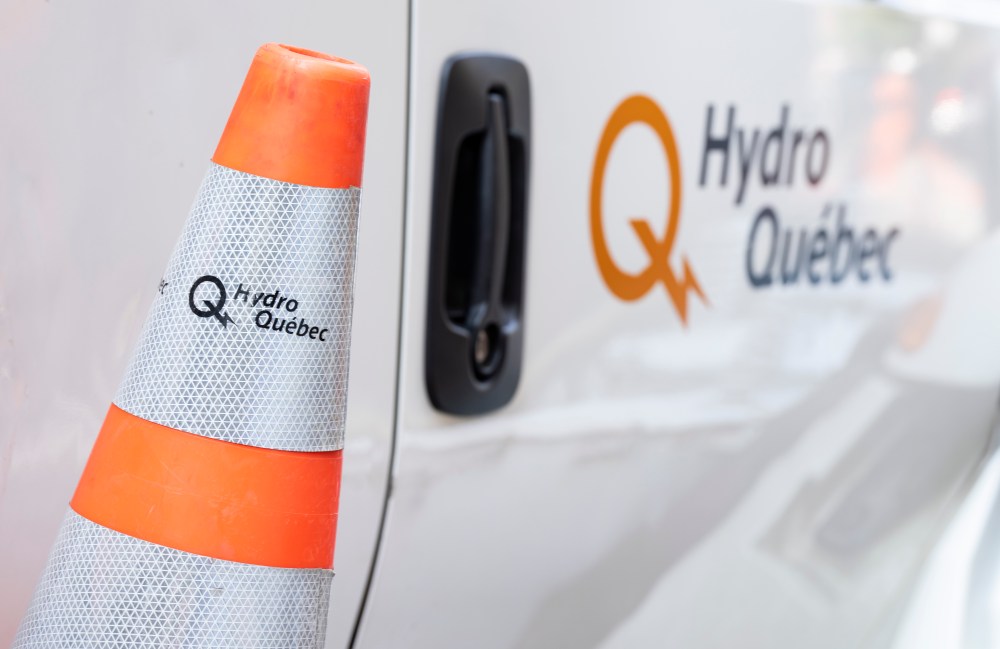
MONTREAL – Hydro-Québec is being urged to waive unpaid electricity bills of members of Indigenous communities in Quebec.
This is one of the eight recommendations by former Quebec Superior Court justice François Rolland that the utility received on July 24. Rolland’s report followed an analysis of bill collection and relations with Indigenous communities.
Among these recommendations, he wrote that Hydro-Québec should transfer unpaid bills to the communities and let them decide whether or not to collect the money.
“Rooted in the spirit of economic reconciliation, this recommendation seeks to strengthen new partnerships founded on mutual respect, trust and an honest understanding of the historical and contemporary realities facing First Nations and Inuit peoples,” wrote Rolland in document.
Ha’dishrayen Gros-Louis, a Wendat and Innu activist living in Wendake, sees the recommendation as a step in the right direction.
He said it would begin to right a historic wrong tied to the development of hydroelectric facilities on Indigenous land with what he sees as insufficient consultation and compensation to Indigenous communities.
“Those dams are on our land, so it’s pretty crazy for them to then ask us to pay what we supposedly owe them, when their development is happening on our land,” he said.
In 2024, Hydro-Québec mandated Rolland to study bill collection practices in Indigenous communities. This followed reports by Radio-Canada that members of some Indigenous communities hadn’t paid for their electricity in years.
“We have heard the concerns expressed on this complex issue. Our goal is to address it with all the sensitivity, rigour and discernment it requires,” said Michael Sabia, then-president and CEO of Hydro-Québec, in the press release announcing Rolland’s appointment.
The resulting recommendations also include improving communication with communities, increasing funding to energy efficiency programs and providing more training for Hydro-Québec staff on Indigenous realities.
In an email to The Canadian Press, Hydro-Québec said that it is reviewing the recommendations and would not comment further.
If they are put in place, the recommendations could lead to bigger energy autonomy for Indigenous communities by getting band councils more involved in hydroelectricity payments, which could encourage the community to develop more of their own electricity projects, said Gros-Louis.
“I think that would allow them to put these measures in place and to make sure it continues over a longer period of time,” he said.
However, he fears that these recommendations might be used as leverage to push Indigenous communities to accept further development on their land.
This fear was echoed by Doris Hervieux, member of Pessamit, an Innu community in the Côte-Nord region of Quebec. To her, these recommendations miss the larger issue of unresolved grievances between the community and Hydro-Québec.
Pessamit recently rejected a deal with Hydro-Québec in a closely-followed referendum. The deal could have settled long-standing legal dispute and paved the way for future development.

Removing debt will not remove discontent in the community, said Hervieux.
“They should come negotiate an agreement first … They owe us enough money already,” she said.
She believes Hydro-Québec still needs to do more to create a partnership with Indigenous communities over energy.
Improving relations with Indigenous communities is one of the priorities outlined in Hydro-Québec’s Action Plan 2035, which the utility published in 2023. In the plan, it outlines the goal of “economic reconciliation” in which Indigenous communities get a bigger share of the wealth generated by new projects.
This report by The Canadian Press was first published July 28, 2026.