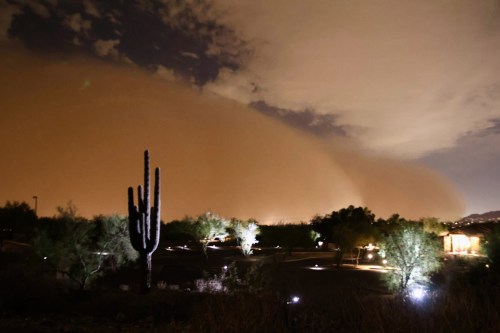
Unusually intense haboob dust storms strike Phoenix twice this week
Advertisement
Read this article for free:
or
Already have an account? Log in here »
To continue reading, please subscribe:
Digital Subscription
One year of digital access for only $1.44 a week*
- Enjoy unlimited reading on winnipegfreepress.com
- Read the E-Edition, our digital replica newspaper
- Access News Break, our award-winning app
- Play interactive puzzles
*Billed as $5.77 plus GST every four weeks. After 52 weeks, price increases to the regular rate of $19.95 plus GST every four weeks. Offer available to new and qualified returning subscribers only. Cancel any time.
To continue reading, please subscribe:
Add Free Press access to your Brandon Sun subscription for only an additional
$1 for the first 4 weeks*
- Enjoy unlimited reading on winnipegfreepress.com
- Read the E-Edition, our digital replica newspaper
- Access News Break, our award-winning app
- Play interactive puzzles
*Your next Brandon Sun subscription payment will increase by $1.00 and you will be charged $17.95 plus GST for four weeks. After four weeks, your payment will increase to $24.95 plus GST every four weeks.
Read unlimited articles for free today:
or
Already have an account? Log in here »
Dust storms that blanketed the Phoenix area in thick haze this week were among the most intense to hit the region in years, scientists said Thursday.
The storms — called haboobs — occur throughout the U.S. Southwest when strong downdrafts from thunderstorms stir up loose dust and dirt that get blown along in front of the approaching storm cell.
They can produce massive walls of dust and debris that blind drivers and make people sick.
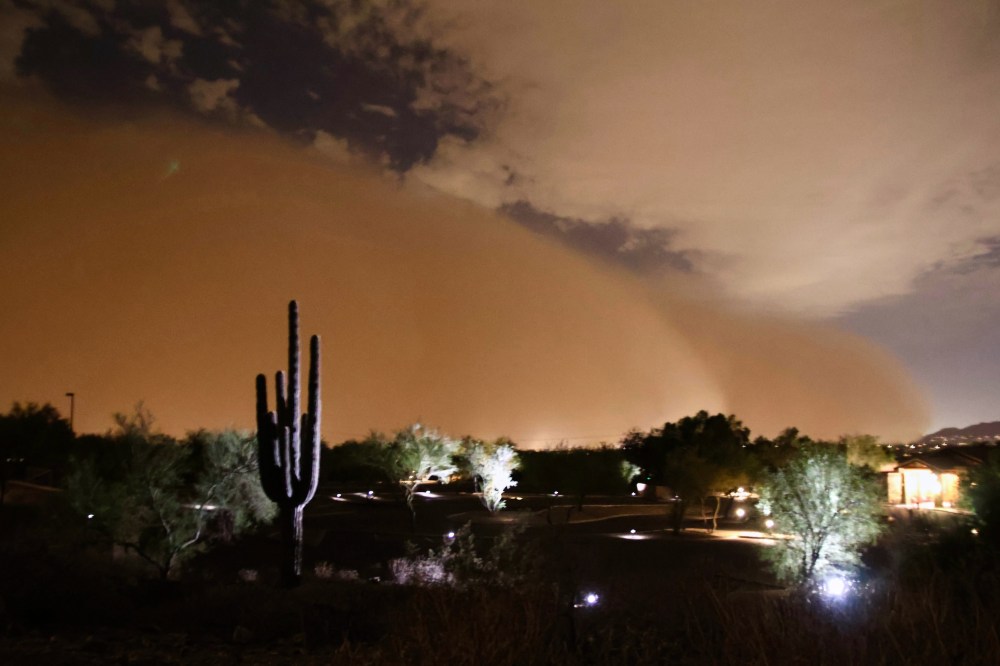
The latest storm rolled in during the early morning hours Thursday, three days after the other one struck. There were no reports of any significant impacts, though both storms reduced visibility to half a mile (0.8 kilometers).
“Luckily, they both happened when it was later at night, so there was less traffic on the roads,” said National Weather Service meteorologist Matt Salerno in Phoenix.
Both storms were extreme, Category 5 events on a scale of dust storm severity, with huge concentrations of dust and wind speeds of about 50 mph (80 kph), according to researchers at Arizona State University, which helped develop the scale.
The scale — unveiled this year — was developed using data going back to 2010.
“To have Class 5 dust storms occur one right after another a few days apart is unprecedented in our records,” said Randall Cerveny, a professor in the School of Geographical Sciences and Urban Planning at Arizona State. “We don’t see that.”
They were only the fifth and sixth dust storms in the last 16 years to reach Category 5, Cerveny told The Associated Press in a phone interview.
He noted the Phoenix region has been drier than normal, which can increase the amount of dust that is kicked up. Scientists have said human-caused climate change increases the odds of both severe drought and heavier storms that could set the stage for more intense dust storms in the future.