Brazil’s Senate passes rare earth minerals regulation, paving the way for boosted exploration
Advertisement
Read this article for free:
or
Already have an account? Log in here »
To continue reading, please subscribe:

Digital Subscription
One year of digital access for only $205*
- Enjoy unlimited reading on winnipegfreepress.com
- Read the E-Edition, our digital replica newspaper
- Access News Break, our award-winning app
- Play interactive puzzles
*First annual payment billed as $205.00 + GST for one year. This annual subscription will automatically renew at $233.00 + GST every 52 weeks (10% off the regular annual price of $259.35). Offer available to new and qualified returning subscribers only. Cancel any time.
To continue reading, please subscribe:
Add Free Press access to your Brandon Sun subscription for only an additional
$1 for the first 4 weeks*
- Enjoy unlimited reading on winnipegfreepress.com
- Read the E-Edition, our digital replica newspaper
- Access News Break, our award-winning app
- Play interactive puzzles
*Your next Brandon Sun subscription payment will increase by $1.00 and you will be charged $17.95 plus GST for four weeks. After four weeks, your payment will increase to $24.95 plus GST every four weeks.
Read unlimited articles for free today:
or
Already have an account? Log in here »
RIO DE JANEIRO (AP) — Brazil’s Senate Wednesday night approved a landmark bill to regulate the exploration of critical and strategic minerals in the South American country, a step toward increased exploitation of its vast reserves of rare earths that are second only to China.
The Senate’s backing of the bill comes after the lower house overwhelmingly voted in favor on May 6. It now heads to President Luiz Inácio Lula da Silva, who is expected to sign the measure into law.
The proposed legislation creates a basic legal framework for rare earths and other critical minerals and a fund to provide credit to mining projects. It also provides for tax incentives for domestic processing.
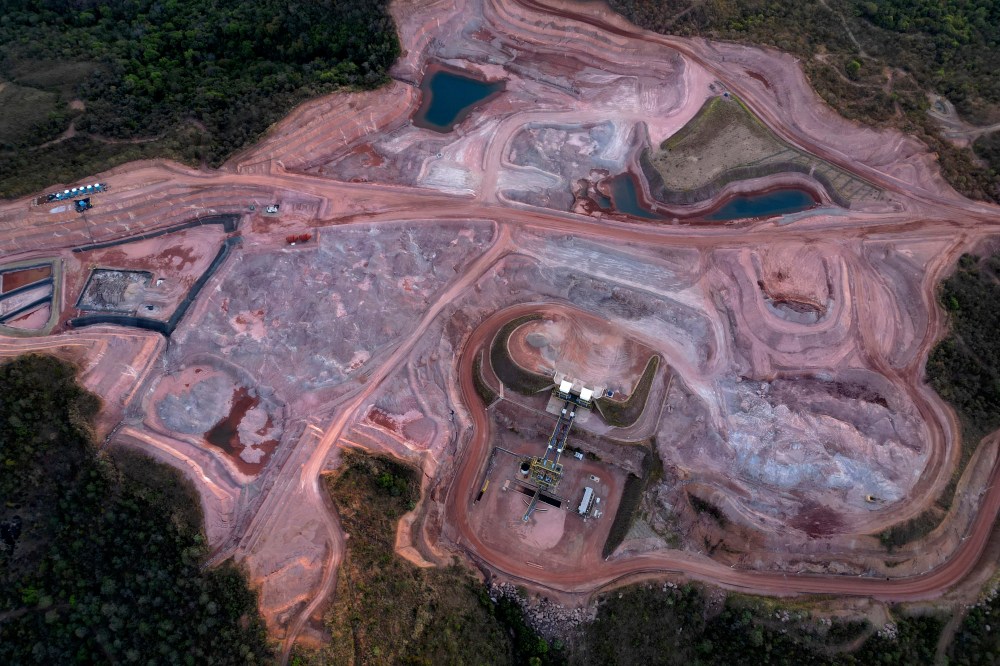
Brazil has the world’s second-largest reserves of rare earth elements, used in a wide range of products, including smartphones, electric vehicles, solar panels and jet engines.
While China continues to dominate critical minerals in global supply chains, Brazil is positioning itself as an alternative by leveraging its vast reserves. Countries around the world have shown interest as they seek to diversify partnerships and reduce reliance on the Asian powerhouse.
A joint analysis by the AP and Reporter Brazil identified a wave of U.S. investment after China last year restricted rare earth exports in response to U.S. tariffs, including the purchase of Brazil’s only commercial rare earth producer, Serra Verde, by a firm in which the U.S. government has a stake.
In April, USA Rare Earth said it had agreed to pay approximately $2.8 billion for Serra Verde, owner of the Pela Ema rare earth mine and processing plant in Brazil’s Goias state.
Government-screening power
Lula has repeatedly said that the South American nation should seek to capitalize on interest in the minerals to develop a national industry, rather than simply export the raw materials.
“We’re not going to repeat what happened with silver and gold in Latin America,” Lula told journalists in Washington on May 7, after his meeting with U.S. President Donald Trump. “With rare earths, we’re going to change our behavior. We want Brazil to be the big winner of these riches.”
The bill establishes the Mineral Activity Guarantee Fund with a contribution of 2 billion reais (about $391 million) from the federal government to guarantee projects and activities linked to the production of critical and strategic minerals.
The legislation also includes a specific program to encourage processing and transforming the minerals in Brazil, with federal incentives of 5 billion reais ($978 million) in tax credits over five years.
In addition, the bill creates the National Council for the Industrialization of Critical and Strategic Minerals, which will indicate priority projects to receive support from the fund.
The council will screen and approve certain forms of foreign investment and influence in companies holding critical and strategic mineral rights, potentially giving the government a de facto veto.
That increases legal uncertainty for investors, said Jaques Paes, a business professor at the Getulio Vargas Foundation. “It puts rare earths in a political realm rather than a technical one.”
Environmental risks
Mining, which in some cases could happen near reserves in the Amazon rainforest, also comes with major environmental risks.
The Climate Observatory, Brazil’s largest network of environmental groups, has criticized the bill, alleging that it increases regulatory flexibility without economic, climate or socioenvironmental trade-offs.
“Critical and strategic minerals are necessary for the energy transition, but this cannot become a blank check for mining. It makes no sense (…) to accelerate legislative proposals that do not guarantee the rights of affected communities and territories,” said Suely Araújo, Public Policy Coordinator at the Climate Observatory, in a statement on Sept. 1.
Leonardo Paz Neves, an international relations professor at the Getulio Vargas Foundation, a think tank and university, said Brazil should engage in a public debate with regard to exploration and production of its resources.
“Access already exists,” said Paz Neves, pointing to USA Rare Earth’s recent purchase. “The big question here is whether the state will want to try to negotiate some kind of privileged agreement regarding that access.”
After meeting with Trump, Lula made clear that Brazil is talking to other countries too. “Brazil has the obligation to share with whoever wants to participate with us, be that the U.S., China, Germany or France.”
In February, Brazil and India signed a nonbinding memorandum of understanding on critical minerals and rare earths, enhancing cooperation on crucial resources between both countries.
___
Follow AP’s coverage of Latin America and the Caribbean at https://apnews.com/hub/latin-america