Expert warns of extreme weather increase
Watchdog committee says all levels of government must work together to fix climate change
Advertisement
Read this article for free:
or
Already have an account? Log in here »
To continue reading, please subscribe:

Digital Subscription
One year of digital access for only $205*
- Enjoy unlimited reading on winnipegfreepress.com
- Read the E-Edition, our digital replica newspaper
- Access News Break, our award-winning app
- Play interactive puzzles
*First annual payment billed as $205.00 + GST for one year. This annual subscription will automatically renew at $233.00 + GST every 52 weeks (10% off the regular annual price of $259.35). Offer available to new and qualified returning subscribers only. Cancel any time.
To continue reading, please subscribe:
Add Free Press access to your Brandon Sun subscription for only an additional
$1 for the first 4 weeks*
- Enjoy unlimited reading on winnipegfreepress.com
- Read the E-Edition, our digital replica newspaper
- Access News Break, our award-winning app
- Play interactive puzzles
*Your next Brandon Sun subscription payment will increase by $1.00 and you will be charged $17.95 plus GST for four weeks. After four weeks, your payment will increase to $24.95 plus GST every four weeks.
Read unlimited articles for free today:
or
Already have an account? Log in here »
Hey there, time traveller!
This article was published 17/03/2018 (3079 days ago), so information in it may no longer be current.
Eric Reder believes if Manitobans want to see the real effects and consequences of climate change, all they need to do is look at the sky and into their own backyards.
“There definitely is more of what we would call extreme-weather events happening in Manitoba and happening within a shorter amount of time,” says Reder, who belongs to the Winnipeg-based environmental organization Wilderness Committee.
“It’s about the extremes and these are extremes that our infrastructure was not built to handle, and that is where you see the potential for chaos.”
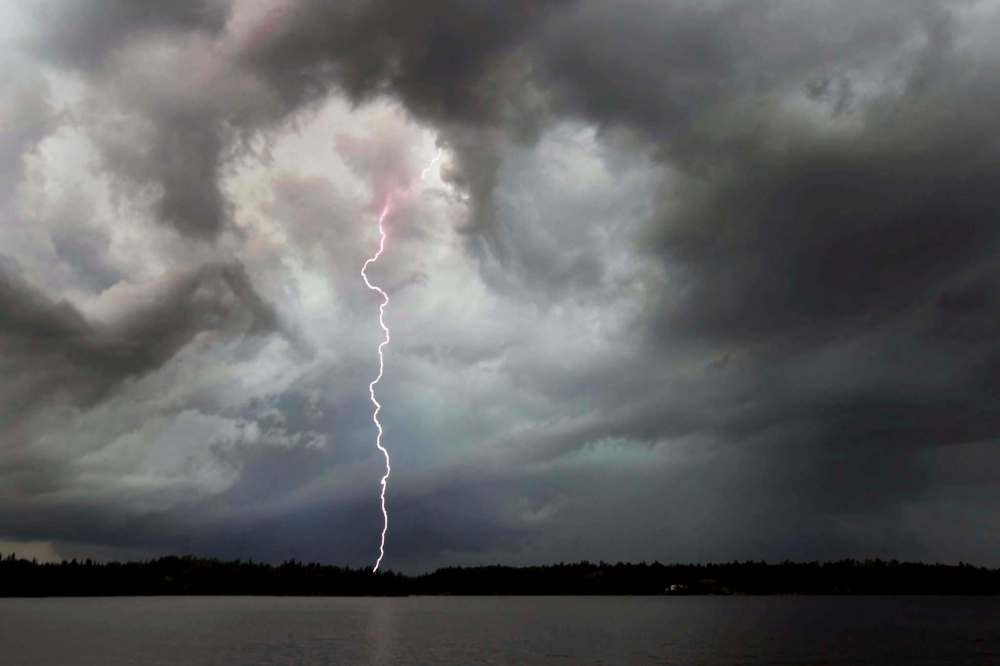
Reder has spent much of his career focused on the effects of climate change both around the world and in Manitoba. And he worries that if things don’t change soon, those consequences could become far more extreme.
One of the most serious effects of climate change here is the larger number of intense storms, which bring precipitation amounts that can be destructive and disastrous.
“We know that we now have more intense and slower-moving rainstorms and thunderstorms,” he says.
“So, instead of a storm in Manitoba, where you get a torrential downpour for 45 minutes, now you can get two hours of that intense torrential rain because the storms move slower, and that is a direct result of that warming of the atmosphere.”
And that means more instances of flash flooding and flooding of homes and basements, he says.
It is for those reasons why Manitoba insurance companies are keeping a close eye on climate change and global warming.
“The insurance industry are really the ones that are at the forefront of this and pushing for climate action, because more than ever they are seeing the costs of natural disasters and the costs of things that are a direct result of climate change,” Reder says.
“They see the size and scope of these disasters and the costs to the insurance industry. They know the costs associated with flooding in Manitoba and they know we can’t afford flooding at this scale.”
Because of what he says is a greater chance of extreme storms and increased precipitation in Manitoba, Reder worries that if the trend continues, it could lead to more homeowners not even feeling their own homes and property are safe from destruction.
“One of the biggest things that people own in their lives is their homes and that home, for many, is their security,” Reder says. “But now that security is being put at risk and more and more people worry that their property isn’t safe.”
Meanwhile, Reder says climate change is having and will continue to have real consequences on the province’s waterways.
“We’ve seen the increased prevalence of algae blooms in freshwater lakes, and that is because of the increased warmth of the water that allows them to flourish, and that is a very scary thing,” Reder says.

If more algae blooms continue to show up, it could damage those lakes by destroying the balance of their ecosystems, he says.
“The algae blooms throw off that balance by choking out certain life forms, and we don’t need an excess of one thing over another. We need everything to be working in harmony, and if climate change is destroying that balance, that is where we can see destruction.”
While Reder can see the effects of global warming on land and water, he’s equally concerned about the impacts he can’t see.
“One of the biggest risks will be the possible appearance of an insect, or a parasite, or some sort of species that we don’t even see coming, that is now able to survive where it wasn’t able to survive before because of that warming of the atmosphere and those changes in weather patterns,” Reder said. “Anywhere around the world when you are looking at changing climate, you are looking at the ability for a species or something else appearing that could be a bigger risk than the ones we already know about.”

Reder sometimes refers to climate change as “climate chaos” because he believes that if residents, businesses and all levels of government here in Manitoba and around the world don’t adapt, the continuing warming of the Earth will lead to more extremes, destruction and possible chaos.
“There is only one concrete way we can stop this problem from occurring and continuing, and that is by stopping the burning of fossil fuels,” Reder says. “There is going to be ebbs and flows, but the one thing that is so far out of whack in the equation is the burning of fossil fuels.”
Reder says although organizations like Wilderness Committee can act as “watchdogs,” the solutions can only begin to take shape if all levels of government start working to stop what he calls an “unnecessary dependence on fossil fuels for energy.”
“The technology is there to get us off fossil fuels,” he says. “We have things like solar panels and electric cars and electric boilers to heat homes.
“But what we lack is the political will, and we are still being force fed this idea that we need to keep propping up the fossil fuel industry. If we continue to prop up the fossil fuel industry, that is where we will continue to see the extreme effects of global warming, and that is what will ultimately lead to climate chaos.”