It’s all in their heads
Ongoing support is crucial for brain-injury survivors, who often suffer invisible wounds with long-term impacts
Advertisement
Read this article for free:
or
Already have an account? Log in here »
To continue reading, please subscribe:

Digital Subscription
One year of digital access for only $205*
- Enjoy unlimited reading on winnipegfreepress.com
- Read the E-Edition, our digital replica newspaper
- Access News Break, our award-winning app
- Play interactive puzzles
*First annual payment billed as $205.00 + GST for one year. This annual subscription will automatically renew at $233.00 + GST every 52 weeks (10% off the regular annual price of $259.35). Offer available to new and qualified returning subscribers only. Cancel any time.
To continue reading, please subscribe:
Add Free Press access to your Brandon Sun subscription for only an additional
$1 for the first 4 weeks*
- Enjoy unlimited reading on winnipegfreepress.com
- Read the E-Edition, our digital replica newspaper
- Access News Break, our award-winning app
- Play interactive puzzles
*Your next Brandon Sun subscription payment will increase by $1.00 and you will be charged $17.95 plus GST for four weeks. After four weeks, your payment will increase to $24.95 plus GST every four weeks.
Read unlimited articles for free today:
or
Already have an account? Log in here »
Hey there, time traveller!
This article was published 22/08/2016 (3678 days ago), so information in it may no longer be current.
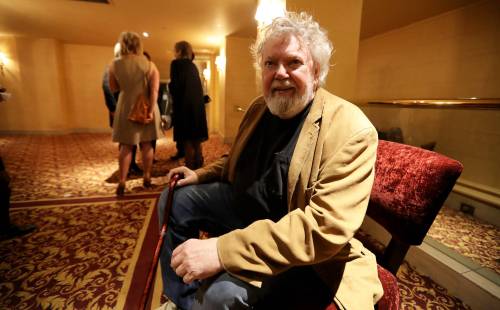
Dennis Guile’s kitchen table is in many ways an extension of his brain.
Covered with reminders and notes, it helps him navigate what he has to do for the day, the week and month ahead.
“If I don’t, I will forget a lot of things.”

The 67-year-old former truck driver isn’t merely referring to the forgetfulness that comes with age.
His short-term memory is profoundly impaired.
He also suffers a host of other cognitive and emotional problems in the aftermath of an accident on the job more than 15 years ago when his truck crashed into a wall, knocking him unconscious. He came to minutes later, but once in hospital, he fell asleep for four days.
Today Guile appears physically unscathed from the crash.
Yet the effects of the brain injury he sustained linger.
“I remember very little of the last 16 years, period,” he says. “Even last week, I’ve had trouble trying to remember what I did.”
Unable to work full time, life has been a struggle. Guile tires quickly. Basic tasks — even talking — can be taxing. And he often wrestles with anger, depression and anxiety.
While every brain injury is unique as the person it affects, sufferers almost universally experience a sense of isolation while waging daily battles in their own heads unseen by family, friends and others.
“There is no real outward appearance of some of the disabilities they can suffer, and that’s why some people refer to it as an ‘invisible disability,’” says neurosurgeon Dr. Michael Ellis, a board member with the Manitoba Brain Injury Association.
Ellis is one of the foremost experts on brain injury in Manitoba, and is the director of the Pan Am Clinic’s Concussion Program, one of the most comprehensive pediatric traumatic brain-injury clinics in Canada.
“Manitoba is unique in that it has a provincial-government-funded, multi-disciplinary pediatric concussion program providing comprehensive care to children with concussions and severe traumatic brain injuries.”
Founded about three years ago, the clinic is the result of a growing recognition of the seriousness of concussions (along with other injuries to the brain).
While still considered a minor injury, at least compared to trauma that damages the structure of the brain, concussions are garnering more attention than they did even a few years ago.
“A concussion is more a mild form of traumatic brain injury in which the brain is exposed to abnormal forces that result in transient neurological dysfunction,” Ellis says. “But ‘mild traumatic brain injury’ is a bit of a misnomer.”
A growing body of research and anecdotal evidence point to a risk of long-term cognitive impairment, especially from repeated concussions, including a link to an early-onset form of dementia called chronic traumatic encephalopathy or CTE.
Found during autopsies of many pro and amateur athletes — often after they have committed suicide — who suffered numerous concussions, CTE remains largely a mystery to experts. Neuroscientists have yet to determine why some individuals with significant trauma develop it, while others don’t.
In any case, the potential risk is such that the way we now care for even minor injuries such as concussions has changed, particularly for minors.
“The developing brain is more vulnerable to this kind of injury, and children and adolescents generally take longer to recover from concussions than adults would,” Ellis says.
Yet brain injuries encompass more than concussions. And they can have significant, negative impacts on people of all ages, says Gladys Hrabi, programs co-ordinator for Manitoba Brain Injury Association.
“There are no firm numbers on brain injuries in Canada,” she says.
Brain Injury Canada estimates tens of thousands of Canadians suffer a brain injury every year, ranging from concussions to neurological damage cause by a stroke.

The numbers are hard to pin down, in part because it’s so wide-ranging, but also because many who suffer a brain injury are misdiagnosed — another reason it’s referred to as an unseen injury, Hrabi says
Even when they receive a proper diagnosis, a large portion of survivors can struggle with negative impacts for months. Some, like Guile, suffer permanent impairment.
And the health-care system is often not well-equipped to help them address their long-lasting cognitive and emotional challenges.
It’s not unusual for patients to bounce from one care-provider to another, and those providers may not have experience dealing with brain injury, Ellis says.
While the province does a good job of caring for children, he believes more could be done for adults.
“In my mind, there certainly is a need for a similar program (to the Pan Am concussion clinic) in Manitoba for the adult populations,” he says.
In Winnipeg, adults do receive specialized care at Riverview Health Centre’s Acquired Brain Injury Program, which provides wide-ranging care for several weeks and is in the process of expanding.
But after rehabilitation, many adult patients require ongoing support in the community. That’s largely provided by the Manitoba Brain Injury Association.
“It is like a community for people with brain injuries,” Hrabi says. “We help survivors help each other to get back to (what was) normal prior to the injury, but we also help them adjust to the new normal.”
The need to help others adjust to an often-altered life is great.
So too is the need for funding to support the Manitoba Brain Injury Association, which makes its upcoming 12th Annual Brain Injury Walk, which takes place Sunday morning at Assiniboine Park, critically important.
“It’s more than a fundraising event,” Hrabi says. “It’s an opportunity for our members to be more visible in the community.”

For Guile, a better understanding among the public would go a long way for survivors — and toward prevention, so others don’t suffer the same fate.
The stakes are simply too high to ignore.
“Everybody talks about heart attacks and cancer, but serious brain injuries cause just as much death and illness,” he says. “Even when you improve, you may never get back to what you were before the injury.”
And that’s one thing for which Guile needs no kitchen-table reminder.
History
Updated on Monday, August 22, 2016 11:41 AM CDT: Updates photos.