Trudeau pledges more cash as G7 leaders aim for wider COVID-19 vaccine distribution
Advertisement
Read this article for free:
or
Already have an account? Log in here »
To continue reading, please subscribe:

Digital Subscription
One year of digital access for only $205*
- Enjoy unlimited reading on winnipegfreepress.com
- Read the E-Edition, our digital replica newspaper
- Access News Break, our award-winning app
- Play interactive puzzles
*First annual payment billed as $205.00 + GST for one year. This annual subscription will automatically renew at $233.00 + GST every 52 weeks (10% off the regular annual price of $259.35). Offer available to new and qualified returning subscribers only. Cancel any time.
To continue reading, please subscribe:
Add Free Press access to your Brandon Sun subscription for only an additional
$1 for the first 4 weeks*
- Enjoy unlimited reading on winnipegfreepress.com
- Read the E-Edition, our digital replica newspaper
- Access News Break, our award-winning app
- Play interactive puzzles
*Your next Brandon Sun subscription payment will increase by $1.00 and you will be charged $17.95 plus GST for four weeks. After four weeks, your payment will increase to $24.95 plus GST every four weeks.
Read unlimited articles for free today:
or
Already have an account? Log in here »
Hey there, time traveller!
This article was published 19/02/2021 (2053 days ago), so information in it may no longer be current.
OTTAWA – The federal government has agreed to boost its funding for vaccine rollouts in lower-income countries, pledging $75 million more to the COVAX international vaccine-sharing program as other wealthy countries step up their commitments as well.
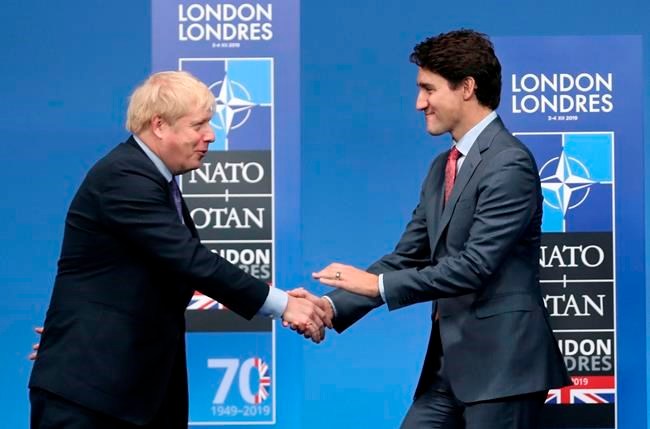
The announcement came as British Prime Minister Boris Johnson hosted Justin Trudeau and their G7 counterparts for a virtual leaders’ summit aimed at bringing renewed momentum to COVID-19 vaccine distribution.
Johnson confirmed Britain will send all its surplus doses to the COVAX Facility, a development that could place Trudeau in a hot seat because Canada is the only G7 country using its membership in the program to get extra vaccines for its own population.
The Liberals have been under fire from international organizations and some opposition parties for the decision to accept 1.9 million doses of vaccine from COVAX for domestic use in Canada by the end of June.
Trudeau gave no indication Friday he would reverse that plan even as vaccine shipments are ramping up — six million total doses scheduled before April 1 — and deliveries are expected to be greater than previously anticipated by the end of June.
“We will make decisions in the best interest of Canadians every step of the way,” he said, when asked about the incoming COVAX load.
Trudeau has defended the decision on the grounds that countries that contribute to COVAX are allowed to receive vaccines of their own and he has noted that Canada is one of the leading contributors to the globalprogram.
COVAX is a partnership created last year under the World Health Organization to help deliver billions of expensive vaccine doses to countries that can’t afford them.
Canada has pledged $220 million to COVAX and another $865 million — $940 million as of Friday — to the ACT Accelerator, which tries to ensure low- and middle-income countries have equitable access to medical treatments during the pandemic. Britain has pledged $971 million to COVAX.
The announcement comes the same day as the European Union’s executive commission promised to double its contribution to one billion euros.
“We will only be safe if the whole world is safe,” said Ursula Von der Leyen, the European Commission’s president, in a statement before the leaders of the G7 gathered in a virtual meeting Friday.
G7 contributions to COVAX more than doubled to US$7.5 billion on Friday, the group said in a joint statement. It called on its partners in the G20 and at financial institutions to add to the cash injection for developing countries.
Trudeau has said it is too soon to say what Canada will do with any excess vaccines, but that the country is committed to helping end the pandemic everywhere because that is in Canada’s interest.
Canada’s top-up comes as welcome news to advocacy groups.
“Today’s new investment comes at the right time: the pandemic does not end until it ends everywhere, so investing to ensure everyone has access to vaccines and other tools is smart,” Stuart Hickox, director of the One Campaign anti-poverty organization’s Canadian chapter, said in an email.
The organization is asking Ottawa to commit to investing one per cent of its emergency COVID-19 spending in the global fight against the pandemic.
“More work needs to be done, but the Trudeau government is on the right path,” Hickox said.
Johnson, who himself became seriously ill after contracting COVID-19 last year, is using Britain’s presidency of the G7 this year to drive a health plan that would enable the speedy creation of new vaccines to combat other deadly diseases and pandemics that might emerge in the future.
The U.K. prime minister wants the G7 to endorse a target to cut the time to develop new vaccines by two-thirds, from 300 days to 100 days.
Johnson wants the WHO and the Coalition for Epidemic Preparedness Innovations, or CEPI, to find ways to speed up vaccine development as well as treatments and tests for common pathogens.
“Perhaps more than ever, the hopes of the world rest on the shoulders of scientists and over the last year, like countless times before, they have risen to the challenge,” Johnson said in a pre-summit statement.
“The development of viable coronavirus vaccines offers the tantalizing prospect of a return to normality, but we must not rest on our laurels. As leaders of the G7 we must say today: never again,” he added.
“By harnessing our collective ingenuity, we can ensure we have the vaccines, treatments and tests to be battle-ready for future health threats, as we beat COVID-19 and build back better together.”
Johnson also wants G7 leaders to support a new treaty on pandemic preparedness that would be administered through the WHO.
Trudeau said Friday the leaders discussed shared challenges such as the pandemic as well as climate change, the global economy and alleged human rights abuses by China against its Uighur minority.
“We’ve taken careful note of conclusions drawn by experts around the world, including findings of crimes against humanity and genocide,” he said.

Trudeau stressed a multilateral approach to dealing with China’s treatment of its population Uighurs and other mostly Muslim minorities in Xinjiang province, which has prompted calls for relocating or boycotting the 2022 Winter Olympics in Beijing.
The meeting was the first G7 leaders’ meeting since last April, when they convened for an emergency virtual gathering as the pandemic was sweeping the globe.
The regular 2020 annual leaders’ summit, which was to have been hosted by former U.S. president Donald Trump, was ultimately scrapped as America battled with a surging death count due to COVID-19.
This report by The Canadian Press was first published Feb. 19, 2021.
—With files from Christopher Reynolds