Pfizer, AstraZeneca preventing hospitalizations from Delta variant in Britain

Advertisement

Advertise with us

OTTAWA - A new study in England suggests even just one dose of the Pfizer-BioNTech and Oxford-AstraZeneca vaccines are extremely good at keeping people from ending up in the hospital if they contract COVID-19 from the Delta variant of the virus that causes it.

Read this article for free:


or

Already have an account? Log in here »

To continue reading, please subscribe:

Subscribe and receive a limited-edition Free Press branded hat or tote.

Digital Subscription

One year of digital access for only $205*

  • Enjoy unlimited reading on winnipegfreepress.com
  • Read the E-Edition, our digital replica newspaper
  • Access News Break, our award-winning app
  • Play interactive puzzles

*First annual payment billed as $205.00 + GST for one year. This annual subscription will automatically renew at $233.00 + GST every 52 weeks (10% off the regular annual price of $259.35). Offer available to new and qualified returning subscribers only. Cancel any time.

To continue reading, please subscribe:

Add Free Press access to your Brandon Sun subscription for only an additional

$1 for the first 4 weeks*

  • Enjoy unlimited reading on winnipegfreepress.com
  • Read the E-Edition, our digital replica newspaper
  • Access News Break, our award-winning app
  • Play interactive puzzles
Start now

*Your next Brandon Sun subscription payment will increase by $1.00 and you will be charged $17.95 plus GST for four weeks. After four weeks, your payment will increase to $24.95 plus GST every four weeks.

Hey there, time traveller!
This article was published 14/06/2021 (1890 days ago), so information in it may no longer be current.

OTTAWA – A new study in England suggests even just one dose of the Pfizer-BioNTech and Oxford-AstraZeneca vaccines are extremely good at keeping people from ending up in the hospital if they contract COVID-19 from the Delta variant of the virus that causes it.

The news is particularly welcome in Canada, where a focus on first doses means more than two-thirds of Canadians are now partially protected from COVID-19, but only about one in eight are fully vaccinated.

Delta, one of the variants first identified in India, is proving to be the most infectious of the variants known so far, and Monday prompted British Prime Minister Boris Johnson to push back plans to lift all public health restrictions next week.
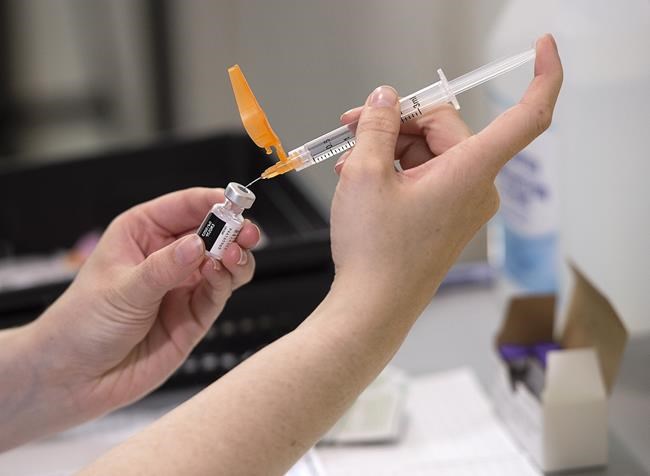
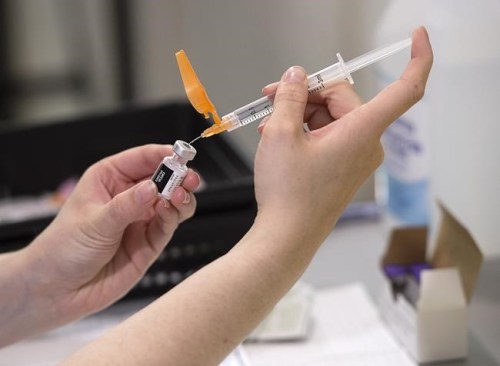
The Pfizer-BioNtech COVID-19 vaccine is prepared at a vaccination clinic in Dartmouth, N.S. on Thursday, June 3, 2021. A new study in England suggests the Pfizer-BioNTech and Oxford-AstraZeneca vaccines are extremely good at keeping people from ending up in the hospital with COVID-19, even after just one dose. THE CANADIAN PRESS/Andrew Vaughan

A surge of cases linked to Delta has tripled the COVID-19 infection rate in the United Kingdom in the last three weeks. The U.K. had seen the number of new cases fall to below 30 for every one million people in mid-May, from more than 1,000 in January. It’s now back up to more than 100.

Last month, Public Health England said a single dose of Pfizer or AstraZeneca was only about 33 per cent effective at preventing symptomatic cases of COVID-19 after one dose, but after two doses, that rose to 88 per cent for Pfizer and 60 per cent for AstraZeneca.

On Monday, Public Health England said it had new data that showed the vaccines were doing really well at keeping people from getting extremely sick.

The study, based on 14,000 people with confirmed cases of COVID-19 due to the Delta variant between April 12 and June 4, found two doses of either vaccine were more than 90 per cent effective at keeping people out of the hospital. There were a total of 166 hospitalizations in the group.

After one dose, Pfizer was 94 per cent effective against hospitalization, and AstraZeneca’s vaccine was 71 per cent effective.

Ontario infectious disease specialist Dr. Isaac Bogoch says the study is a ray of hope at a time when “good news is in short supply.”

Dr. Gerald Evans, chair of infectious diseases at Queen’s University medical school, said many people still don’t understand that vaccines are still considered effective even if they don’t entirely prevent an illness.

“If people’s aim is ‘I don’t even ever want to get COVID,’ then the vaccine doesn’t look that good,” he said. “But if, if they’re looking at ‘well, I still might get COVID but I’m not going to get really sick,’ then that’s an incredibly encouraging thing.”

Evans said the Delta variant is spreading fastest in the U.K. among people who have no vaccinations at all.

Canada is pivoting to second doses rapidly now, with 1.2 million people joining the fully vaccinated group just in the last four days, and two million in the last 10 days. About 70 per cent of shots are now going to second doses, up from only about 38 per cent a week ago.

Canada is also vaccinating faster than ever, averaging more than 10 doses a day for every 10,000 Canadians in the last week. With more than 13 million doses expected in the next eight days, the supply is also coming in faster than ever.

While individual provinces have set their own vaccine targets and reopening plans, chief public health officer Dr. Theresa Tam set a tentative national goal to get 75 per cent of eligible Canadians vaccinated with one dose, and 20 per cent with both doses, before most outdoor restrictions can be lifted.

At current rates Canada is set to hit the 75 per cent with one dose goal before the end of this week, and 20 per cent with two in eight to 10 days.

Tam has warned however that with Delta’s added infectiousness, Canadians need to continue to be careful and follow public health orders, particularly between their first and second doses.

This report by The Canadian Press was first published June 14, 2021.

Report Error Submit a Tip

More Stories

Sea Bears finish on top

Joshua Frey-Sam 6 minute read Preview

Sea Bears finish on top

Joshua Frey-Sam 6 minute read Saturday, Aug. 15, 2026

Beauty. Bliss. Ecstasy.

That is how Aug. 15, 2026 will be remembered in Winnipeg.

What was once a pipe dream in the city’s hoops community became an epic reality on Saturday, when Simon Hildebrandt, who grew up playing on the courts of this very town, made good on a three-pointer from the wing to crown the Winnipeg Sea Bears Canadian Elite Basketball League champions.

A storybook ending to a 98-84 victory over the Brampton Honey Badgers sent a CEBL attendance record of 12,519 fans into pandemonium at Canada Life Centre and capped a Finals run for the ages — one that was fraught with injury, impromptu player exits and unprecedented circumstances.

Read
Saturday, Aug. 15, 2026

Impaired driving victim honoured

Morgan Modjeski 5 minute read Preview

Impaired driving victim honoured

Morgan Modjeski 5 minute read Saturday, Aug. 15, 2026

Ten years after he was killed in a collision involving an impaired driver in 2016, Robbie Anderson’s name has been added to MADD Canada’s Manitoba Memorial honouring those killed in drunk and drug-impaired-related crashes.

His older brother Chris Anderson, was one of two dozen people who gathered at the Glen Eden Funeral Home and Cemetery in West St. Paul Saturday to remember their loved ones, 86 victims whose names are etched into the granite monument near the heart of the graveyard.

“It’s heavy,” said Anderson when asked what it was like to be part of the ceremony and see his brother’s name added. “It’s been something I’ve been thinking about for a while.”

Grateful for MADD’s work and its efforts to honour Robbie, who was 27 when he died, Anderson said his brother, represented the “absolute best of us.”

Read
Saturday, Aug. 15, 2026

Cross-border abduction under investigation

1 minute read Updated: Yesterday at 12:40 PM CDT

A cross-border kidnapping from Winnipeg to Minnesota is under investigation, according to North Dakota state patrol.

A 31-year-old Manitoba man abducted a 37-year-old Manitoba man in Winnipeg and drove across the border into North Dakota, the North Dakota State Highway Patrol said in a Facebook post Sunday. The state patrol said it became aware of the possible abduction Sunday morning and worked with local, federal and Canadian law enforcement to investigate.

Authorities identified a suspect vehicle using cameras at multiple locations and used cell-phone location information and licence-plate reader technology to find the vehicle in Alexandria, Minnesota.

"The victim was able to break free from the suspect and run into a nearby store. The suspect was taken into custody shortly afterward by the Douglas County Sheriff’s Office and Alexandria Police Department. The victim was recovered safely," the North Dakota state patrol's post reads.

HSC weapons scanners effective, needed at other hospitals: nurses union

Carol Sanders 5 minute read Preview

HSC weapons scanners effective, needed at other hospitals: nurses union

Carol Sanders 5 minute read Saturday, Aug. 15, 2026

The AI weapons scanners at Health Sciences Centre have detected close to 2,000 items since they were installed at Manitoba’s largest hospital.

From March 6, 2025 to the beginning of this month, a total of 1,973 items had been flagged by the scanners and identified for further review, Shared Health said this week.

Knives, Swiss army knives and other multi-tools, drugs, alcohol, box cutters, syringes and other injection devices were detected, it said. The technology set up at entrances to the adult and children’s emergency rooms and the crisis response centre is designed to identify a wide range of objects that may require review under site safety protocols.

But Manitoba Nurses Union president Darlene Jackson said the technology isn’t available everywhere at HSC, and a sawed-off rifle was discovered in the adult ER earlier this month.

Read
Saturday, Aug. 15, 2026

Rise of social media reflects rise of self-promotion — to the detriment of genuine storytelling

Reviewed by Matt Henderson 5 minute read Preview

Rise of social media reflects rise of self-promotion — to the detriment of genuine storytelling

Reviewed by Matt Henderson 5 minute read Saturday, Aug. 15, 2026

A conversation is overheard between two people; one congratulates the other on their success, evident through countless posts on LinkedIn, but the other confesses the prolific aggrandizement is due to slumping success.

A young man on an airplane spends three hours poring over selfies taken on a vacation, zooming in on his biceps and using AI to retouch photos before posting on Instagram.

Anonymous and cowardly trolls on Reddit attempt to end another person’s career.

All this “storytelling” was observed in one day by this reviewer.

Read
Saturday, Aug. 15, 2026

Manitoba family finalist for cattle producers environmental award

Aaron Epp 4 minute read Preview

Manitoba family finalist for cattle producers environmental award

Aaron Epp 4 minute read Saturday, Aug. 15, 2026

A family in western Manitoba is one of seven finalists for a national environmental award honouring beef cattle producers.

Connor and Kyla English, alongside Connor’s parents, Brian and Leanne English, are nominated for the Canadian Cattle Association’s Environmental Stewardship Award. The 30-year-old award is presented to beef farmers and ranchers who explore innovative ways to protect, preserve and enhance their operations and the environment simultaneously.

This year’s recipient will be announced on Wednesday during a banquet at the Canadian Beef Industry Conference in Winnipeg.

The English family’s roots near Bradwardine — about 265 kilometres west of Winnipeg — date back to 1898. Today, Connor, Kyla, Brian and Leanne manage a herd of about 320 breeding cows on nearly 445 hectares (1,100 acres) of owned and rented pasture and forage land.

Read
Saturday, Aug. 15, 2026