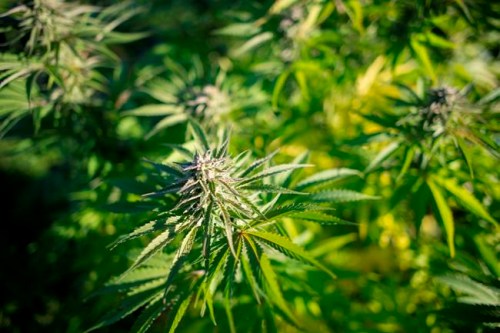
Cannabis farmers forced to react as heat, wildfires take their toll on crops
Advertisement
Read this article for free:
or
Already have an account? Log in here »
To continue reading, please subscribe:

Digital Subscription
One year of digital access for only $205*
- Enjoy unlimited reading on winnipegfreepress.com
- Read the E-Edition, our digital replica newspaper
- Access News Break, our award-winning app
- Play interactive puzzles
*First annual payment billed as $205.00 + GST for one year. This annual subscription will automatically renew at $233.00 + GST every 52 weeks (10% off the regular annual price of $259.35). Offer available to new and qualified returning subscribers only. Cancel any time.
To continue reading, please subscribe:
Add Free Press access to your Brandon Sun subscription for only an additional
$1 for the first 4 weeks*
- Enjoy unlimited reading on winnipegfreepress.com
- Read the E-Edition, our digital replica newspaper
- Access News Break, our award-winning app
- Play interactive puzzles
*Your next Brandon Sun subscription payment will increase by $1.00 and you will be charged $17.95 plus GST for four weeks. After four weeks, your payment will increase to $24.95 plus GST every four weeks.
Read unlimited articles for free today:
or
Already have an account? Log in here »
Hey there, time traveller!
This article was published 02/07/2021 (1919 days ago), so information in it may no longer be current.
It used to be common to see Tyler Rumi and his B.C. cannabis farm staff out watering their plants until the recent heat wave hit.
Now extreme temperatures have the co-founder and chief executive of Good Buds and his crew waking up under the cover of darkness to tend to their Salt Spring Island property and wrap their shifts by 10 a.m.
“When we typically would water, early in the morning, by around 9 or 10 a.m. the water was evaporating right into the air because it was so hot out,” said Rumi.

“Now we’ve moved on irrigation scheduling completely.”
Rumi’s new 2 a.m. wake-up calls are part of a new process the company has implemented as it and other cannabis farms try to cope with rising temperatures that have blanketed several provinces and contributed to the deaths of hundreds of people in B.C.
Heat warnings have been in effect recently in B.C. and Alberta, large parts of Saskatchewan, Northwest Territories and a section of Yukon as temperatures reached 40 C in some areas.
Sixty temperature records were topped in B.C., including in the Village of Lytton, where an all-time Canadian high was beat when the mercury hit 49.5 C on Tuesday.
Wildfires also ensnared Lytton, resulting in an emergency evacuation order as much of the area was scorched this week.
Cannabis plants can deal with heat, but too much of it poses a threat to their health, while wildfires can level crops within seconds and wreak havoc on an already short growing season in Canada.
Rumi’s been watching the thermometer closely and as soon as he noticed it creeping up, he had staff begin pulling out “water suckers,” weeds that snatch up water meant for the cannabis plans.
He’s also been ensuring staff stay cool.
“It just gets too hot out there, so we go out and we do our weeding and different activities early in the morning before the peak heat arrives and then we go down to the ocean or down to the lake to enjoy the afternoon,” he said.
While the Good Buds farm is roughly six hours away from Lytton, Rumi is not taking any chances with his crop of small-batch and organic cannabis because wildfires not far from his property posed challenges last year.
Staff had to dawn masks because the air quality was so poor and they fretted about the plants because the wildfires were wiping out all the sun they need to grow.
“So that’s something that’s very much on our minds,” said Rumi. “It can become very detrimental.”
Meanwhile, chief executive Mandesh Dosanjh considers himself fortunate because his Pure Sunfarms company does its growing in greenhouses, which are more protected from the weather and other elements, and in the Fraser Valley, where temperatures aren’t as hot.
But the company still isn’t immune to Mother Nature’s worst.
Pure Sunfarms uses the perpetual harvesting method, where rooms are all in different stages of the planting, growing and cleaning processes, so particular attention has to be paid to young plants during heat waves.
“They have the most difficult time with this heat,” Dosanjh said. “Because we were planting last week we had one room…that was captivating all of our eyes.”
Dosanjh also found himself reminding staff to stay hydrated and take more breaks.

To give some relief to the plants, he and staff adjusted light shades, toggled settings on their vents and fans and relied on a newly-installed misting station above the canopy.
Temperatures are easing back to their normal rates in the farm’s region, but Dosanjh is taking the last two weeks as a sign of things to come.
“We know the high heat is not going to go away over the coming summers and will probably get worse.”
This report by The Canadian Press was first published July 2, 2021.
Note to readers: This is a corrected story. A previous version contained an incorrect temperature record.