Ontario asks Ottawa to work with WHO on ensuring mixed vaccines recognized abroad

Advertisement

Advertise with us

TORONTO - Ontario has asked the federal government to ensure Canadians who received mixed COVID-19 vaccines will be recognized for international travel as border measures lift.

Read this article for free:


or

Already have an account? Log in here »

To continue reading, please subscribe:

Subscribe and receive a limited-edition Free Press branded hat or tote.

Digital Subscription

One year of digital access for only $205*

  • Enjoy unlimited reading on winnipegfreepress.com
  • Read the E-Edition, our digital replica newspaper
  • Access News Break, our award-winning app
  • Play interactive puzzles

*First annual payment billed as $205.00 + GST for one year. This annual subscription will automatically renew at $233.00 + GST every 52 weeks (10% off the regular annual price of $259.35). Offer available to new and qualified returning subscribers only. Cancel any time.

To continue reading, please subscribe:

Add Free Press access to your Brandon Sun subscription for only an additional

$1 for the first 4 weeks*

  • Enjoy unlimited reading on winnipegfreepress.com
  • Read the E-Edition, our digital replica newspaper
  • Access News Break, our award-winning app
  • Play interactive puzzles
Start now

*Your next Brandon Sun subscription payment will increase by $1.00 and you will be charged $17.95 plus GST for four weeks. After four weeks, your payment will increase to $24.95 plus GST every four weeks.

Hey there, time traveller!
This article was published 26/07/2021 (1881 days ago), so information in it may no longer be current.

TORONTO – Ontario has asked the federal government to ensure Canadians who received mixed COVID-19 vaccines will be recognized for international travel as border measures lift.

Health Minister Christine Elliott and Solicitor General Sylvia Jones wrote to Intergovernmental Affairs Minister Dominic LeBlanc and other officials on Sunday about the issue.

“We ask the Government of Canada to work with the WHO to update its guidance to international partners that mixing vaccines should be internationally accepted as a complete vaccine regimen,” they wrote.

Vials of both Pfizer-BioNTech and Oxford-AstraZeneca COVID-19 vaccines sit on a counter at the Junction Chemist Pharmacy, in Toronto, Friday, June 18, 2021. Ontario has asked the federal government to ensure Canadians who received mixed COVID-19 vaccines will be recognized for international travel as border measures lift.THE CANADIAN PRESS/Nathan Denette

Ontario and other provinces have offered residents the option of taking one shot each of Pfizer-BioNTech and Moderna vaccines oran mRNA shot after a first of the Oxford-AstraZeneca vaccines. Provinces offered the mixed option this year as country grappled with a shifting incoming vaccine supply schedule and concerns over a rare but serious blood clot linked to the AstraZeneca shot.

The ministers wrote that it’s critical for “the integrity and confidence” in Canada’s and Ontario’s vaccination programs that people who “have done the right thing” by taking doses of two different vaccines are considered immunized abroad.

“As the federal government opens international travel, we believe these Ontarians should also be considered ‘fully immunized’ by other countries both at international borders and in their activities within those jurisdictions,” they said.

They argue that the Oxford-AstraZeneca vaccine, which is not approved by the U.S. Federal Drug Authority, should be seen as valid internationally “on any certificate or passport.” That shot listed for emergency use by the WHO.

The letter notes that some European Union countries are using a similar mixed-dose approach to vaccination and said Ontario is looking forward to the outcome of conversations with those countries and with the United States.

Concerns have been raised in recent weeks about potential barriers facing people who mixed their COVID-19 shots.

The U.S. has been reluctant to sanction the practice of following a Moderna shot with a Pfizer-BioNTech vaccine, or vice versa, while many European countries don’t recognize the Oxford-AstraZeneca shot made at the Serum Institute of India, which may impact Canadians who received it.

Several cruise lines have also said they won’t accept customers who have received different types of vaccine, or mixed brands at all.

In their Sunday letter, the Ontario ministers also raised the issue of border measures for international travellers as Canada plans to loosen some travel restrictions aimed at limiting COVID-19 spread.

Ottawa announced last week that fully vaccinated U.S. citizens and permanent residents will be allowed into Canada without a 14-day quarantine as of Aug. 9. Eligible travellers in other parts of the world will be permitted to enter without quarantine on Sept. 7.

The rules apply to people who have received a full course of a COVID-19 vaccine approved for use in Canada.

Jones and Elliott wrote to Ottawa on “the importance of ensuring effective measures at the border for those who are not yet fully immunized,” and asked for “enforced and effective” quarantine rules for non-vaccinated travellers coming into the country.

They also asked for a consistent approach to international travel across land, air and water borders and at all points of entry.

The federal government did not provide a response to a request for comment on Monday.

Meanwhile, Ontario Premier Doug Ford repeated on Monday that he doesn’t believe in a vaccine certification system in Ontario

“It’s just not needed,” Ford said, speaking in Ottawa. “So we’re going to have people 80 per cent – hopefully – fully vaccinated and we just don’t need it.”

He said it’s up to the federal government whether to create a vaccine passport for international travel, and if it does, he’s “not going to balk at that.”

A group of experts advising the Ford government on the pandemic last week said a domestic proof-of-vaccination system would help speed up reopening and help prepare for a potential resurgence in cases — something Ontario’s top doctor has said will likely happen in the fall.

Ford also repeated Monday that he doesn’t support mandatory vaccinations of health workers, noting that they already have high vaccination rates.

Professional groups representing doctors and registered nurses in Ontario have publicly supported mandatory vaccination for health-care workers.

The provincial Liberals joined those calls on Monday, with their leader, Steven Del Duca, calling for mandatory shots for education and health workers and for provincial proof of vaccination.

Ford is “jeopardizing Ontario’s reopening by not planning ahead to prevent a fourth wave,” Del Duca said in a statement.

Ontario reported 119 COVID-19 cases on Monday and three deaths from the virus.

Eighty per cent of adults in Ontario have at least one COVID-19 vaccine dose and 67 per cent are fully vaccinated.

This report by The Canadian Press was first published July 26, 2021.

– With files from Allison Jones

Report Error Submit a Tip

More Stories

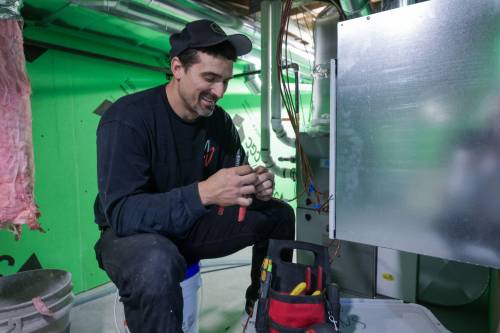
Former Bombers linebacker Gauthier enjoying career as electrician

Taylor Allen 6 minute read Preview

Former Bombers linebacker Gauthier enjoying career as electrician

Taylor Allen 6 minute read Yesterday at 12:44 PM CDT

Most professional football players don’t ride off into the sunset on their own terms.

Shayne Gauthier was well aware of that, but it didn’t make it sting any less when the Winnipeg Blue Bombers informed the veteran linebacker that they weren’t bringing him back for 2026.

“I was really hoping to play one more (season) because it would have been my 10th season, so, I’d say it didn’t really end the way I wanted,” Gauthier recently told the Free Press.

“It left a little sour taste in my mouth, but that’s part of pro sports. If everybody got the ending that they wanted, then it wouldn’t really work.”

Read
Yesterday at 12:44 PM CDT

Day 1 of Jets training camp in the books with pairings essentially cemented

Ken Wiebe 7 minute read Preview

Day 1 of Jets training camp in the books with pairings essentially cemented

Ken Wiebe 7 minute read Thursday, Sep. 17, 2026

Nearly six minutes into his question-and-answer session, Scott Arniel took a welcome detour from the news of the day.

After exhausting the discussion around the goalie who wasn’t in training camp, the head coach of the Winnipeg Jets finally got a query about the line combinations and defensive pairings that were unveiled in training camp.

And unlike past years, when exhibition games were more frequent and the training camp wasn’t this condensed, Arniel conceded these groupings were intentional and were likely staying together for some time.

The expansion to an 84-game regular season brings with it a reduction to four pre-season games and a much shorter training camp, which could limit the amount of experimentation that Arniel can do during the next two weeks.

Read
Thursday, Sep. 17, 2026

Kinew delivered what most of us wanted; now we’ll have to deal with the consequences

Dan Lett 5 minute read Preview

Kinew delivered what most of us wanted; now we’ll have to deal with the consequences

Dan Lett 5 minute read Updated: Yesterday at 8:43 AM CDT

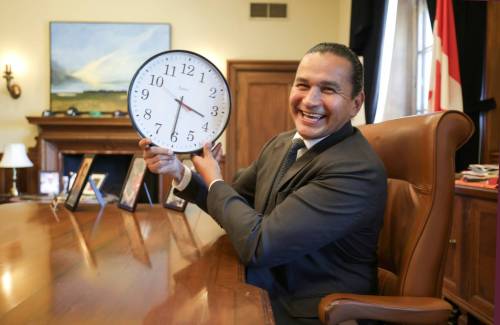
Premier Wab Kinew has decided to adopt permanent daylight savings time, which means a permanent end to the spring forward, fall back tradition of adjusting our clocks. And absolutely no one is surprised.

Read
Updated: Yesterday at 8:43 AM CDT

Canada-U.S. trade relationship is broken, but the damage can — and will — be repaired

Tom Brodbeck 5 minute read Preview

Canada-U.S. trade relationship is broken, but the damage can — and will — be repaired

Tom Brodbeck 5 minute read Thursday, Sep. 17, 2026

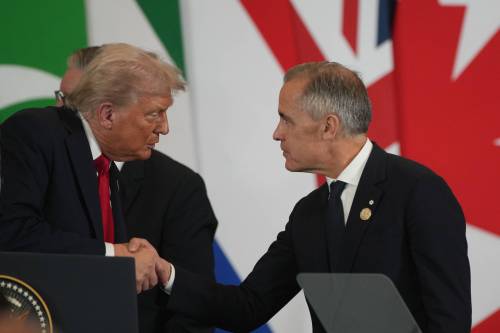
Canada needs to get serious about diversifying its trade beyond the United States. But at the same time, Canadians should expect relations with the U.S. to normalize after Donald Trump is no longer in the White House.

For generations, Canada-U.S. trade was considered almost a fact of geography. The two countries share the world’s longest undefended border, deeply integrated supply chains and a century of commercial relationships.

Canadian manufacturers depend on American customers. American manufacturers depend on Canadian suppliers. Energy, agriculture, automotive production and countless other industries operate across the border as though it barely exists.

That isn’t going to change dramatically, even in the midst of a bitter trade war unleashed by the U.S. president.

Read
Thursday, Sep. 17, 2026

Siloam Mission, WFPS discussing on-site paramedic to reduce staggering number of emergency calls

Scott Billeck 4 minute read Preview

Siloam Mission, WFPS discussing on-site paramedic to reduce staggering number of emergency calls

Scott Billeck 4 minute read Yesterday at 2:00 AM CDT

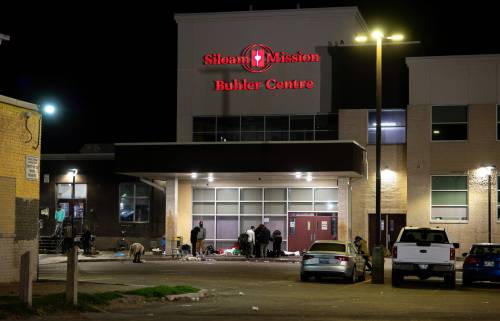
Winnipeg’s fire-paramedic service and its largest homeless-serving organization are discussing what it would look like to station at least one paramedic at Siloam Mission, as emergency calls to the downtown facility surge.

The ongoing discussions come as Winnipeg Fire Paramedic Service crews were dispatched 1,771 times during the first eight months of the year to the two adjacent Siloam properties at 303 Stanley St. and 300 Princess St.

WFPS said most of the calls were related to overdoses or other consequences of substance use, with the total nearly double the 854 calls recorded over the same period last year. By comparison, there were 831 calls during the same span in 2024, and 591 in 2023.

“The number of emergency calls isn’t sustainable for us as a service, but it’s certainly not sustainable for them as an agency trying to provide services,” WFPS chief Ryan Sneath told the Free Press. “And they recognize that they’re impacting emergency services, not them specifically, but the site in a significant way.”

Read
Yesterday at 2:00 AM CDT

Canada must not accept another Iranian autocracy

David Matas 5 minute read 2:01 AM CDT

Iran is a state run by a radical government victimizing its citizens and its neighbours. How do we change that? Any regime change that repeats the mistakes of the past is not a solution.

What went wrong in the past which led to the current regime? One answer is the U.K. and American aided coup which led to the ouster in 1953 of a democratically elected government headed at the time by Mohammad Mossadegh and its replacement with an American friendly autocrat, the Shah of Iran, Mohammad Reza Pahlavi.

The Shah imposed his rule through the Iranian National Intelligence and Security Organization — SAVAK, the acronym of its Persian name. SAVAK systematically inflicted torture, arbitrary killings and extra-judicial killings on perceived opponents of the regime. It was only a matter of time before repression of a regime directed to serving foreign interests would be overthrown.

What replaced the regime of the Shah, in 1979, the current regime of the mullahs, is a regime as intolerant and violent as the regime of the Shah and then some. That was not inevitable. But neither was it surprising. The vicious nature of the current regime, following the example set by the Shah, and its hatred for the United States, reacting to the U.S. aided imposition of the Shah, both echoes and reacts to the past. In 1979, the U.S. reaped what it sowed in 1953.