US intelligence still divided on origins of coronavirus

Advertisement

Advertise with us

WASHINGTON (AP) — U.S. intelligence agencies remain divided on the origins of the coronavirus but believe China's leaders did not know about the virus before the start of the global pandemic, according to results released Friday of a review ordered by President Joe Biden.

Read this article for free:


or

Already have an account? Log in here »

To continue reading, please subscribe:

Subscribe and receive a limited-edition Free Press branded hat or tote.

Digital Subscription

One year of digital access for only $205*

  • Enjoy unlimited reading on winnipegfreepress.com
  • Read the E-Edition, our digital replica newspaper
  • Access News Break, our award-winning app
  • Play interactive puzzles

*First annual payment billed as $205.00 + GST for one year. This annual subscription will automatically renew at $233.00 + GST every 52 weeks (10% off the regular annual price of $259.35). Offer available to new and qualified returning subscribers only. Cancel any time.

To continue reading, please subscribe:

Add Free Press access to your Brandon Sun subscription for only an additional

$1 for the first 4 weeks*

  • Enjoy unlimited reading on winnipegfreepress.com
  • Read the E-Edition, our digital replica newspaper
  • Access News Break, our award-winning app
  • Play interactive puzzles
Start now

*Your next Brandon Sun subscription payment will increase by $1.00 and you will be charged $17.95 plus GST for four weeks. After four weeks, your payment will increase to $24.95 plus GST every four weeks.

Hey there, time traveller!
This article was published 27/08/2021 (1849 days ago), so information in it may no longer be current.

WASHINGTON (AP) — U.S. intelligence agencies remain divided on the origins of the coronavirus but believe China’s leaders did not know about the virus before the start of the global pandemic, according to results released Friday of a review ordered by President Joe Biden.

According to an unclassified summary, four members of the U.S. intelligence community say with low confidence that the virus was initially transmitted from an animal to a human. A fifth intelligence agency believes with moderate confidence that the first human infection was linked to a lab. Analysts do not believe the virus was developed as a bioweapon and most agencies believe the virus was not genetically engineered.

The Office of the Director of National Intelligence said in a statement Friday that China “continues to hinder the global investigation, resist sharing information and blame other countries, including the United States.” Reaching a conclusion about what caused the virus likely requires China’s cooperation, the office said.

People wearing face masks to help curb the spread of the coronavirus line up outside a bakery shop to buy cookies in Shanghai, China, Friday, Aug. 27, 2021. (AP Photo/Andy Wong)

The cause of the coronavirus remains an urgent public health and security concern worldwide. In the U.S., many conservatives have accused Chinese scientists of developing COVID-19 in a lab and allowing it to leak. State Department officials under former President Donald Trump published a fact sheet noting research into coronaviruses conducted at the Wuhan Institute of Virology, located in the Chinese city where the first major known outbreak occurred.

The scientific consensus remains that the virus most likely migrated from animals in what’s known as a zoonotic transmission. So-called “spillover events” occur in nature, and there are at least two coronaviruses that evolved in bats and caused human epidemics, SARS1 and MERS.

In a statement, Biden said China had obstructed efforts to investigate the virus “from the beginning.”

“The world deserves answers, and I will not rest until we get them,” he said. “Responsible nations do not shirk these kinds of responsibilities to the rest of the world.”

China’s embassy in Washington hit back with a lengthy statement saying the U.S. had “fabricated” the report and invoking mistaken American intelligence about weapons of mass destruction prior to the Iraq War.
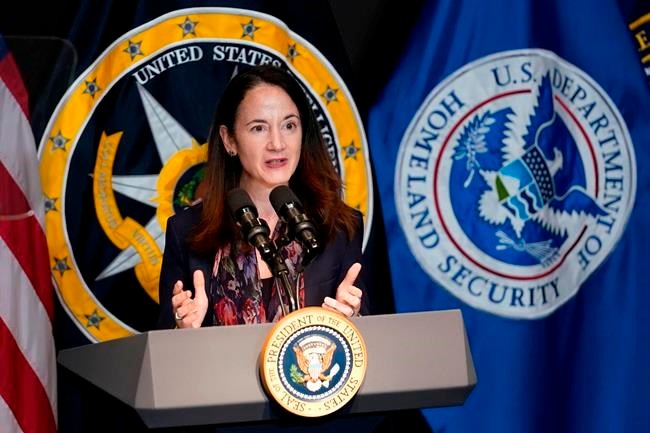
FILE - In this July 27, 2021, file photo Director of National Intelligence Avril Haines introduces President Joe Biden during a visit to the Office of the Director of National Intelligence in McLean, Va. China's refusal to fully cooperate with U.S. and international investigations of the virus has hampered reviews of the virus' origins. The Director of National Intelligence said Friday, Aug. 27, that China “continues to hinder the global investigation, resist sharing information, and blame other countries including the United States.” (AP Photo/Susan Walsh, File)

“The report by the intelligence community is based on presumption of guilt on the part of China, and it is only for scapegoating China,” the embassy said. “Such a practice will only disturb and sabotage international cooperation on origin-tracing and on fighting the pandemic, and has been widely opposed by the international community.”

Biden in May ordered a 90-day review of what the White House said was an initial finding leading to “two likely scenarios”: an animal-to-human transmission or a lab leak. The White House said then that two agencies in the 18-member intelligence community leaned toward the hypothesis of a transmission in nature and another agency leaned toward a lab leak.

The Office of the Director of National Intelligence on Friday did not identify which agencies supported either hypothesis. But it noted some of the same hurdles facing the World Health Organization and scientists worldwide: a lack of clinical samples and data from the earliest cases of COVID-19.

In conducting the review, intelligence agencies consulted with allied nations and experts outside of government. An epidemiologist was brought into the National Intelligence Council, a group of senior experts that consults the head of the intelligence community.
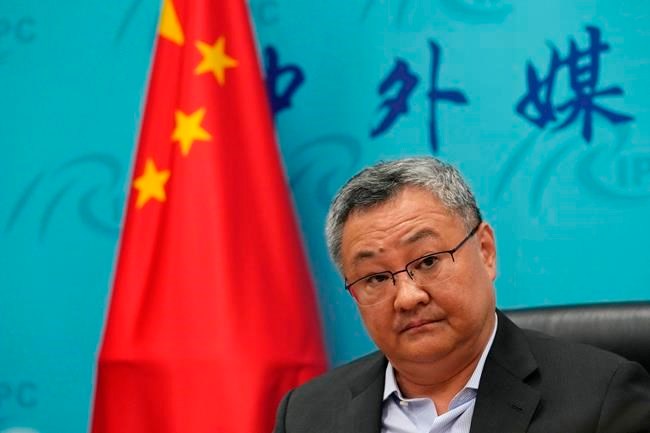

FILE - In this Aug. 25, 2021, file photo Fu Cong, a Foreign Ministry director general, speaks at a briefing for foreign journalists at the Foreign Ministry in Beijing, China. U.S. intelligence agencies remain divided on the origins of the coronavirus but believe China's leaders did not know about the virus before the start of the global pandemic, according to results released Friday, Aug. 27, of a review ordered by President Joe Biden. China's foreign ministry attacked the U.S. investigation ahead of the report's release. Fu Cong, a Foreign Ministry director general, said at a briefing for foreign journalists that “scapegoating China cannot whitewash the U.S.” (AP Photo/Ng Han Guan, File)
Report Error Submit a Tip

More Stories

United Way, other charities fight for dollars as donor base shrinks

Scott Billeck 8 minute read Preview

United Way, other charities fight for dollars as donor base shrinks

Scott Billeck 8 minute read Yesterday at 2:00 AM CDT

Winnipeg’s charitable sector is being squeezed from both sides: demand for help is growing while the pool of donors to meet that need is shrinking.

The imbalance is increasingly being carried by a relatively small group of deep-pocketed donors. Last year, 600 people — about three per cent of United Way Winnipeg’s individual donors — accounted for roughly $8 million, or 55 per cent of individual donations.

The fundraising pitch isn’t getting any easier.

Homelessness and public drug use have become increasingly visible, household budgets remain strained and the problems charities are trying to address can seem so entrenched that donors may reasonably wonder what difference another contribution can make.

Read
Yesterday at 2:00 AM CDT

Grieving child builds backyard rocket ship

Harriet Zaidman 4 minute read 2:01 AM CDT

I Built a Rocket Ship (Kids Can Press, 32 pages, hardcover, $22) by Winnipegger Anna Lazowski is a tender story for children ages 4-8 about a little girl trying to make sense of her mother’s death. The child engages in conversation with her late mom, agreeing and disagreeing about things said as she carries objects (and of course, the cat) to the backyard. There, she is building a rocket ship she will pilot into the skies to find her mom again.

Jennica Lounsbury’s varied perspectives show the range of emotions the little girl experiences.

● ● ●

Northwoods Lullaby by Mary Casanova (University of Minnesota Press, 32 pages, hardover, $25) is a bedtime book for readers up to age eight, perfect to bring a busy, happy day to a close. Just like children who are listening to adults reading the book, all the animal babies are being tucked into their nests and burrows by loving parents: “Thump and scamper,/nimble clover./ Soon it’s time to rest. Baby loon/ nestles in/as Papa floats along.”

Give-and-take relationship of Roman leaders takes centre stage in Harris’s historical fiction

Reviewed by Kathryne Cardwell 4 minute read Preview

Give-and-take relationship of Roman leaders takes centre stage in Harris’s historical fiction

Reviewed by Kathryne Cardwell 4 minute read 2:01 AM CDT

British novelist Robert Harris’s latest work is a reflection on tyranny, corruption and betrayal among all-powerful political leaders.

You might be forgiven for thinking it’s a contemporary thriller — it’s actually historical fiction set in ancient Rome.

A former BBC journalist, Harris debuted as a novelist in 1992 with Fatherland, an alternative history where Nazi Germany won the Second World War.

Since then, the prolific author has become best-known for his works of historical fiction, especially his ancient Rome trilogy released from 2006-2015 and the novel Conclave, which was published in 2016 and was made into the film of the same name in 2024.

Read
2:01 AM CDT

Cabernet Sauvignon star of wine festival

Ben Sigurdson 5 minute read Preview

Cabernet Sauvignon star of wine festival

Ben Sigurdson 5 minute read 3:00 AM CDT

The Winnipeg Wine Festival will celebrate the king of red wine grapes next weekend — the theme of this year’s festival, which takes place Sept. 25 and 26 at the RBC Convention Centre, is Cabernet Sauvignon.

Cab Sauv, as it’s also known, is the world’s most widely planted wine grape of any colour, first coming to prominence in the 1800s in France’s Bordeaux region, where the grape is still popular. Rather than single-variety wines, Bordeaux reds tend to be blends, with those coming from the left bank of the Gironde estuary being Cabernet-dominant, while right-bank wines are Merlot-dominant, with Cabernet Sauvignon playing a supporting role. Cabernet and Merlot work well together and many other countries have followed suit in blending the two.

A team at University of California Davis put Cabernet Sauvignon through a DNA test in 1996 and discovered its parent grapes are Cabernet Franc and Sauvignon Blanc — it’s likely that at some point the two varieties, planted next to each other in some vineyard, crossed and mutated and became the grape we know today. (Someone growing grapes in the 19th century must have had an inkling of what was up, as the grape has been called Cabernet Sauvignon since long before the DNA test.)

Flavour-wise, most Cabernet Sauvignon wines are big and bold, with a core of deep dark berry flavours, some graphite and spice notes and relatively bright acidity. It’s a grape that is well-suited to barrel aging, with most examples seeing at least some time in wood.

Read
3:00 AM CDT

Manitoba abandoning spring, fall clock changes

Carol Sanders 8 minute read Preview

Manitoba abandoning spring, fall clock changes

Carol Sanders 8 minute read Updated: Yesterday at 8:48 AM CDT

Time’s up for the time change in Manitoba.

Manitobans won’t be setting their clocks back an hour in November. The province has decided to permanently stay on daylight time after surveying residents on the twice annual clock adjustment.

“We heard from Manitobans loud and clear — no more changing the clocks in Manitoba,” Premier Wab Kinew said in a news release Thursday.

Most of the 72,000 votes submitted in an online EngageMB survey — 92 per cent — said they would like to see the practice end. The survey asked if they preferred earlier sunrises in winter with standard time or the later sunsets in summer with daylight time. More than half of survey participants (58 per cent) indicated a preference to stay on permanent daylight time; 34 per cent voted to eliminate the time change but stay on standard time.

Read
Updated: Yesterday at 8:48 AM CDT

Steinbach Credit Union member warns others after scammer steals $10K

Scott Billeck 5 minute read Preview

Steinbach Credit Union member warns others after scammer steals $10K

Scott Billeck 5 minute read Yesterday at 5:19 PM CDT

A Winnipeg single mother whose bank account was drained of nearly $10,000 says Steinbach Credit Union needs to warn its members about what she believes is a broader security problem.

The woman, who is not being named to protect her identity, said a scammer gained access to her account earlier this week after calling SCU’s contact centre, claiming to be her and successfully completing the credit union’s authentication process.

She said she knows of at least six others who have experienced similar incidents in which callers impersonate SCU account holders and pass the authentication checks.

The woman discovered something was wrong when her minor son asked why money had been transferred out of an account they jointly hold.

Read
Yesterday at 5:19 PM CDT