Biden doubles US global donation of COVID-19 vaccine shots
Advertisement
Read this article for free:
or
Already have an account? Log in here »
To continue reading, please subscribe:

Digital Subscription
One year of digital access for only $205*
- Enjoy unlimited reading on winnipegfreepress.com
- Read the E-Edition, our digital replica newspaper
- Access News Break, our award-winning app
- Play interactive puzzles
*First annual payment billed as $205.00 + GST for one year. This annual subscription will automatically renew at $233.00 + GST every 52 weeks (10% off the regular annual price of $259.35). Offer available to new and qualified returning subscribers only. Cancel any time.
To continue reading, please subscribe:
Add Free Press access to your Brandon Sun subscription for only an additional
$1 for the first 4 weeks*
- Enjoy unlimited reading on winnipegfreepress.com
- Read the E-Edition, our digital replica newspaper
- Access News Break, our award-winning app
- Play interactive puzzles
*Your next Brandon Sun subscription payment will increase by $1.00 and you will be charged $17.95 plus GST for four weeks. After four weeks, your payment will increase to $24.95 plus GST every four weeks.
Read unlimited articles for free today:
or
Already have an account? Log in here »
Hey there, time traveller!
This article was published 22/09/2021 (1837 days ago), so information in it may no longer be current.
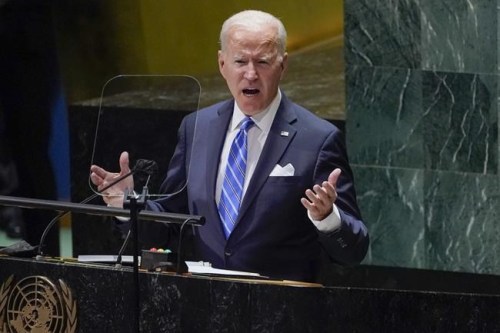
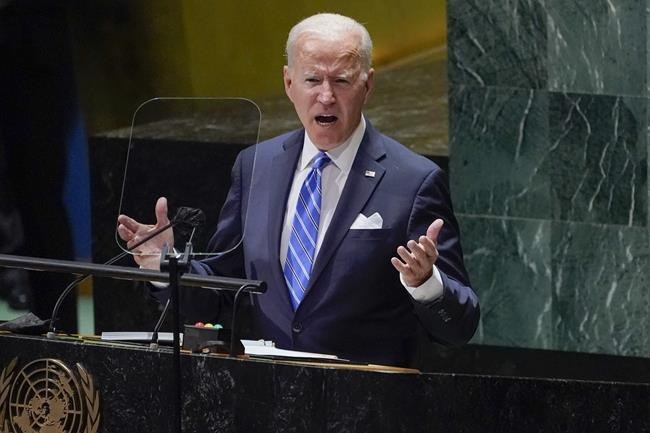
President Joe Biden announced Wednesday that the United States is doubling its purchase of Pfizer’s COVID-19 shots to share with the world to 1 billion doses as he embraces the goal of vaccinating 70% of the global population within the next year.
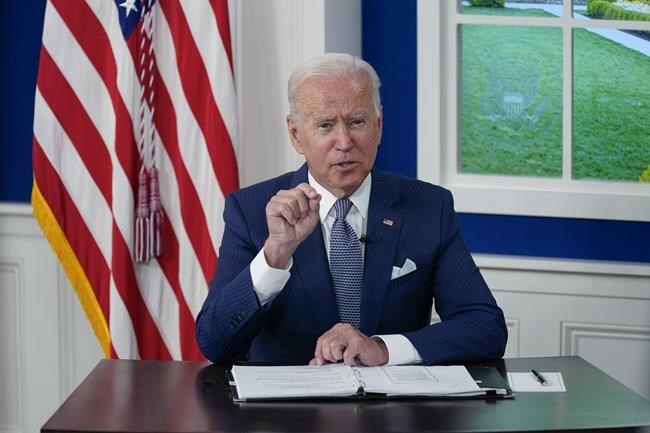
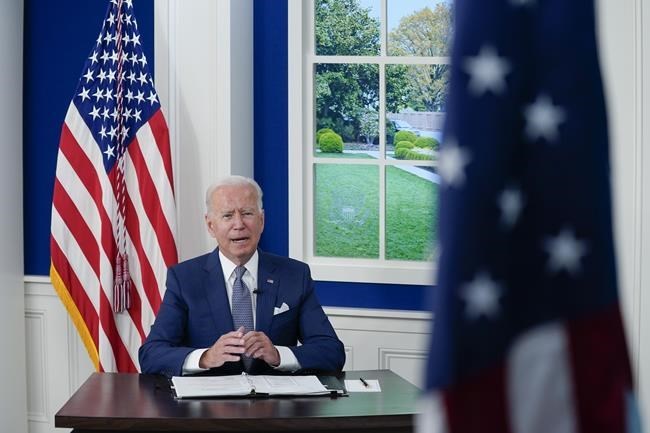
The stepped-up U.S. commitment marks the cornerstone of the global vaccination summit Biden convened virtually on the sidelines of the U.N. General Assembly, where he encouraged well-off nations to do more to get the coronavirus under control. It comes as world leaders, aid groups and global health organizations have growing increasingly vocal about the slow pace of global vaccinations and the inequity of access to shots between residents of wealthier and poorer nations.
“Global health security until now has failed, to the tune of 4.5 million lives, and counting,” UN Secretary General António Guterres told the summit, referring to the confirmed global death toll from the coronavirus. “We have effective vaccines against COVID-19. We can end the pandemic. And that is why I have been appealing for a global vaccination plan and I hope this summit is a step in that direction.”
The U.S. purchase of another 500 million shots brings the total U.S. vaccination commitment to more than 1.1 billion doses through 2022. About 160 million shots supplied by the U.S. have already been distributed to more than 100 countries, representing more donations than the rest of the world combined. The remaining American doses will be distributed over the coming year.
“To beat the pandemic here, we need to beat it everywhere,” Biden said. He added that with the new commitments, “For every one shot we’ve administered to date in America, we have now committed to do three shots to the rest of the world.”
The latest purchase reflects only a fraction of what will be necessary to meet a goal of vaccinating 70% of the global population — and 70% of the citizens of each nation — by next September’s U.N. meeting. It’s a target pushed by global aid groups that Biden threw his weight behind.
Biden is pressing other countries to do more in their vaccine sharing plans.
“We need other high income countries to deliver on their own ambitious vaccine donations and pledges,” Biden said. He called on wealthy countries to commit to donating, rather than selling the shots to poorer nations, and to provide them “with no political strings attached.”
The European Union committed to donating 500 million doses — a slight increase from its earlier announced plans — according to a joint statement between the bloc and the U.S. “We call for nations that are able to vaccinate their populations to double their dose-sharing commitments or to make meaningful contributions to vaccine readiness,” the statement said.
They also committed to working with the U.S. to bolster global vaccine supply.
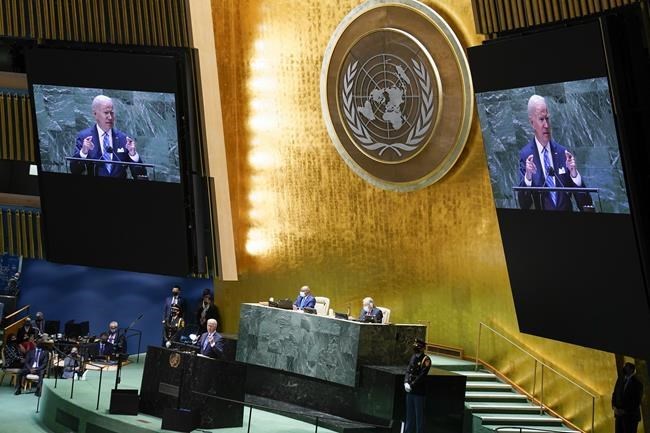
Biden, in his remarks, said the U.S. would also increase its funding to global aid groups that are administering shots.
The American response has come under criticism for being too modest, particularly as the administration advocates for providing booster shots to tens of millions of Americans before vulnerable people in poorer nations have received even a first dose.
“We have observed failures of multilateralism to respond in an equitable, coordinated way to the most acute moments. The existing gaps between nations with regard to the vaccination process are unheard of,” Colombian President Iván Duque said Tuesday at the United Nations.
More than 5.9 billion COVID-19 doses have been administered globally over the past year, representing about 43% of the global population. But there are vast disparities in distribution, with many lower-income nations struggling to vaccinate even the most vulnerable share of their populations, and some yet to exceed 2% to 3% vaccination rates.
Chilean President Sebastian Piñera said the “triumph” of speedy vaccine development was offset by political “failure” that produced inequitable distribution. “In science, cooperation prevailed; in politics, individualism. In science, shared information reigned; in politics, reserve. In science, teamwork predominated; in politics, isolated effort,” Piñera said.
The World Health Organization says only 15% of promised donations of vaccines — from rich countries that have access to large quantities of them — have been delivered. The U.N. health agency has said it wants countries to fulfill their dose-sharing pledges “immediately” and make shots available for programs that benefit poor countries and Africa in particular.
COVAX, the U.N.-backed program to ship vaccines to all countries has struggled with production issues, supply shortages and a near-cornering of the market for vaccines by wealthy nations.
The WHO has urged companies that produce vaccines to prioritize COVAX and make public their supply schedules. It also has appealed to wealthy countries to avoid broad rollouts of booster shots so doses can be made available to health care workers and vulnerable people in the developing world. Such calls have largely gone ignored.
COVAX has missed nearly all of its vaccine-sharing targets. Its managers also have lowered their ambitions to ship vaccines by the end of this year, from an original target of some 2 billion doses worldwide to hopes for 1.4 billion now. Even that mark could be missed.
As of Tuesday, COVAX had shipped more than 296 million doses to 141 countries.
“Today’s summit was full of speeches but tragically lacking in action,” said Oxfam America’s President and CEO Abby Maxman. “While we commend President Biden for rallying world leaders to commit to vaccinate 70% of the world by this time next year, we have yet to see an effective plan to meet this goal. President Biden and leaders of rich countries should listen to what leaders from developing countries are asking for: the rights and the recipe to make their own vaccine doses.”
Biden, earlier this year, broke with European allies to embrace waivers to intellectual property rights for the vaccines, but there was no movement Wednesday toward the necessary global consensus on the issue required under World Trade Organization rules. While some nongovernmental organizations have called those waivers vital to boosting global production of the shots, U.S. officials concede it is not the most constricting factor in the inequitable vaccine distribution — and some privately doubt the waivers for the highly complex shots would lead to enhanced production.
The 70% global target is ambitious, not least because of the U.S. experience.

Biden had set a goal of vaccinating 70% of the U.S. adult population by July 4, but persistent vaccine hesitance contributed to the nation not meeting that target until a month later. Nearly 64% of the entire U.S. population has received at least one dose and less than 55% is fully vaccinated, according to data from the Centers for Disease Control and Prevention.
U.S. officials hope to increase those figures in the coming months, both through encouraging the use of vaccination mandates and by vaccinating children once regulators clear the shots for the under-12 population.
Aid groups have warned that the persistent inequities risk extending the global pandemic, and that could lead to new and more dangerous variants. The delta variant raging across the U.S. has proved to be more transmissible than the original strain, though the existing vaccines have been effective at preventing nearly all serious illness and death.
___
Associated Press writers Jamey Keaten in Geneva, Josh Boak at the United Nations and David Biller in Rio de Janeiro contributed to this report.
Related Articles
'The future is raising its voice': A dire mood at UN meeting
Advertisement Advertise With Us
Advertisement Advertise With Us