Who’s a hero? Some states, cities still debating hazard pay
Advertisement
Read this article for free:
or
Already have an account? Log in here »
To continue reading, please subscribe:

Digital Subscription
One year of digital access for only $205*
- Enjoy unlimited reading on winnipegfreepress.com
- Read the E-Edition, our digital replica newspaper
- Access News Break, our award-winning app
- Play interactive puzzles
*First annual payment billed as $205.00 + GST for one year. This annual subscription will automatically renew at $233.00 + GST every 52 weeks (10% off the regular annual price of $259.35). Offer available to new and qualified returning subscribers only. Cancel any time.
To continue reading, please subscribe:
Add Free Press access to your Brandon Sun subscription for only an additional
$1 for the first 4 weeks*
- Enjoy unlimited reading on winnipegfreepress.com
- Read the E-Edition, our digital replica newspaper
- Access News Break, our award-winning app
- Play interactive puzzles
*Your next Brandon Sun subscription payment will increase by $1.00 and you will be charged $17.95 plus GST for four weeks. After four weeks, your payment will increase to $24.95 plus GST every four weeks.
Read unlimited articles for free today:
or
Already have an account? Log in here »
Hey there, time traveller!
This article was published 25/11/2021 (1777 days ago), so information in it may no longer be current.
HARTFORD, Conn. (AP) — When the U.S. government allowed so-called hero pay for frontline workers as a possible use of pandemic relief money, it suggested occupations that could be eligible from farm workers and childcare staff to janitors and truck drivers.
State and local governments have struggled to determine who among the many workers who braved the raging coronavirus pandemic before vaccines became available should qualify: Only government workers, or private employees, too? Should it go to a small pool of essential workers like nurses or be spread around to others, including grocery store workers?
“It’s a bad position for us to be in because you have your local government trying to pick winners and losers, if you would, or recipients and nonrecipients. And hence by default, you’re saying importance versus not important,” said Jason Levesque, the Republican mayor of Auburn, Maine, where officials have not yet decided who will receive hazard pay from the city’s American Rescue Plan funds.
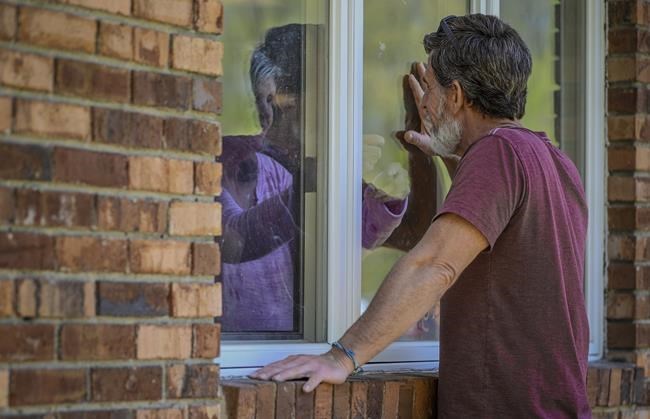
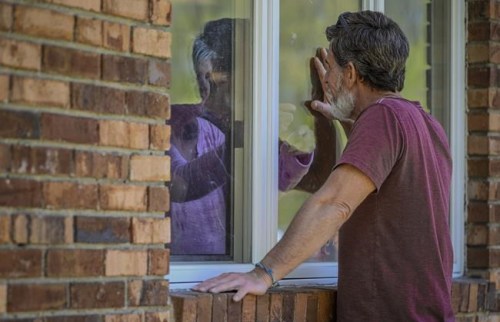
A year and a half into the pandemic, such decisions have taken on political implications for some leaders as unions lobby for expanded eligibility, with workers who end up being left out feeling embittered.
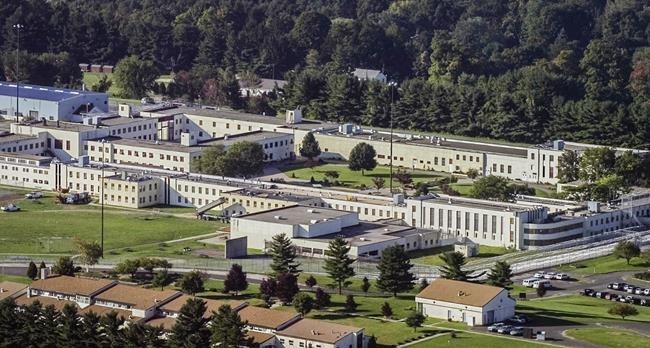
“It sounds like it’s about the money, but this is a token of appreciation,” said Ginny Ligi, a correctional officer who contracted COVID-19 last year in Connecticut, where the bonus checks have yet to cut amid negotiations with unions. “It’s so hard to put into words the actual feeling of what it was like to walk into that place every day, day in, day out. It scarred us. It really did.”
Interim federal rules published six months ago allow state and local COVID-19 recovery funds to be spent on premium pay for essential workers of up to $13 per hour, in addition to their regular wages. The amount cannot exceed $25,000 per employee.
The rules also allow grants to be provided to third-party employers with eligible workers, who are defined as someone who has had “regular in-person interactions or regular physical handling of items that were also handled by others” or a heightened risk of exposure to COVID-19.
The rules encourage state and local governments to “prioritize providing retrospective premium pay where possible, recognizing that many essential workers have not yet received additional compensation for work conducted over the course of many months,” while also prioritizing lower income eligible workers.
As of July, about a third of U.S. states had used federal COVID-19 relief aid to reward workers considered essential with bonuses, although who qualified and how much they received varied widely, according to an Associated Press review.
A list of hazard and premium pay state allocations as of Nov. 18, provided by the National Conference of State Legislatures, shows funds have typically been set aside for government workers, such as state troopers and correctional officers.
In Minnesota, lawmakers still have $250 million in aid set aside for hero pay, but they’ve been been struggling with how to distribute it. A special committee was unable to come up with a compromise plan, instead sending two competing recommendations to the full legislature for consideration.
“I think every time we take another week, we’re just delaying the whole process and I think the fastest way is to get them over to the Legislature,” said Republican state Sen. Mary Kiffmeyer, a member of the committee, during a meeting last month.
Minnesota Senate Republicans want to offer a tax-free bonus of $1,200 to about 200,000 workers who they say took on the greatest risk, such as nurses, long-term care workers, prison staff and first responders.
But House Democrats want to spread the money more widely, providing roughly $375 to about 670,000 essential workers, including low-wage food service and grocery store employees, security guards, janitors and others.
Earlier this week, after it appeared that a political impasse was easing over another issue, Democratic House Speaker Melissa Hortman told Minnesota Public Radio that she believed an agreement can be reached on front-line worker pay, noting there’s a “pretty natural middle ground” between the dueling proposals.
Connecticut has yet to pay out any of the $20 million in federal pandemic money set aside by state lawmakers in June for essential state employees and members of the Connecticut National Guard.
As negotiations continue with union leaders, the Connecticut AFL-CIO labor organization has stepped up pressure on Democratic Gov. Ned Lamont, who is up for reelection in 2022, to provide $1 an hour in hazard pay to all public and private sector essential workers who worked during the pandemic before vaccinations became available.
“The governor needs to reevaluate his priorities and show that these workers who put themselves and their lives at risk are a top priority. I think it’s really the least he can do for these workers,” said Ed Hawthorne, president of the Connecticut AFL-CIO. “These workers showed up for Connecticut. It’s time to governor to show up for them.”
Max Reiss, Lamont’s spokesperson, said the figures cited by organized labor are “just not feasible.”
In the meantime, he said, the administration is in negotiations with state employee unions, classifying the work state employees did during the pandemic and determining whether they may have shifted to other responsibilities that were more or less risky, which could also affect whether they receive more or less money.
“We want to recognize the workers who kept going into work every day because they had to and there was not a choice. And those range from people working in state-run health care facilities to people who needed to plow our roads during severe weather and work in-person jobs,” he said. “The next piece is that you have to come up with the determination as to who all those people were. And there’s a verification process to that.”
In some states like California, cities are in the process of determining how to fairly distribute some of their federal funds to to help essential private sector workers who may not have received extra pay from their employers.
Rachel Torres, deputy of the political and civil rights department at United Food and Commercial Workers Union, Local 770, said her union is urging cities to follow the lead of Oxnard and Calabasas, which voted this year to provide grocery and drug store workers with payments of as much as $1,000.
“It really should not be a competition among essential workforces. There should be moneys available for many workers,” Torres said.
David Dobbs and his fellow firefighters in Bridgeport, Connecticut, are upset their city has yet to provide them with a share of the $110 million it received in federal pandemic funds. Mayor Joe Gamin, a Democrat, said in a statement that he supports the concept of premium pay but that the matter is still being reviewed to make sure any payments comply with federal rules.
“We’ve demonstrated a commitment to this partnership. And I think we feel a little betrayed by the city right now, when when they’re not dealing with us, when they came into this windfall,” said Dobbs, president of the Bridgeport Firefighters Association, which gave up pay raises in the past when the city’s budget was tight. “Imagine loaning your friends a decent amount of money and then hitting the Powerball and not making things right.”
___
Associated Press writer Steve Karnowski in Minneapolis contributed to this report.