Unvaccinated military face ‘steeper’ challenge than airman who refused anthrax shot

Advertisement

Advertise with us

OTTAWA - Unvaccinated military members are in for a tougher fight than a retired airman who was disciplined for refusing an anthrax vaccine 20 years ago, his former lawyer warns.

Read this article for free:


or

Already have an account? Log in here »

To continue reading, please subscribe:

Subscribe and receive a limited-edition Free Press branded hat or tote.

Digital Subscription

One year of digital access for only $205*

  • Enjoy unlimited reading on winnipegfreepress.com
  • Read the E-Edition, our digital replica newspaper
  • Access News Break, our award-winning app
  • Play interactive puzzles

*First annual payment billed as $205.00 + GST for one year. This annual subscription will automatically renew at $233.00 + GST every 52 weeks (10% off the regular annual price of $259.35). Offer available to new and qualified returning subscribers only. Cancel any time.

To continue reading, please subscribe:

Add Free Press access to your Brandon Sun subscription for only an additional

$1 for the first 4 weeks*

  • Enjoy unlimited reading on winnipegfreepress.com
  • Read the E-Edition, our digital replica newspaper
  • Access News Break, our award-winning app
  • Play interactive puzzles
Start now

*Your next Brandon Sun subscription payment will increase by $1.00 and you will be charged $17.95 plus GST for four weeks. After four weeks, your payment will increase to $24.95 plus GST every four weeks.

Hey there, time traveller!
This article was published 19/01/2022 (1718 days ago), so information in it may no longer be current.

OTTAWA – Unvaccinated military members are in for a tougher fight than a retired airman who was disciplined for refusing an anthrax vaccine 20 years ago, his former lawyer warns.

Jay Prober said some in the Canadian Armed Forces who don’t want to take the current COVID-19 vaccines have contacted him because he defended Michael Kipling, the retired sergeant charged and ultimately acquitted of breaching an order to take an anthrax vaccine while serving in Kuwait.

“This would be much, much tougher and a much steeper mountain to climb,” the Winnipeg-based lawyer said in a recent interview.
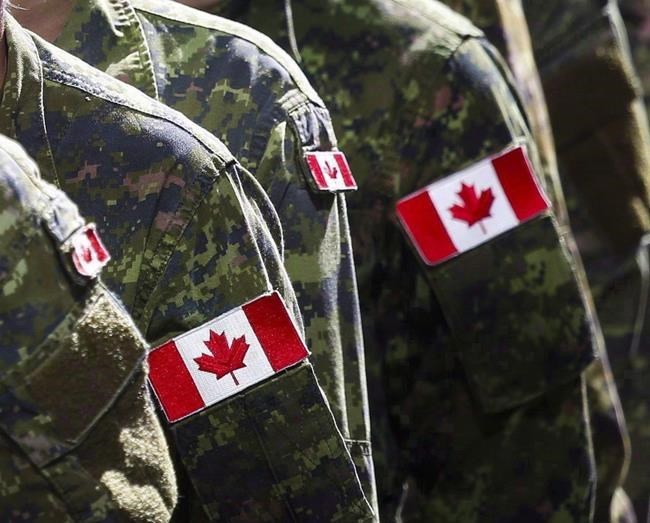
Members of the Canadian Armed Forces march during the Calgary Stampede parade in Calgary, Friday, July 8, 2016. Unvaccinated military members are in for a tougher fight than a retired soldier who was disciplined for refusing an anthrax vaccine 20 years earlier, his former lawyer warns. THE CANADIAN PRESS/Jeff McIntosh

“It’s completely different, quite frankly,”

Controversy over mandatory vaccinations for the military has re-emerged during the pandemic, with chief of the defence staff Gen. Wayne Eyre ordering all personnel to be inoculated against COVID-19.

Back in March 1998, troops serving in Kuwait City near Iraq’s border were ordered to take an anthrax vaccine out of concern it could be used as a biological weapon.

That gave rise to the conflict with Kipling, a flight engineer who refused to be vaccinated because the vaccine was unlicensed in Canada. He had fallen ill after an earlier shot and feared the vaccine could be connected to an unexplained sickness other veterans experienced.

The doctor tasked with immunizing soldiers at that time was Stephen Ellis, the physician-turned-Conservative MP, who now assists Tory leader Erin O’Toole on shaping pandemic-related policies.

According to the reported testimony Ellis gave during Kipling’s court martial in 2000, the doctor had served as a former captain and squadron medical officer.

He felt he was in a dilemma because, as a doctor, he knew patients should be able to provide informed consent, which didn’t exist within the military structure because members must obey orders.

Despite briefing soldiers on the vaccine’s potential side-effects, Ellis testified he couldn’t appease Kipling’s concerns and saw how his refusal to be vaccinated caused stress for a member with more than 20 years of service.

“Mike has a right not to take the vaccine, but he must also — by virtue of him wearing a uniform and collecting a (military) paycheque — suffer the consequences,” Ellis testified, according to a report by The Winnipeg Free Press.

Through his office, Ellis declined to speak on the matter now.

O’Toole, who is himself a veteran, said recently that getting vaccinated against COVID-19 is a requirement for most military members because of their duty to serve. His support for vaccine mandates in the military is in contrast to his opposition to such requirements for air travellers and those working in federally-regulated sectors like trucking.

For Prober, the main difference between Kipling’s case and the mandatory vaccination order some members and reservists face today is that the refusal to take the anthrax vaccine affected only Kipling.

“COVID vaccines are different,” he said. “If you refuse a COVID vaccine you put others at risk, not just yourself.”

For that reason, he said justifying a refusal becomes that much more challenging.

A Federal Court judge recently ruled against granting an injunction for several Forces members who didn’t want to take their shots, writing they failed to demonstrate how their personal interest outweighs that of the public’s.

Another key difference is that unlike the U.S.-made anthrax vaccine — which the military had special permission to use because it had not yet been approved in Canada — today’s COVID-19 vaccines have been greenlit by Health Canada.

The Department of National Defence reports a vaccination rate among troops of 98.3 per cent. However, more than 830 members have received formal warnings, orders to attend counselling and probation for refusing to get jabbed.

Formal reviews have also been launched against another 100 unvaccinated troops who are still refusing to comply even after exhausting those other remedial measures.

Ultimately, unvaccinated service members could be dismissed from the military. So far, the department says 44 full-time members have left voluntarily.

In Kipling’s case, his refusal to be immunized resulted in him being sent back to Canada and charged with disobeying an order “without a reasonable excuse.”

He retired after the charge was laid, but a court martial was still held.

A military judge eventually ruled Kipling’s charter rights had been infringed and accepted that the anthrax vaccine he’d been ordered to take could have been unsafe.

The Forces appealed the ruling and the Court Martial Appeal Court ordered a new trial, but the case was ultimately dropped.

Reached at his home this week, Kipling declined to speak.

This report by The Canadian Press was first published Jan. 19, 2022

Report Error Submit a Tip

More Stories

Manitoba marks end of sending simple workplace problems to doctor’s office

Tory McNally 7 minute read Preview

Manitoba marks end of sending simple workplace problems to doctor’s office

Tory McNally 7 minute read 2:01 AM CDT

There are some changes in the workplace that make you think: “Well, it’s about time.”

This is one of them.

Starting Oct. 1, Manitoba changed the rules around sick notes. I think it is going to be a wonderful change — not just for doctors and patients, but for employers, employees and the way we think about accountability at work.

The change comes from Bill 11, the Employment Standards Code Amendment Act (Sick Notes for Employee Absences), which received royal assent on June 1 and came into force Thursday. Under the new rules, employers generally cannot require a sick note for an illness or injury unless the employee is away for more than one week or has been absent because of illness or injury for more than 10 scheduled workdays in the calendar year.

Read
2:01 AM CDT

Clock ticks down on destruction of records documenting residential school abuses

Marsha McLeod 13 minute read Preview

Clock ticks down on destruction of records documenting residential school abuses

Marsha McLeod 13 minute read Yesterday at 12:49 PM CDT

In less than a year, a private company is set to destroy the largest cache of records detailing the widespread abuse of Indigenous children at residential schools in Canada.

The destruction, which was ordered by an Ontario court in 2014 and later upheld by the Supreme Court, is set to take place on Sept. 19, 2027.

This countdown is igniting emotional conversations that seek to balance the immense historical value of the records alongside the confidentiality survivors were promised as part of the process of providing detailed testimony about abuses they’d suffered.

The records were created as part of the Indian Residential Schools Settlement Agreement, a class-action settlement stemming from survivors who began suing the federal government in the late 1990s over the harm they’d been subjected to at residential schools.

Read
Yesterday at 12:49 PM CDT

You’re a solid, loyal sister, so worry not

Maureen Scurfield 5 minute read Yesterday at 2:00 AM CDT

DEAR MISS LONELYHEARTS: I ran into my sister’s husband at the bar recently. He was drinking with a bunch of people from his work. I noticed he was sitting close to a young woman, with his arm around her.

I just nodded without a smile as I slowly passed them. I kept on going, but he knew I saw them together. A few minutes later he came over — obviously drunk — and said, “You’re a good girl! You won’t say anything to your sister, will you?” Ha! I looked at him and said, “Of course I’m going to say something!”

My loyalty will always be to my sister. I phoned my sis in my car and blabbed. She tried to laugh it off, but she’s gone silent since — not answering my calls or messages. So apparently now I’m the troublemaker? That’d be just her style! What should I do?

— Worried About Us, North Kildonan

Broadening prediction-market gambling a bad idea

Editorial 4 minute read Preview

Broadening prediction-market gambling a bad idea

Editorial 4 minute read 2:01 AM CDT

Let’s make a prediction: sooner or later, when Canadian governments find a way to take their own cut of the action, prediction-contract gambling on everything from sports to entertainment to political decisions is going to come to Canada.

And that’s a horrible, dangerous, pernicious idea.

Unless you have particular access to information — either inside information or strategic information based on skills or education — you’re not likely to make money at it. In fact, structurally, you’re likely to lose. In prediction markets, you basically pay an amount, plus fees from the company involved, to bet on whether something will or will not happen within a certain time frame. The amount you pay for your contract depends on how other people are also betting.

As Wealthsimple describes it, “You buy whichever side you think is right. Prices move with demand, so if the market leans towards one outcome, the more that side costs. If a lot of people are backing the TSX to finish above 38,000, yes gets more expensive and no gets cheaper.”

Read
2:01 AM CDT

Province looks to seize notorious drug den

Erik Pindera 5 minute read Preview

Province looks to seize notorious drug den

Erik Pindera 5 minute read 12:00 PM CDT

Provincial justice officials are trying to seize a Dominion Street drug den that has been the source of trouble in the West End for years.

The owner of 982 Dominion St., 45-year-old Robert Edward Johnson, was most recently arrested in June along with several others after a lengthy Winnipeg Police investigation into thefts and illicit drug sales connected to the house.

“The residence has a reputation within the neighbourhood as being a location where individuals habitually attend for the purpose of purchasing and/or consuming controlled substances,” reads a statement of claim filed by the province’s director of civil forfeiture in the Court of King’s Bench last week.

“For several years, the residence has been associated with criminal activity, violence, and disorder, resulting in numerous police attendances and complaints from members of the surrounding community.”

Read
12:00 PM CDT

Creative powerhouse Perry Rosemond never lost Winnipeg roots

Ben Waldman 7 minute read Preview

Creative powerhouse Perry Rosemond never lost Winnipeg roots

Ben Waldman 7 minute read 6:00 AM CDT

He created King of Kensington, directed the troops in the Royal Canadian Air Farce, and his creative eye was behind the lens for television shows starring Johnny Cash, Tom Jones, Mr. Dress-Up and the Friendly Giant.

He also wrote and developed the Canadian version of Sesame Street during his time as the head of school and preschool programming for CBC in Toronto, and directed a televised special in 2002 for Winnipeg sketch comedy troupe Royal Liechtenstein Theatre Company.

But before his name featured in the credits of some of the most iconic and influential pieces of the Cancon canon, Perry Rosemond was an only child living in a crammed, multi-generational home in Winnipeg’s North End, racing each day to beat the morning bell next door at William Whyte School.

In memoirs that have yet to be published, the late television producer recalled his childhood. “(T)here were 14 of us in the house at 193 Andrews St., and it wasn’t that big of a house,” he writes.

Read
6:00 AM CDT