Doctors suggest new names for low-grade prostate cancer

Advertisement

Advertise with us

A cancer diagnosis is scary. Some doctors say it’s time to rename low-grade prostate cancer to eliminate the alarming C-word.

Read this article for free:


or

Already have an account? Log in here »

To continue reading, please subscribe:

Subscribe and receive a limited-edition Free Press branded hat or tote.

Digital Subscription

One year of digital access for only $205*

  • Enjoy unlimited reading on winnipegfreepress.com
  • Read the E-Edition, our digital replica newspaper
  • Access News Break, our award-winning app
  • Play interactive puzzles

*First annual payment billed as $205.00 + GST for one year. This annual subscription will automatically renew at $233.00 + GST every 52 weeks (10% off the regular annual price of $259.35). Offer available to new and qualified returning subscribers only. Cancel any time.

To continue reading, please subscribe:

Add Free Press access to your Brandon Sun subscription for only an additional

$1 for the first 4 weeks*

  • Enjoy unlimited reading on winnipegfreepress.com
  • Read the E-Edition, our digital replica newspaper
  • Access News Break, our award-winning app
  • Play interactive puzzles
Start now

*Your next Brandon Sun subscription payment will increase by $1.00 and you will be charged $17.95 plus GST for four weeks. After four weeks, your payment will increase to $24.95 plus GST every four weeks.

Hey there, time traveller!
This article was published 18/04/2022 (1628 days ago), so information in it may no longer be current.

A cancer diagnosis is scary. Some doctors say it’s time to rename low-grade prostate cancer to eliminate the alarming C-word.

Cancer cells develop in nearly all prostates as men age, and most prostate cancers are harmless. About 34,000 Americans die from prostate cancer annually, but treating the disease can lead to sexual dysfunction and incontinence.

Changing the name could lead more low-risk patients to skip unnecessary surgery and radiation.
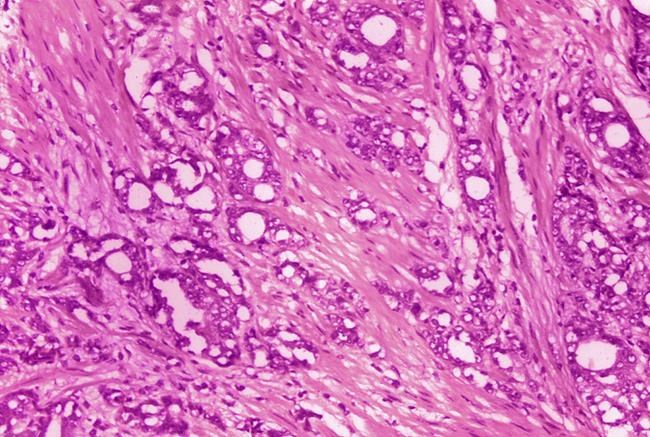
FILE - This 1974 microscope image made available by the Centers for Disease Control and Prevention shows changes in cells indicative of adenocarcinoma of the prostate. Some doctors say it’s time to rename low-grade prostate cancer to eliminate the alarming C word. About 34,000 Americans die from prostate cancer annually, but most prostate cancers are harmless. A paper published Monday, April 18, 2022 in the Journal of Clinical Oncology is reviving a debate about dropping the word “cancer” when patients learn the results of these low-risk biopsy findings. (Dr. Edwin P. Ewing, Jr./CDC via AP)

“This is the least aggressive, wimpiest form of prostate cancer that is literally incapable of causing symptoms or spreading to other parts of the body,” said University of Chicago Medicine’s Dr. Scott Eggener, who is reviving a debate about how to explain the threat to worried patients.

The words “You have cancer” have a profound effect on patients, Eggener wrote Monday in Journal of Clinical Oncology. He and his co-authors say fear of the disease can cause some patients to overreact and opt for unneeded surgery or radiation.

Others agree. “If you reduce anxiety, you’ll reduce overtreatment,” said Dr. David Penson of Vanderbilt University. “The word ‘cancer,’ it puts an idea in their head: ‘I have to have this treated.’”

Diagnosis sometimes starts with a PSA blood test, which looks for high levels of a protein that may mean cancer but can also be caused by less serious prostate problems or even vigorous exercise.

When a patient has a suspicious test result, a doctor might recommend a biopsy, which involves taking samples of tissue from the prostate gland. Next, a pathologist looks under a microscope and scores the samples for how abnormal the cells look.

Often, doctors offer patients with the lowest score — Gleason 6 — a way to avoid surgery and radiation: active surveillance, which involves close monitoring but no immediate treatment.

In the U.S., about 60% of low-risk patients choose active surveillance. But they might still worry.

“I would be over the moon if people came up with a new name for Gleason 6 disease,” Penson said. “It will allow a lot of men to sleep better at night.”

But Dr. Joel Nelson of University of Pittsburgh School of Medicine, said dropping the word “cancer” would “misinform patients by telling them there’s nothing wrong. There’s nothing wrong today, but that doesn’t mean we don’t have to keep track of what we’ve discovered.”

Name changes have happened previously in low-risk cancers of the bladder, cervix and thyroid. In breast cancer, there’s an ongoing debate about dropping “carcinoma” from DCIS, or ductal carcinoma in situ.

In prostate cancer, the 1960s-era Gleason ranking system has evolved, which is how 6 became the lowest score. Patients may assume it’s a medium score on a scale of 1 to 10. In fact, it’s the lowest on a scale of 6 to 10.

What to call it instead of cancer? Proposals include IDLE for indolent lesion of epithelial origin, or INERRT for indolent neoplasm rarely requiring treatment.

“I don’t really give a hoot what it’s called as long as it’s not called cancer,” Eggener said.

Steve Rienks, a 72-year-old civil engineer in Naperville, Illinois, was diagnosed with Gleason 6 prostate cancer in 2014. He chose active surveillance, and follow-up biopsies in 2017 and 2021 found no evidence of cancer.

Calling it something else would help patients make informed choices, Rienks said, but that’s not enough: Patients need to ask questions until they feel confident.

“It’s about understanding risk,” Rienks said. “I would encourage my fellow males to educate themselves and get additional medical opinions.”

___

The Associated Press Health and Science Department receives support from the Howard Hughes Medical Institute’s Department of Science Education. The AP is solely responsible for all content.

Report Error Submit a Tip

More Stories

Port of Churchill signs agreement with Dutch port

Aaron Epp 2 minute read Preview

Port of Churchill signs agreement with Dutch port

Aaron Epp 2 minute read Tuesday, Sep. 29, 2026

Arctic Gateway Group, operator of the Port of Churchill, has signed an agreement with the Port of Rotterdam in the Netherlands to attract business and strengthen supply chains linking Western Canada and Europe.

The agreement enables the two ports to work together to develop new trade in critical minerals and energy products, connect Canadian producers with European buyers, and identify opportunities to improve the supply chain from Western Canadian resource projects through Churchill and into European markets.

The Port of Rotterdam is Europe’s largest port and home to more than 3,000 businesses across its industrial complex, serving as a major gateway for critical raw materials and energy.

Meanwhile, the Port of Churchill has been identified as a transformative national strategy for Canada and is emerging as a northern trade corridor connecting Western Canada’s resources to global markets.

Read
Tuesday, Sep. 29, 2026

Kent Monkman debuts beaver sculpture in Toronto’s ambitious new waterfront park

Alex Nino Gheciu, The Canadian Press 2 minute read Preview

Kent Monkman debuts beaver sculpture in Toronto’s ambitious new waterfront park

Alex Nino Gheciu, The Canadian Press 2 minute read Updated: 3:33 PM CDT

TORONTO - Kent Monkman’s first-ever public art installation is dam good.

The celebrated Cree artist’s new permanent sculpture, dubbed “The Colony,” debuts Wednesday in Toronto’s east end.

The 15-foot-high bronze structure features beavers dancing, feasting and celebrating, evoking Indigenous ceremonies.

It highlights the vital role of beavers in the natural, Indigenous and colonial histories of Turtle Island, says a release.

Read
Updated: 3:33 PM CDT

Cops handcuffed by bail issues, lack of mental-health options, WPS chief tells residents in crime-ridden North End neighbourhood

Nicole Buffie 6 minute read Preview

Cops handcuffed by bail issues, lack of mental-health options, WPS chief tells residents in crime-ridden North End neighbourhood

Nicole Buffie 6 minute read 5:30 PM CDT

Weak bail reform and a lack of mental-health resources and addictions treatment beds are making it more difficult to tackle crime in inner-city neighbourhoods such as William Whyte, where there has been a significant increase in criminal behaviour compared to last year, the city’s top police officer says.

Winnipeg Police Services Chief Gene Bowers made the remarks Thursday night at an event hosted by the William Whyte Neighbourhood Association, where about two dozen residents gathered to share their concerns about crime in the North End community.

“Fentanyl and meth, that’s caused a strain on all our front lines and and all these agencies that are trying to help people,” Bowers told the room of people at Inner City Youth Alive on Aberdeen Avenue Thursday night.

“What really is the problem is there’s no treatment. That’s the gap, because (police and agencies) are all churning the same people through, and we’re all seeing them. We’re all frustrated that there’s no help.”

Read
5:30 PM CDT

J’accuse!: Kinew uses French to fry interim Tory leader over alleged caucus subterfuge

Chris Kitching and Maggie Macintosh 4 minute read Preview

J’accuse!: Kinew uses French to fry interim Tory leader over alleged caucus subterfuge

Chris Kitching and Maggie Macintosh 4 minute read Yesterday at 5:55 PM CDT

NDP Premier Wab Kinew took a dig at the Progressive Conservatives’ leadership change while facing off with Obby Khan’s short-term replacement for the first time in question period Thursday.

Read
Yesterday at 5:55 PM CDT

Face up to fact you blew it with ex-wife

Maureen Scurfield 4 minute read Yesterday at 2:01 AM CDT

DEAR MISS LONELYHEARTS: My ex-wife just moved back to town and looks like a changed woman. She spent years married to me, and our kids just graduated in a city where we once lived together. That was without help from me, other than minor financial stuff.

She has found a great new job back in Winnipeg and she’ll do very well. I admire her more than any other woman I ever met, but she’s not interested in me at all.

I once had a solid, responsible job and then got into drinking, and I cheated on her. That’s why she left town. Now I’ve been sober and sorry for many years.

I asked her last weekend if I could take her out to dinner and she said no and changed the subject.

Manitoba’s own Summer Howell takes on biggest role yet as Stephen King’s telekinetic teen Carrie

Randall King 7 minute read Preview

Manitoba’s own Summer Howell takes on biggest role yet as Stephen King’s telekinetic teen Carrie

Randall King 7 minute read 3:49 PM CDT

From the tender age of eight, actress Summer Howell has made her presence known in a series of horror films shot in her home province of Manitoba.

Her first film was Curse of Chucky (2013), director Don Mancini’s continuation of the venerable killer doll series he started (as a screenwriter) in 1988 with Child’s Play.

“Even then, it was obvious she was very talented, intelligent and delightful,” Mancini said of Howell.

Though she has worked in other genres, Howell gravitated to horror repeatedly, with credits in Shawn Linden’s harrowing Hunter Hunter (2020) and the 2023 possession thriller All Fun and Games. Earlier this year, she shot the horror film Sundown in Winnipeg with director Rebekah McKendry, which premièred last week at Beyond Fest in Los Angeles and is headed for a streaming berth on Shudder.

Read
3:49 PM CDT