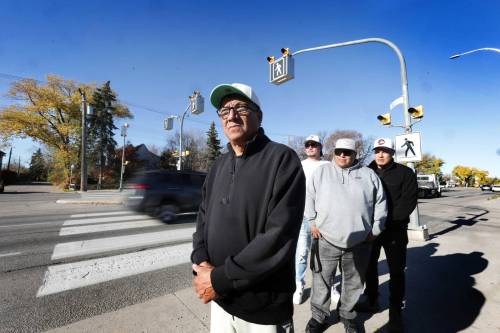
2021 census shows number of seniors over 85 expected to triple in next 25 years
Advertisement
Read this article for free:
or
Already have an account? Log in here »
To continue reading, please subscribe:
Digital Subscription
One year of digital access for only $1.44 a week*
- Enjoy unlimited reading on winnipegfreepress.com
- Read the E-Edition, our digital replica newspaper
- Access News Break, our award-winning app
- Play interactive puzzles
*Billed as $5.77 plus GST every four weeks. After 52 weeks, price increases to the regular rate of $19.95 plus GST every four weeks. Offer available to new and qualified returning subscribers only. Cancel any time.
To continue reading, please subscribe:
Add Free Press access to your Brandon Sun subscription for only an additional
$1 for the first 4 weeks*
- Enjoy unlimited reading on winnipegfreepress.com
- Read the E-Edition, our digital replica newspaper
- Access News Break, our award-winning app
- Play interactive puzzles
*Your next Brandon Sun subscription payment will increase by $1.00 and you will be charged $17.95 plus GST for four weeks. After four weeks, your payment will increase to $24.95 plus GST every four weeks.
Read unlimited articles for free today:
or
Already have an account? Log in here »
Hey there, time traveller!
This article was published 27/04/2022 (1640 days ago), so information in it may no longer be current.
OTTAWA – Canada’s seniors over the age of 85 are the fastest-growing age group in the country, marking another milestone on the slow march to what experts warn will be a crisis in care for the country’s elders.
The latest census data from 2021 shows that since 2016, the number of people aged 85 and older grew by 12 per cent — more than twice as high as the overall growth of the Canadian population at 5.2 per cent.
The number of people over 85 more than doubled since the 2001 census, and is expected to triple by 2046.

The pace of aging is expected to accelerate with every new candle added to the boomer generation’s birthday cake each year.
Last year the oldest baby boomers turned 76, and most probably live independently, said Bonnie-Jeanne MacDonald, director of financial security research at the National Institute on Ageing at Toronto Metropolitan University.
“They haven’t started hitting these critical ages that are usually associated with needing care and support,” MacDonald said. “But it’s really something that’s now very clearly on the horizon.”
Statistics Canada director of demography Laurent Martel calls the phase Canada is entering a “date with demographic destiny.”
By 2050, the 85-and-older population could reach more than 2.7 million people, the census shows, as the last cohort of baby boomers turns 85.
The question is: who will care for that generation, and where will they live?
“One of the big impacts of the aging population is on the health care system, and on the need for long-term care,” said Environics chief demographer Doug Norris.
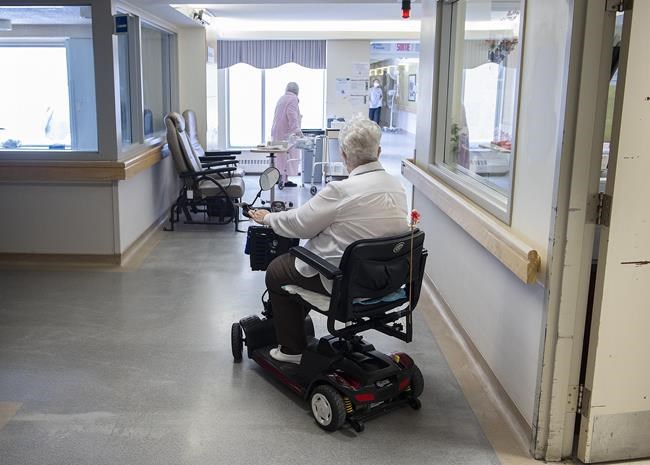
More than one in four seniors in that age bracket currently live in a “collective dwelling” like a seniors residence, nursing home, long-term care residence or hospital, the census shows.
The proportion of elders living in those settings only increases with age, as more than half of centenarians receive care in one of those homes.
Wait-lists for long-term care beds can already stretch on for years, leaving people stuck in hospitals because there is nowhere else for them to go, or families struggling to care for their loved ones at home.
“It’s going to affect the country in terms of the way the medical resources are distributed. It’s going to certainly require more of our tax budget to be allocated towards caring for seniors. But I think most of all, it’s going to affect everyone personally,” she said.
That’s especially true because Canada’s older adults have not had as many children as previous generations.
That means fewer caregivers to tend to the growing number of people who won’t have access to long-term care spaces.
“Baby boomers aren’t just the largest generation, they’re also the first generation to have relatively few children. So they’re not going to have the same family support that’s existed since basically the beginning of time,” MacDonald said.
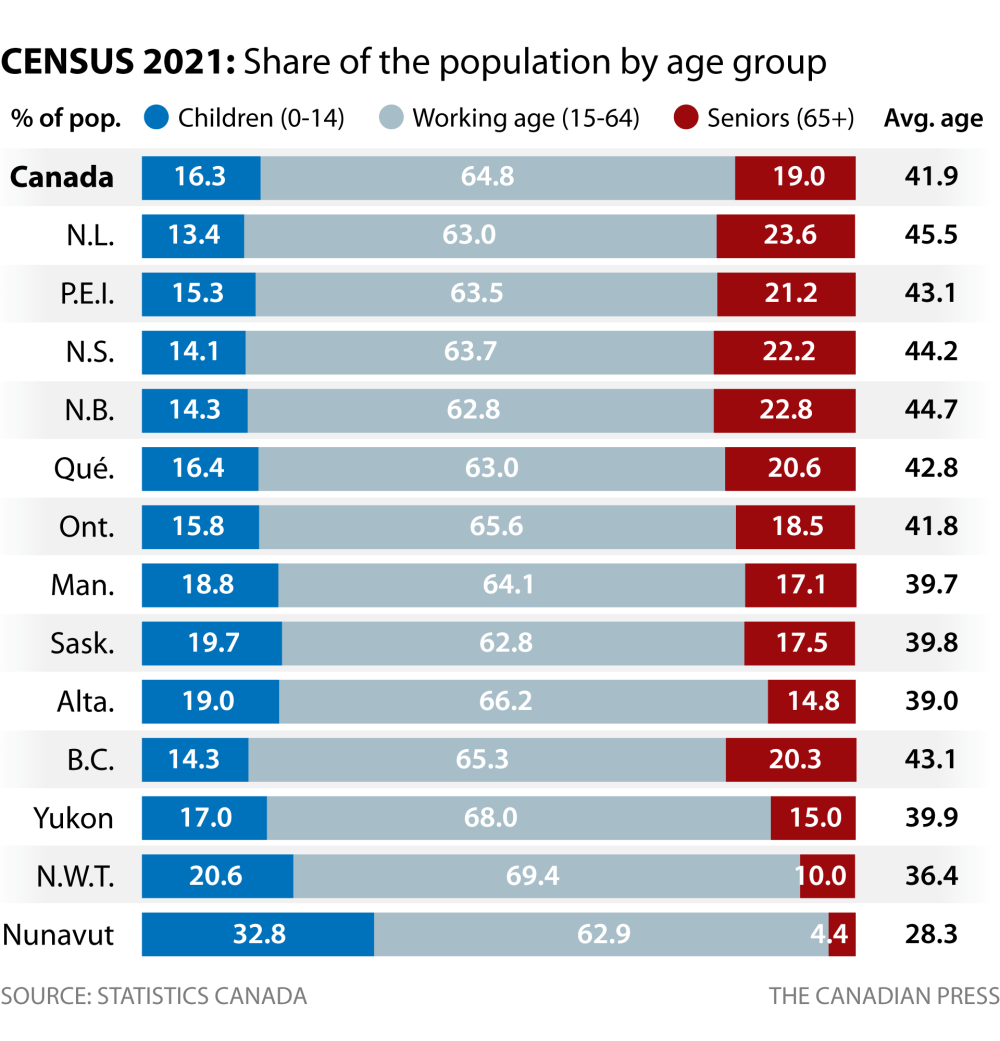
Now, with one in five people in Canada aged 65 and older, the immediate threat will be costly to avoid, she said.
While the millennial population is trending toward becoming the largest generation in Canada by 2026, the sheer number of over-85s in the country will make it difficult to fund the increased demand for health services and care.
It’s a problem MacDonald has personally contended with. When her aunt, who has no children, stopped eating at her retirement home, MacDonald and her other family members needed to take turns dropping by to feed her.
That trend could continue into the future, since birthrates have been falling since 2016, leaving fewer people to care for millennials when they reach old age as well, said Statistics Canada’s Martel.
In fact, 2020 saw the lowest birthrate since the First World War, he said.
“When you have shocks like these in the age pyramid, you do have challenges for the new generation supporting the generation on top of them, especially as this generation gets older,” Martel said.
People are also living longer, and while that’s great news, it also means health care is going to have to change to accommodate an older population.

“The health-care system in Canada was devised when the average age was like 28,” said Parminder Raina, scientific director of the McMaster Institute for Research on Aging.
“Acute-care hospitals are not designed for an aging population.”
Many of the effects of Canada’s grey wave won’t be felt for about five to 10 years, when Canada can expect to see massive increases in the number of people over 85.
But the country has already missed the boat on large new investments, since the people who need the care won’t be paying income tax toward a solution.
That means Canada will need to get creative in caring for its elders over the next decades.
“We need to create not just better systems, but smarter systems,” MacDonald said.
Solutions may look different region to region. Rural populations are aging faster than big cities, and Atlantic provinces are greying faster than the rest of the country — partially due to a lower influx of immigrants.
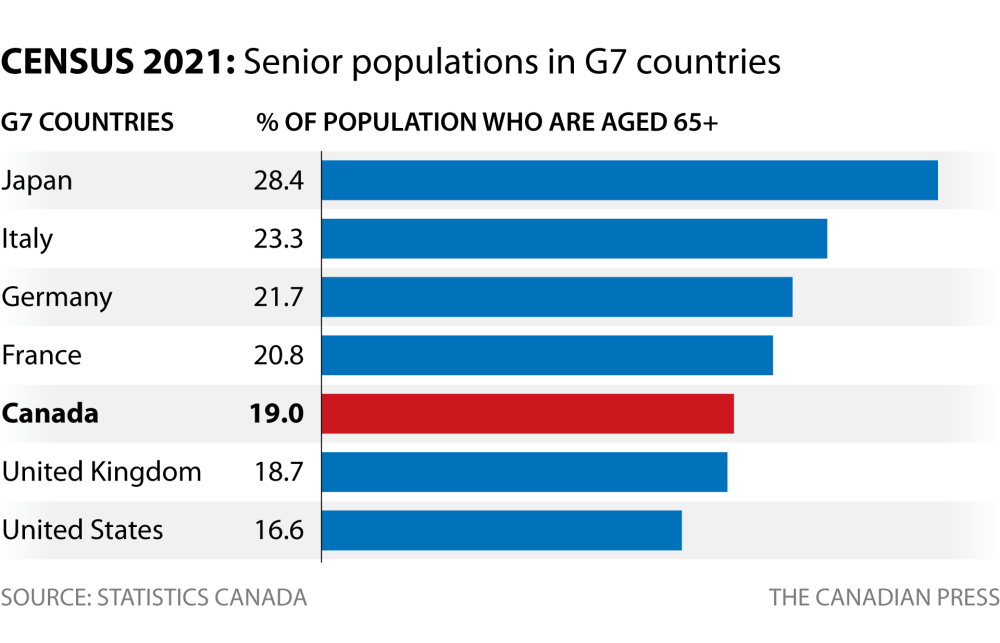
Fortunately, Canada still skews younger than some other G7 countries like France, Germany, Italy and Japan, which are ahead of the aging curve.
“We certainly can learn from their experiences,” Martel said.
This report by The Canadian Press was first published April 27, 2022.
Related Articles
1 in 300 Canadians transgender or non-binary


Advertisement Advertise With Us
Advertisement Advertise With Us