US Supreme Court’s abortion pill order spares safe havens
Advertisement
Read this article for free:
or
Already have an account? Log in here »
To continue reading, please subscribe:

Digital Subscription
One year of digital access for only $205*
- Enjoy unlimited reading on winnipegfreepress.com
- Read the E-Edition, our digital replica newspaper
- Access News Break, our award-winning app
- Play interactive puzzles
*First annual payment billed as $205.00 + GST for one year. This annual subscription will automatically renew at $233.00 + GST every 52 weeks (10% off the regular annual price of $259.35). Offer available to new and qualified returning subscribers only. Cancel any time.
To continue reading, please subscribe:
Add Free Press access to your Brandon Sun subscription for only an additional
$1 for the first 4 weeks*
- Enjoy unlimited reading on winnipegfreepress.com
- Read the E-Edition, our digital replica newspaper
- Access News Break, our award-winning app
- Play interactive puzzles
*Your next Brandon Sun subscription payment will increase by $1.00 and you will be charged $17.95 plus GST for four weeks. After four weeks, your payment will increase to $24.95 plus GST every four weeks.
Read unlimited articles for free today:
or
Already have an account? Log in here »
Hey there, time traveller!
This article was published 14/04/2023 (1226 days ago), so information in it may no longer be current.
Before the U.S. Supreme Court stepped in Friday, access to an abortion pill was in line to become more cumbersome in California, New York and some other states that have positioned themselves as safe havens for those seeking to end their pregnancies.
The order keeps in place federal rules for use of mifepristone, one of the two drugs usually used in combination in medication abortions. The legal saga isn’t over: The Supreme Court suggested it will decide the issue by Wednesday.
The high court’s position at least pauses a ruling issued last Wednesday by the 5th U.S. Circuit Court of Appeals in New Orleans that would have allowed mifepristone sales to continue, but under rules adopted by the Food and Drug Administration in 2000, before a series of changes that relaxed access.
The 5th Circuit ruling, which overturned another recent federal court order halting mifepristone sales nationwide, was set to take effect Saturday. It would have required the drug to be taken in the presence of a physician, ruling out mailing it to patients.
“That’s not good for all of these states that are trying to help other people,” Jolynn Dellinger, a senior lecturing fellow at Duke Law School who has been following the mifepristone litigation, said before the Supreme Court ruled.
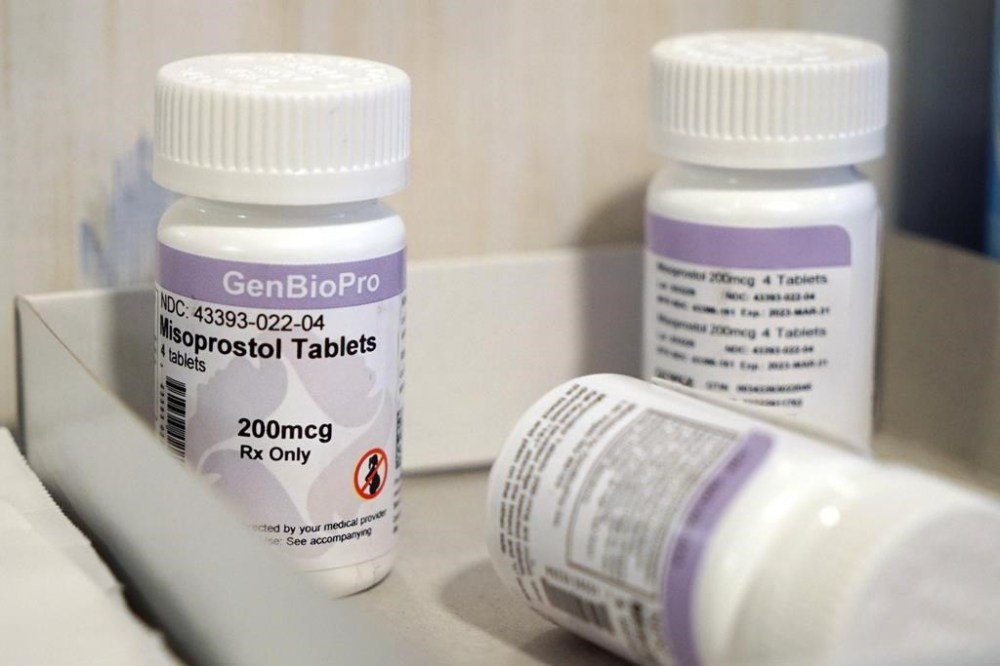
None of the rulings affect the other abortion pill, misoprostol, which can be used alone to end pregnancies but is more effective when taken in combination with mifepristone.
For the 13 states with bans on abortion at all stages of pregnancy and the one with a ban on abortion after cardiac activity can be detected, reverting to the old rules would have had little to no effect on abortion policy.
At least 10 other states had restrictions that already placed limits on medication abortion, according to an analysis by the Kaiser Family Foundation. For instance, in Georgia, it’s legal only in the first six weeks of pregnancy; in Kansas, an ultrasound at an office visit is required before it’s dispensed; and in North Carolina, it can’t be prescribed via telehealth.
On the other side, 17 states controlled by Democrats apparently would not have been affected by the change either; in a separate but closely related case last week, a judge sided with them in their request that mifepristone access not be changed there.
That would have left just eight states where returning to the pre-2016 rules could have had a major impact: Democrat-controlled California, Massachusetts, New Jersey and New York — all states that have protected abortion access and welcomed out-of-staters seeking abortions — Republican-controlled Alaska and Montana and politically divided New Hampshire and Virginia.
California, Massachusetts and New York have stockpiled abortion pills in case of restrictions, and Maryland’s governor announced Friday that his state was doing the same. New Jersey Gov. Phil Murphy has said he’s considering doing so.
Maryland Gov. Wes Moore, a Democrat, said his administration has partnered with the University of Maryland Medical System to ensure access to mifepristone.
“As a member of the Reproductive Freedom Alliance, Maryland will not stand for this assault on women’s health care,” Moore said. “This purchase is another example of our Administration’s commitment to ensure Maryland remains a safe haven for abortion access and quality reproductive health care.”
___
Associated Press/Report for America Statehouse News Initiative journalist Maysoon Khan in Albany, New York, contributed to this report. Report for America is a nonprofit national service program that places journalists in local newsrooms to report on undercovered issues.