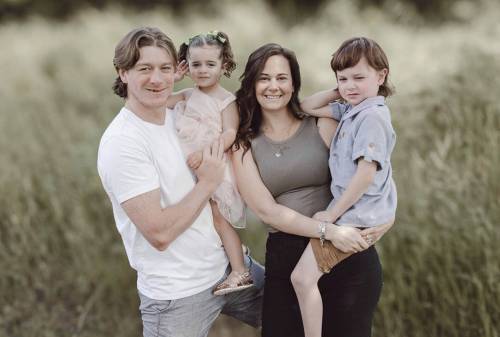
‘He is still fighting’
Six-year-old with brain tumour thrives; family raises money for research
Advertisement
Read this article for free:
or
Already have an account? Log in here »
To continue reading, please subscribe:
Digital Subscription
One year of digital access for only $1.44 a week*
- Enjoy unlimited reading on winnipegfreepress.com
- Read the E-Edition, our digital replica newspaper
- Access News Break, our award-winning app
- Play interactive puzzles
*Billed as $5.77 plus GST every four weeks. After 52 weeks, price increases to the regular rate of $19.95 plus GST every four weeks. Offer available to new and qualified returning subscribers only. Cancel any time.
To continue reading, please subscribe:
Add Free Press access to your Brandon Sun subscription for only an additional
$1 for the first 4 weeks*
- Enjoy unlimited reading on winnipegfreepress.com
- Read the E-Edition, our digital replica newspaper
- Access News Break, our award-winning app
- Play interactive puzzles
*Your next Brandon Sun subscription payment will increase by $1.00 and you will be charged $17.95 plus GST for four weeks. After four weeks, your payment will increase to $24.95 plus GST every four weeks.
Read unlimited articles for free today:
or
Already have an account? Log in here »
Hey there, time traveller!
This article was published 15/07/2024 (826 days ago), so information in it may no longer be current.
Gordie White wasn’t supposed to be here.
The six-year-old from Brandon was diagnosed with an inoperable tumour known as diffuse intrinsic pontine glioma or DIPG three years ago.
His parents, Ryan and Sarah White, continue to raise money to try to find a cure for childhood cancer and advocate for patients in similar situations to their son.
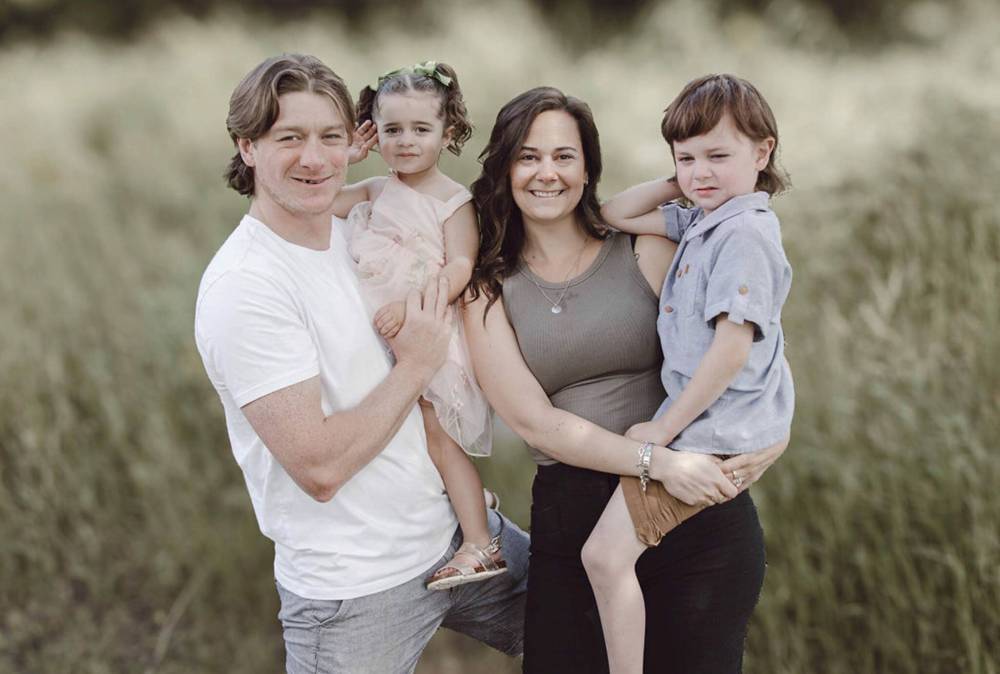
“He’s an amazing little boy,” Sarah said. “He wakes up every day with a smile on his face.”
Sarah, Ryan, Gordie, and his younger sister Molly all caught COVID-19 in January 2022. A few weeks later, Sarah noticed he was slurring his words and his face started to droop. She was told Gordie had developed Bell’s palsy, an unexplained period of facial weakness or paralysis.
He was given steroids, which temporarily helped. Sarah was worried and took Gordie to the hospital when the symptoms came back a few weeks later.
A CT scan found a mass in his brain. Gordie was taken to Winnipeg for an MRI and that’s when the family was told he had DIPG and only had nine to 11 months left to live.
“Devastating,” Sarah said of the diagnosis. “They say… all he can do is go home and make memories. It was gut-wrenching.”
The family was told he could have radiation treatment to extend his life, but there was no cure.
They were also told there wasn’t enough money for research and to change that, it had to come from families with children diagnosed with DIPG, Sarah said.
“They told us no money will save your child because they can’t find a cure,” Sarah said. “My husband and I, we refused to accept that. We knew we would fight for our child.”
The White family raised more than $15,000 in June and donated the money to the lab used by Gordie’s Winnipeg doctor, Magimairajan Issai Vanan, to support treatment for DIPG.
The cancerous tumour grows in the brain stem and is difficult to treat because it’s protected by the blood-brain barrier. In healthy brains, it prevents anything harmful from reaching the brain. The blood-brain barrier is stronger in the brain stem.
“The tumour hijacks this blood-brain barrier and tries to protect itself,” said Vanan. “Whatever we try to do in terms of treatment, except radiation… most of the times it doesn’t get into the tumour because of the barrier.”
He sees an average of two children with DIPG every year. Vanan’s research often takes a “back seat” to spend more time with his patients. His team is the only one that treats children with brain tumours so their patient workload is “enormous.”
Vanan’s research focuses on finding medications to open that barrier and allow medication to reach and kill the tumour cells.
Sarah said Gordie is being treated with medicinal CBD and THC along with an experimental drug called ONC201 that is only available in the United States. The family strongly believes this combination of medication is helping Gordie.
They fly to Rochester, N.Y., every 12 weeks to get the medication, meaning they have to take time off work and pay out of pocket for travel, although the drug is free.
Sarah said it would make a huge difference to have the medication available in Canada.
“It would be an accomplishment to know that we have helped other people in Canada because there are so many people who do not even have the doctors that are helping us,” Sarah said. “If we can bring it to Canada, we know that we are stepping in the right direction.”
Sarah’s mom is determined to make ONC201 accessible here.
Robbie Zetariuk said she retired to be able to advocate for Gordie, her second grandchild, whom she calls “love bug.”
“You raise three children and then find the ultimate joy of having grandchildren,” Zetariuk said. “It’s not something you ever feel you’ll be faced with — that your youngest child is told she’s going to lose her firstborn in less than a year. There’s really no words to describe it.”
Zetariuk said she plans on enjoying the summer and time with her four grandchildren after working for the past 47 years. She will start meeting with Vanan in September to learn how she can help bring ONC201 to Canada.
She knows there might not be a cure during Gordie’s lifetime but hopes to raise awareness about DIPG and help other families who are going through the same struggle.
“I will have time and I will have energy, but more importantly, I have the passion and commitment to be able to save this little boy’s life,” Zetariuk said.

Zetariuk says Gordie is mischievous, funny and “lights up the room wherever he goes.”
Sarah said he loves his little sister, Star Wars and playing hockey and baseball.
They’re doing everything they can to make memories with Gordie, Sarah said while in Disneyland last week. The family has gone to Disney World the past two summers.
“It’s a milestone for him every summer,” Sarah said. “It’s a reminder that we are still doing this. He is still fighting.”
jura.mcilraith@freepress.mb.ca
History
Updated on Thursday, July 18, 2024 5:46 PM CDT: Adds Cancer Care facts.