Staying safe in a wildfire: What to pack and when to evacuate
Advertisement
Read this article for free:
or
Already have an account? Log in here »
To continue reading, please subscribe:

Digital Subscription
One year of digital access for only $205*
- Enjoy unlimited reading on winnipegfreepress.com
- Read the E-Edition, our digital replica newspaper
- Access News Break, our award-winning app
- Play interactive puzzles
*First annual payment billed as $205.00 + GST for one year. This annual subscription will automatically renew at $233.00 + GST every 52 weeks (10% off the regular annual price of $259.35). Offer available to new and qualified returning subscribers only. Cancel any time.
To continue reading, please subscribe:
Add Free Press access to your Brandon Sun subscription for only an additional
$1 for the first 4 weeks*
- Enjoy unlimited reading on winnipegfreepress.com
- Read the E-Edition, our digital replica newspaper
- Access News Break, our award-winning app
- Play interactive puzzles
*Your next Brandon Sun subscription payment will increase by $1.00 and you will be charged $17.95 plus GST for four weeks. After four weeks, your payment will increase to $24.95 plus GST every four weeks.
Read unlimited articles for free today:
or
Already have an account? Log in here »
Hey there, time traveller!
This article was published 07/01/2025 (647 days ago), so information in it may no longer be current.
Evacuating a wildfire area can be scary, but experts say people can significantly improve their own safety with a little preparation and common sense.
Creating a wildfire action plan, packing a “go bag” and maintaining basic situational awareness during evacuations can make a big difference when escaping a disaster, Jesse Torres, a battalion chief for the California Department of Forestry and Fire Protection, or Cal Fire, said
But the most important tip? Don’t wait around for an evacuation order, Torres said.
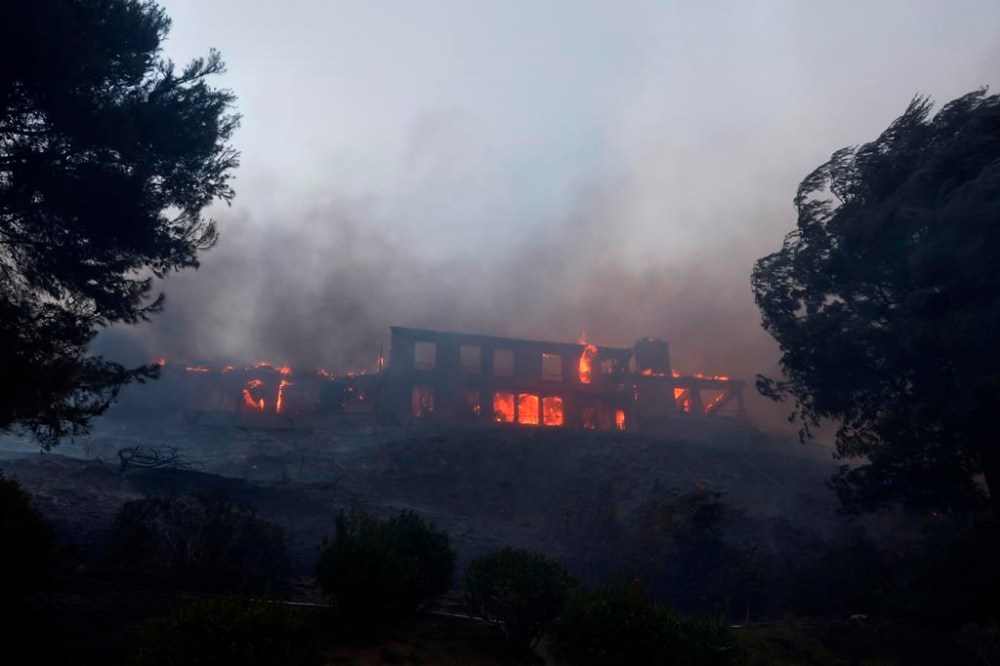
“The biggest thing is to get out early, before the notifications come out. It’s so important to avoid the congestion,” he said. That’s especially true in areas that have narrow roadways or limited routes, Torres said, because traffic jams can form quickly: “Everyone’s doing the same thing — they’re all trying to get out.”
Here are some safety tips on what to do before and during a wildfire evacuation, and what to do if you get trapped.
Sign up for regional alert systems
Many communities, including several in California, have warning alert systems that allow residents to sign up for push notifications to their mobile phones or email accounts.
FEMA has a downloadable app that provides real-time alerts on mobile phones, and public safety agencies can also push alerts to television, radio and wireless devices through the Integrated Public Alert & Warning System. The NOAA Weather Radio All Hazards is a nationwide network of radio stations that broadcast continuous weather information as well as official Weather Service warnings, forecasts and other hazard information.
A battery- or crank-operated portable radio can also be a critical tool for receiving emergency alerts, especially in areas where cellular service is unreliable or when regional cellular towers might be threatened by wind, fire or other hazards.
Have an emergency action plan
Household emergency action plans help ensure that all members of a family know exactly what to do and where to go during a wildfire. The U.S. Department of Homeland Security says emergency plans should be tailored for a household’s unique circumstances, taking into account things like special medical needs or whether a family has livestock.
Strong wildfire action plans typically include: A pre-arranged meeting point well outside the area of danger where household members can meet to determine who has evacuated; multiple escape routes out of the area so people know which way to go if one pathway to safety is blocked; arrangements for any family members with disabilities or medical conditions; arrangements for pets and livestock; and a communication plan that identifies someone outside the area to be the main contact point in case household members get separated.
Pack a ‘Go Bag’
When it’s time to evacuate, having a pre-packed “go bag” or emergency supply kit can save valuable minutes, Torres said.
Cal Fire says a “go bag” should include a map with at least two evacuation routes; necessary prescriptions or medical items like eyeglasses; extra car keys, cash or credit cards; a basic first aid kit; a flashlight and battery-powered radio with extra batteries; and copies of important documents like passports or birth certificates. It should also include a three-day supply of non-perishable food and water per person, as well as food and water for any pets. N95 masks can help filter out many of the particles in wildfire smoke, and an extra cellphone battery or charger can also be helpful.
“Go bags” should be accessible and easy to grab in an emergency, Torres said.
“Plan like you’re going on a trip for seven days. Have clothes, toilet paper, toothbrush, soap, a towel in there,” Torres said. “You might end up in an evacuation center, or you might end up with family, so be prepared.”
Protect your home
If time allows, the U.S. Department of Agriculture recommends connecting water hoses and filling garbage cans, tubs, pools and the like with water to help firefighters if they end up on your property.
“Close all your windows, and if you’re able to and aware of how to do it safely, shut off the gas and power to your home,” he said. Closing doors, windows and vents will help prevent embers from blowing inside and catching the interior on fire, Torres said.
Don’t wait — just go
Even if you don’t have a “go bag” or a wildfire action plan set up, don’t dally if you feel like danger is near, Torres said.
Fires can move faster than humans, especially when they are driven by high winds. And all sorts of things, including downed power lines, thick smoke, abandoned cars, blowing debris and heavy traffic can impede escape routes during emergencies.
“Just get out of those warning- and evacuation order-zones. If you have family on the other side of the county, go to the other side of the county,” Torres said. “Get out and get off the roadways as soon as possible.”
What to do if you are trapped
If you can’t evacuate, your car breaks down or you get stuck for some other reason, don’t panic, Torres said. Instead, take a look around and call 911.
“Realize where you are, what street you are at. Can you see an address sign? Call 911, so we can get resources out to you to try to find you,” Torres said.
Sometimes people lose sight of the fire during an evacuation, and it can be hard to tell where they are in all the smoke. An intersection or landmark can help emergency responders identify someone’s location and determine if they are in immediate danger, he said. Again, it’s crucial not to delay — go ahead and call 911 to “get that process started,” said Torres.
If someone can walk to a safe spot, they should do that, Torres said. In that scenario, stay on a main route if possible, because that increases the chances of being spotted by a passing car or emergency responder, he said.