First Nations chiefs call out Ottawa over pipeline deal that doesn’t mention water

Advertisement

Advertise with us

OTTAWA - Some First Nations chiefs are demanding answers from Ottawa after the federal government signed a pipeline agreement with Alberta that failed to make any mention of fresh water.

Read this article for free:


or

Already have an account? Log in here »

To continue reading, please subscribe:

Subscribe and receive a limited-edition Free Press branded hat or tote.

Digital Subscription

One year of digital access for only $205*

  • Enjoy unlimited reading on winnipegfreepress.com
  • Read the E-Edition, our digital replica newspaper
  • Access News Break, our award-winning app
  • Play interactive puzzles

*First annual payment billed as $205.00 + GST for one year. This annual subscription will automatically renew at $233.00 + GST every 52 weeks (10% off the regular annual price of $259.35). Offer available to new and qualified returning subscribers only. Cancel any time.

To continue reading, please subscribe:

Add Free Press access to your Brandon Sun subscription for only an additional

$1 for the first 4 weeks*

  • Enjoy unlimited reading on winnipegfreepress.com
  • Read the E-Edition, our digital replica newspaper
  • Access News Break, our award-winning app
  • Play interactive puzzles
Start now

*Your next Brandon Sun subscription payment will increase by $1.00 and you will be charged $17.95 plus GST for four weeks. After four weeks, your payment will increase to $24.95 plus GST every four weeks.

Hey there, time traveller!
This article was published 22/01/2026 (257 days ago), so information in it may no longer be current.

OTTAWA – Some First Nations chiefs are demanding answers from Ottawa after the federal government signed a pipeline agreement with Alberta that failed to make any mention of fresh water.

The memorandum of understanding — which opens a door to building a pipeline to transport bitumen from Alberta to the B.C. coast — does not touch on the high level of water consumption required to pull bitumen out of the oilsands. It also doesn’t mention the threat to fresh water sources posed by the tailings ponds oilsands operations leave behind.

In 2021, the federal government launched the Crown-Indigenous Working Group to develop options alongside affected First Nations and Métis communities to manage and remediate the heavily polluted tailings ponds.
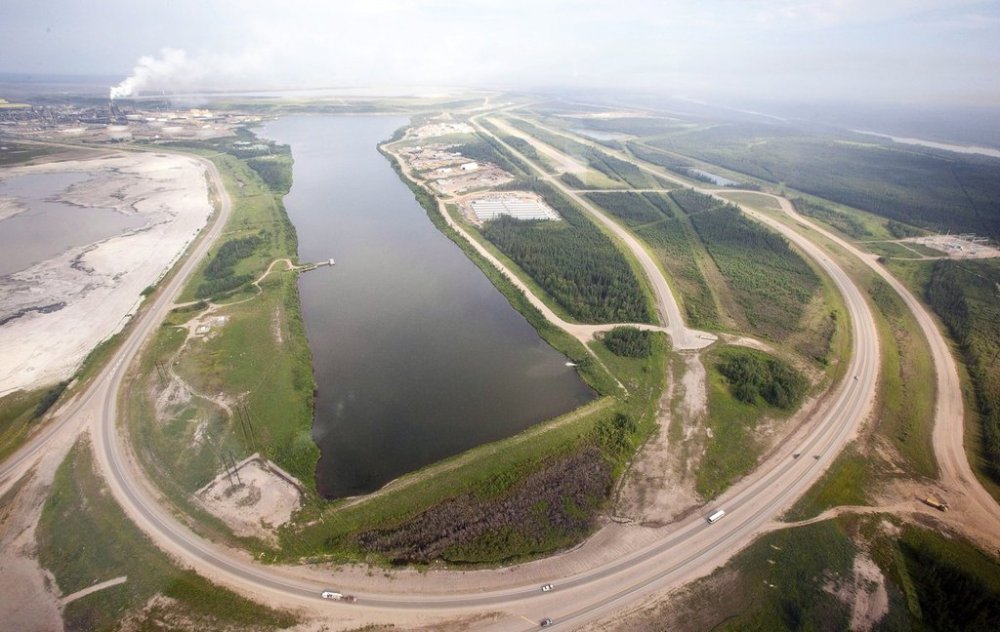
A highway loops around a tailings pond at the Syncrude facility near Fort McMurray, Alta., on July 10, 2012. THE CANADIAN PRESS/Jeff McIntosh

The Privy Council Office did not respond directly when asked why water was not part of the agreement with Alberta, or whether the major projects office will require water quality standards and the treatment of effluent in Alberta’s proposal.

It instead stated again the major projects office will work with Indigenous communities and the federal government commits to upholding the United Nations Declaration on the Rights of Indigenous Peoples.

One Indigenous water watchdog group projects in a new report that tailings ponds in Alberta could cover an area larger than neighbouring First Nations by 2070.

“For the Nations that have long cared for these waters and whose treaty rights affirm their continued relationship to the land, this comparison makes clear the magnitude of the encroachment and the risks carried forward into the future,” said the report released last month by Keepers of the Water.

The federal-provincial agreement was signed just weeks before Indigenous Services Minister Mandy Gull-Masty — during an interview with The Canadian Press — declined to commit to including source water protections in a long-promised First Nations clean drinking water bill.

Source water protection was included in a previous version of the legislation, introduced by former prime minister Justin Trudeau’s government. That bill failed to pass before Parliament was prorogued last year.

Provincial governments in Alberta and Ontario objected to that legislation, saying it could affect their ability to pursue development. First Nations leaders, meanwhile, demanded that Gull-Masty not bow to the demands of the provinces.

The only mention of water in the agreement with Alberta has to do with a prospective pipeline’s path to the Pacific coast. The agreement says exporting bitumen through a deepwater port in B.C. to Asian markets could require the termination of an oil tanker moratorium that has been law since 2019.

Coastal First Nations president Marilyn Slett said she called on Prime Minister Mark Carney in a meeting last week to maintain and protect the oil tanker moratorium, warning that “it would take just one spill to destroy our way of life.”

Chiefs in Alberta are particularly concerned about tailing ponds, which have a history of leaking into their water sources. One tailings pond leak went unreported for nine months in 2022.

Trevor Mercredi, grand chief of Treaty 8 First Nations in Alberta, said he doesn’t think environmental protections and water safety are top priorities for government and industry right now.

“I don’t know if they’ll ever deal with it,” said Mercredi, who also serves on the Indigenous advisory council in the federal government’s major projects office, which will review the eventual pipeline proposal.

He said the federal government just wants “to get through these projects” and deal with the fallout later.

Keepers of the Water executive director Jesse Cardinal said the federal government’s ambitions for the energy sector are running up against a hard limit on available water.

“The tailings ponds are biggest they’ve ever been. They’re twice the size of the city of Vancouver … We don’t have the water for these pipe dreams that the Alberta government has,” Cardinal said.

She said Indigenous Peoples aren’t the only ones threatened by excessive water consumption — farmers who depend on irrigation and Albertans who want to see their kids grow up in a safe environment also need to take notice.

“We cannot continue the way we’re going without conserving …” she said. “We’re not saying we want (Canadians) to be unemployed and destitute. But we’re all going to be destitute if we don’t work together. It’s inevitable.”

The federal government committed $12 million over 10 years for the Fort Chipewyan Health Study to examine the impacts of the oilsands on community members’ health.

When the funding was announced in 2024, a news release said the study could determine whether there are heightened risks of cancer or other health impacts in communities downstream from oilsands operations. Indigenous communities along the Athabasca River point to elevated cancer rates in their communities.

“We couldn’t wait for external funding support. The number of issues were piling up and the concerns of our community members are serious. We needed to act,” Mikisew Cree First Nation Chief Billy-Joe Tuccaro said at the time.

Mikisew Cree First Nation and Keepers of the Water have for years raised the alarm over tailings ponds and the lack of progress on cleaning them up. They’re holding a conference in March to discuss the issue and have invited Prime Minister Mark Carney to attend.

A discussion paper on managing tailings ponds was published last February by Environment and Climate Change Canada. It was developed in partnership with the Crown-Indigenous Working Group.

“The (Crown-Indigenous Working Group) is committed to understanding the potential impacts and risks of all options and ensuring that any impacts to treaty and Aboriginal rights resulting from the potential release of oilsands mining effluent are thoroughly assessed, understood and avoided,” the paper said.

“The CIWG process is part of the consultation process the federal government is undertaking with potentially impacted Indigenous communities, exploring alternatives that avoid, accommodate or mitigate impacts.”

This report by The Canadian Press was first published Jan. 21, 2026.

Report Error Submit a Tip

More Stories

‘Amazing honour’: Winnipeg distribution centre continues award-winning ways for McKesson Canada

Aaron Epp 5 minute read Preview

‘Amazing honour’: Winnipeg distribution centre continues award-winning ways for McKesson Canada

Aaron Epp 5 minute read Yesterday at 6:00 AM CDT

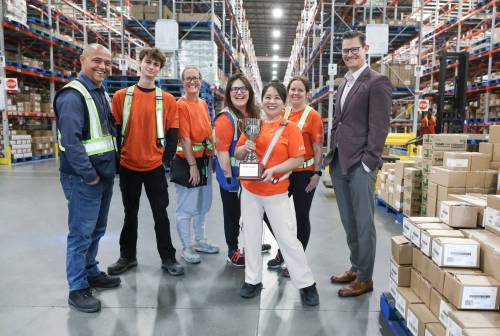
After a three-year absence, the trophy is back in Winnipeg.

Last week, McKesson Canada named its 120,000-square-foot pharmaceutical distribution centre in the northwest part of the Manitoba capital its Distribution Centre of the Year. The award recognizes the facility’s role in helping essential medications reach communities across the province and some of Canada’s remote regions.

This is the fourth time the Winnipeg facility has earned the company-wide award since it opened five years ago. McKesson previously honoured the centre in 2021, 2022 and 2023. The recognition comes with a trophy, as well as a banner that was hung from the rafters on Thursday.

More than 100 employees work across the centre’s day-and-night operations, processing between 80,000 and 100,000 medication units daily. Last year, the centre distributed more than 21 million medication units while maintaining more than 99 per cent accuracy.

Read
Yesterday at 6:00 AM CDT

Essential workers ruling raises questions

Editorial 4 minute read Preview

Essential workers ruling raises questions

Editorial 4 minute read 2:00 AM CDT

Ever been to a Dynacare clinic? Most of us have been. It’s an amazing demographic and ethnic slice of the city we’ve become.

Read
2:00 AM CDT

Scare up some social reconnection this fall

Maureen Scurfield 4 minute read 2:00 AM CDT

DEAR MISS LONELYHEARTS: I’m an emotional mess. My lesbian girlfriend and I broke up in August, and now I hold the lease on the apartment we shared. It’s a great big old place with two spacious balconies.

I just got new roommates — two younger friends who really love it here — but secretly I’m still feeling lonely. Every minute of living here reminds me of my girlfriend because we decorated the place together and hung out on the balconies to sunbathe in the summer.

Would it help to move out of my beloved old block with its memory triggers? Maybe, but what if I died of loneliness in a new place? I need people around me, and no one but my ex-girlfriend has really been the right person. Please help. I feel sick about this.

— Love-Nest Sadness, Winnipeg

Real journalists matter in an AI world

Paul Deegan 4 minute read Preview

Real journalists matter in an AI world

Paul Deegan 4 minute read 2:00 AM CDT

An algorithm can decide what you see, but it doesn’t report the news. Nunatsiaq News, an award-winning newspaper in Nunavut, recently reported that a so-called “news” website was posting AI-generated articles about the north by stealing real news stories produced by real journalists.

The articles were supposedly written by Nunavut correspondent Leah Qammaniq — a fake journalist, with a fake photo and a fake bio.

Governor General Louise Arbour warned us of fake news in her installation speech in June. She said, “We must continue to protect the public space in which our national debates take place: from schools and universities to the media, political parties, unions and civil society organizations …With instant access to vast amounts of information, it is very tempting to pay little attention to the reliability of sources. The lines between knowledge and belief, between truth and falsehood, between facts and assumptions, are increasingly blurred. AI could be threatening not only the way we live and work, but also the control we exercise over our own destiny.”

The Government of Canada has recognized the problem as well. Its recent discussion paper, Enhancing trust in artificial intelligence through increased transparency, stated, “Canadians encounter news reporting, product reviews, and audio-visual content across the internet, often without any indication of whether it was written by a person, generated by an AI system, or produced through some combination of both … A particular concern within this broader landscape is that generative AI greatly enables the creation and dissemination of deceptive or misleading content.”

Read
2:00 AM CDT

Clocks stay in daylight saving, but analysis backs permanent standard time

Ashley Joannou, The Canadian Press 5 minute read Preview

Clocks stay in daylight saving, but analysis backs permanent standard time

Ashley Joannou, The Canadian Press 5 minute read Updated: Yesterday at 6:15 AM CDT

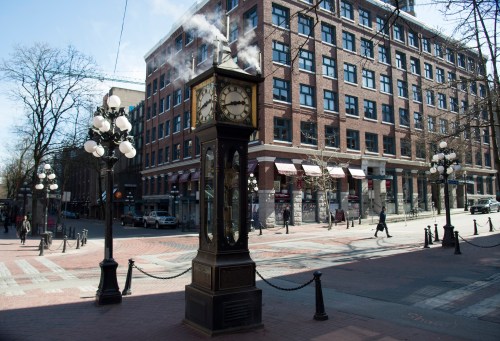
VANCOUVER - Ralph Mistlberger's light is adjustable, allowing him to have the full spectrum of options depending on what his internal clock needs.

"You want cool in the morning. You want warm in the evening or warm in the afternoon," he said.

"And so, it goes from being more bluish in the morning to more reddish in the evenings. Both of those are important because artificial light affects your clock."

Mistlberger knows real sunlight is better than a lamp, but after more than 40 years as a neuroscientist studying sleep and the body's circadian rhythms, he's preparing for what's to come Nov. 1.

Read
Updated: Yesterday at 6:15 AM CDT

Telekinetic teen hits small screen

Denise Duguay 4 minute read Preview

Telekinetic teen hits small screen

Denise Duguay 4 minute read 2:00 AM CDT

At desperate times like these, it’s good to be reminded that one person can make a difference. A telekinetic high schooler, grieving lover, ambitious law firm, frantic father and spiritual climber offer a variety of inspiring lessons in this new offering of TV recommendations.

Carrie (series premières Wednesday, Oct. 7 on Prime Video)Famously over-the-top filmmaker Brian De Palma (Phantom of the Paradise, Dressed to Kill, Scarface) directed the 1976 Carrie into its status as one of the scariest films of the time and beyond. It became better known than the debut horror novel by Stephen King from which it was adapted. It even trumped the three adaptations that followed. This new TV series looks ready to challenge that supremacy. Taking the title role made famous by Sissy Spacek, Manitoba actress Summer H. Howell (see Randall King’s interview at wfp.to/carrie) plays a homeschooler thrilled to finally be allowed to attend public high school. But when the mean girls begin circling and blood manifests in scary new ways, the new girl’s telekinetic potential blossoms in spectacular fashion. Also of horrific note as Halloween approaches: Below (Netflix miniseries premièring Thursday) stars Josh Hartnett as a fisherman trying to protect his family and town from a mysterious sea creature; Eternally Yours (sitcom premièring Thursday, Oct. 8, on CBS/Global) is a new vampire comedy; and Crystal Lake (thriller series premières Oct. 15 on Crave) stars Linda Cardellini (DTF St. Louis) as Pam Voorhees, single mom of a tormented kid named Jason, in this Friday the 13th origin story. Boo!


Small Prophets (series Canadian première Wednesday, Oct. 7, on Apple TV)Canadian fans of British TV have been champing at the bit for this quirky series since its acclaimed U.K. première in February. It’s a shaggy, quietly hilarious character study in the vein of Detectorists (2014-22, AcornTV), both of which were created by Mackenzie Crook (Pirates of the Caribbean), who also starred in Detectorists and plays a supporting role in Small Prophets. When the new story opens, Michael Sleep (Detectorists’ Pearce Quigley) is living a life of quiet desperation, visiting his father (Sir Michael Palin) and pining for the return of his disappeared beloved, Clea. Until, that is, Dad shares a loony alchemical recipe that sparks hope in Michael that he might be able to summon spirits to then summon Clea to … the garden shed? Not as creepy as it sounds? A tale of hope, frustratingly indirect action, meddlesome and ineffectual neighbours and, of course, true, true love.

Read
2:00 AM CDT