More health workers strike as Ebola cases in Congo exceed 2,000, including 754 deaths

Advertisement

Advertise with us

BUNIA, Congo (AP) — The number of confirmed cases of Ebola in Congo has reached 2,011, including 754 deaths, according to government data released overnight in what authorities say is the fastest-growing outbreak on record.

Read this article for free:


or

Already have an account? Log in here »

To continue reading, please subscribe:

Subscribe and receive a limited-edition Free Press branded hat or tote.

Digital Subscription

One year of digital access for only $205*

  • Enjoy unlimited reading on winnipegfreepress.com
  • Read the E-Edition, our digital replica newspaper
  • Access News Break, our award-winning app
  • Play interactive puzzles

*First annual payment billed as $205.00 + GST for one year. This annual subscription will automatically renew at $233.00 + GST every 52 weeks (10% off the regular annual price of $259.35). Offer available to new and qualified returning subscribers only. Cancel any time.

To continue reading, please subscribe:

Add Free Press access to your Brandon Sun subscription for only an additional

$1 for the first 4 weeks*

  • Enjoy unlimited reading on winnipegfreepress.com
  • Read the E-Edition, our digital replica newspaper
  • Access News Break, our award-winning app
  • Play interactive puzzles
Start now

*Your next Brandon Sun subscription payment will increase by $1.00 and you will be charged $17.95 plus GST for four weeks. After four weeks, your payment will increase to $24.95 plus GST every four weeks.

BUNIA, Congo (AP) — The number of confirmed cases of Ebola in Congo has reached 2,011, including 754 deaths, according to government data released overnight in what authorities say is the fastest-growing outbreak on record.

Health workers at Bunia General Hospital, the region’s largest medical center, went on strike Wednesday and are the latest group to walk off the job at the epicenter over payment issues. Health professionals and other front-line workers barricaded the entrance to the hospital, claiming they have not received pay despite working under difficult conditions.

The World Health Organization says more than 100 healthcare workers have been infected since the beginning of the outbreak.
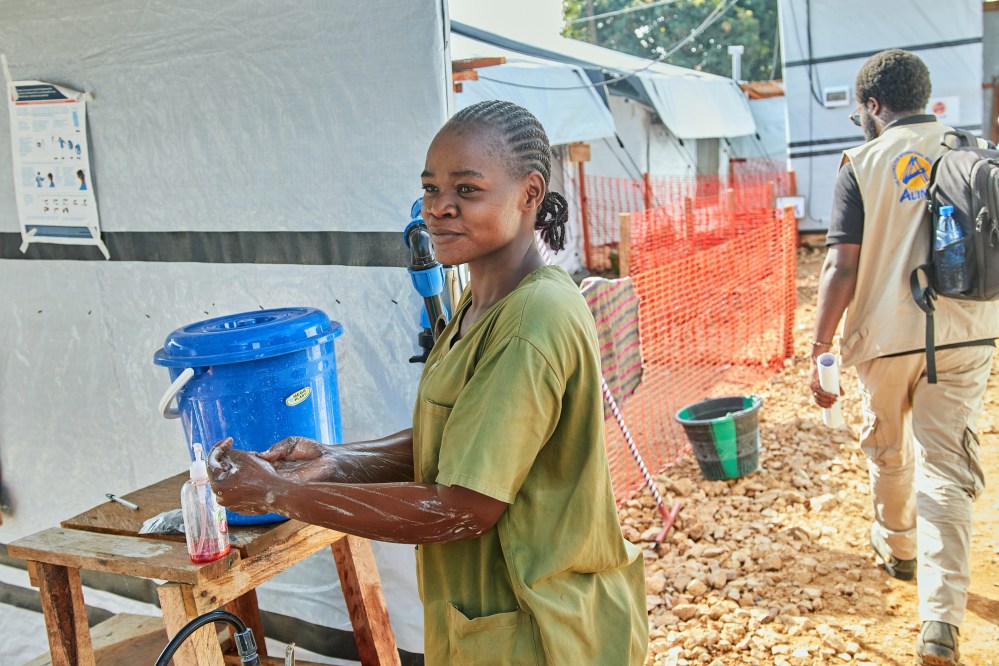
Health workers stand at the Evangelical Medical Center, in Bunia, eastern Congo, Friday, July 3, 2026, where Ebola clinical trials are scheduled to take place. (AP Photo/Dirole Lotsima Dieudonne)

The Central African nation has been battling the Ebola outbreak caused by the rare Bundibugyo virus since May 15. A total of 753 patients remain in isolation or in hospitals, while 366 have recovered so far, according to data from Congo’s Ministry of Health.

The outbreak continues to spread faster than health officials can track despite an expanding response. At least 80% of new cases are emerging from unknown chains of transmission, the WHO said Tuesday.

A key challenge is that health authorities have yet to identify the outbreak’s patient zero, while displacement from armed conflict and mining-related movements have made it difficult to trace thousands who have come in contact with infected individuals.

The authorities have been able to trace 67% of the contacts of those exposed to confirmed cases, Congo’s health ministry said.

Many of the newly reported deaths are of people who died in their communities without ever reaching a health facility and without receiving care, Dr. Chikwe Ihekweazu, the WHO emergencies chief, said Tuesday after returning from Bunia in Ituri, the worst-hit province in the outbreak.
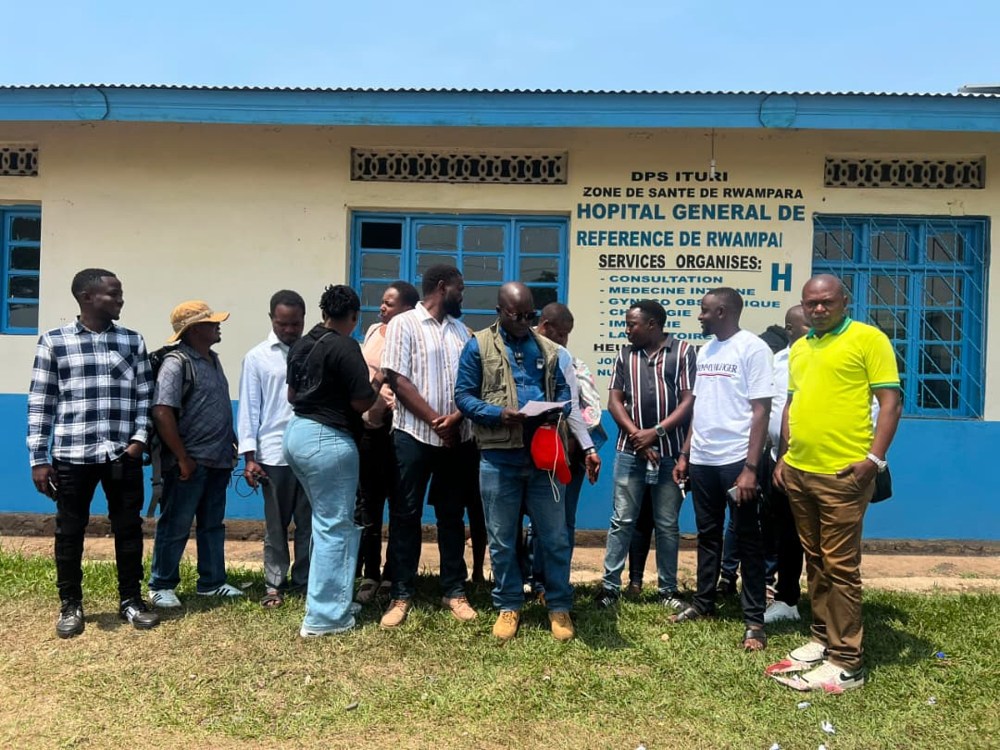
Workers at an Ebola treatment center go on strike over unpaid salaries and bonuses at Rwampara General Hospital, in Ituri, northeastern Congo, Monday, July 13, 2026, (AP Photo/Prosper Heri Ngorora)

The response is being hampered by a funding gap, attacks on health centers, an ongoing conflict in eastern Congo, and mistrust among local communities.

Dozens of healthcare workers at an Ebola virus treatment center in Rwampara, another hard-hit city in the Ituri province, went on strike over unpaid salaries and bonuses on Monday. On Tuesday, they agreed to resume work on condition the government pay them within 72 hours.

Some have told The Associated Press they have not received any payment since they started work at the onset of the outbreak.

Response efforts have also been challenged by the lack of approved vaccines or treatments for the Bundibugyo virus, unlike the more common Zaire virus for which there is a vaccine and which was responsible for most of Congo’s past 16 outbreaks of the disease.

Enrollment in a highly anticipated study of two possible Ebola treatments recently started in Ituri.
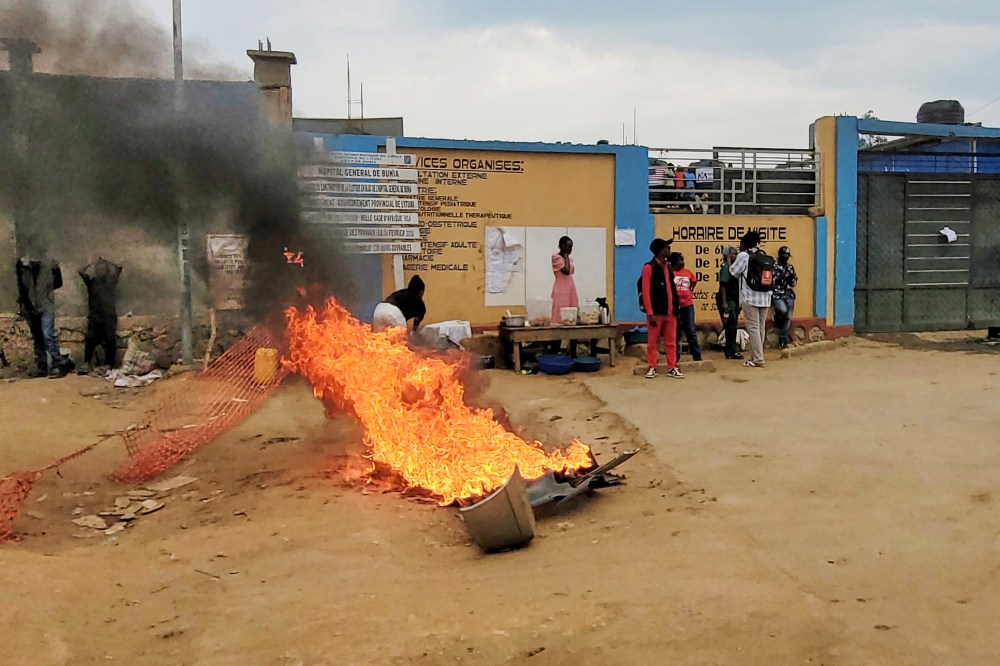

Rubble set on fire as health workers involved in Congo's Ebola response go on strike as they protest over payment issues in Bunia, Congo, Wednesday, July 15, 2026. (AP Photo/Constant Same Bagalwa)
Report Error Submit a Tip

More Stories

Cabernet Sauvignon star of wine festival

Ben Sigurdson 5 minute read Preview

Cabernet Sauvignon star of wine festival

Ben Sigurdson 5 minute read 3:00 AM CDT

The Winnipeg Wine Festival will celebrate the king of red wine grapes next weekend — the theme of this year’s festival, which takes place Sept. 25 and 26 at the RBC Convention Centre, is Cabernet Sauvignon.

Cab Sauv, as it’s also known, is the world’s most widely planted wine grape of any colour, first coming to prominence in the 1800s in France’s Bordeaux region, where the grape is still popular. Rather than single-variety wines, Bordeaux reds tend to be blends, with those coming from the left bank of the Gironde estuary being Cabernet-dominant, while right-bank wines are Merlot-dominant, with Cabernet Sauvignon playing a supporting role. Cabernet and Merlot work well together and many other countries have followed suit in blending the two.

A team at University of California Davis put Cabernet Sauvignon through a DNA test in 1996 and discovered its parent grapes are Cabernet Franc and Sauvignon Blanc — it’s likely that at some point the two varieties, planted next to each other in some vineyard, crossed and mutated and became the grape we know today. (Someone growing grapes in the 19th century must have had an inkling of what was up, as the grape has been called Cabernet Sauvignon since long before the DNA test.)

Flavour-wise, most Cabernet Sauvignon wines are big and bold, with a core of deep dark berry flavours, some graphite and spice notes and relatively bright acidity. It’s a grape that is well-suited to barrel aging, with most examples seeing at least some time in wood.

Read
3:00 AM CDT

Family account spiced with magic realism, geopolitical intrigue and a ghost story

Reviewed by Zilla Jones 4 minute read Preview

Family account spiced with magic realism, geopolitical intrigue and a ghost story

Reviewed by Zilla Jones 4 minute read 2:01 AM CDT

Tom Lin’s second novel Babylon, South Dakota moves beyond a historical account of an immigrant family’s struggle, delightfully blending and bending genres.

Lin is a Chinese-born novelist whose family emigrated to the U.S. when he was four years old. His debut novel, The Thousand Crimes of Ming Tsu, won the 2022 Andrew Carnegie Medal for Excellence in Fiction, making him the youngest ever recipient of that award. He earned a PhD in English from the University of California Davis and is currently an assistant professor of English and creative writing at the University of Iowa.

Babylon, South Dakota takes place in an unspecified time period that can be understood to be during the Mao era — likely the 1950s or ’60s. A young Chinese couple, the Hsuis, immigrate to the rural community that gives the book its title. They take the names Saul and Mei and settle on a 160-acre homestead left to them by a distant relative.

Saul’s dream is to breed and sell chrysanthemums from seeds he brought from China, while Mei wants to raise livestock. They speak no English, know nothing of life in the United States, are unprepared for the harshness of winter and the isolation of the farm and bring nothing with them except some gold, which Mei hides around the house for emergencies. Their only link to the outside world is a discarded and marginally functioning TV set, which Saul rescues and rigs up.

Read
2:01 AM CDT

Steinbach Credit Union member warns others after scammer steals $10K

Scott Billeck 5 minute read Preview

Steinbach Credit Union member warns others after scammer steals $10K

Scott Billeck 5 minute read Yesterday at 5:19 PM CDT

A Winnipeg single mother whose bank account was drained of nearly $10,000 says Steinbach Credit Union needs to warn its members about what she believes is a broader security problem.

The woman, who is not being named to protect her identity, said a scammer gained access to her account earlier this week after calling SCU’s contact centre, claiming to be her and successfully completing the credit union’s authentication process.

She said she knows of at least six others who have experienced similar incidents in which callers impersonate SCU account holders and pass the authentication checks.

The woman discovered something was wrong when her minor son asked why money had been transferred out of an account they jointly hold.

Read
Yesterday at 5:19 PM CDT

Hellebuyck standoff caused by… Nathan MacKinnon?

Mike McIntyre 7 minute read Preview

Hellebuyck standoff caused by… Nathan MacKinnon?

Mike McIntyre 7 minute read Yesterday at 6:34 PM CDT

Looking for someone to blame in the Connor Hellebuyck fiasco and cast as public enemy No. 1? How about long-time Winnipeg Jets nemesis Nathan MacKinnon?

Allow us to explain as we fire up the time machine and head back to February in Italy.

Oh, what could have been if MacKinnon had been able to score on what appeared to be an open net late in the third period of the men’s gold medal game with Hellebuyck down and seemingly out of position.

Instead, the star forward fired wide, keeping the score deadlocked at 1-1 as the clock ticked down on regulation.

Read
Yesterday at 6:34 PM CDT

Day 1 of Jets training camp in the books with pairings essentially cemented

Ken Wiebe 7 minute read Preview

Day 1 of Jets training camp in the books with pairings essentially cemented

Ken Wiebe 7 minute read Thursday, Sep. 17, 2026

Nearly six minutes into his question-and-answer session, Scott Arniel took a welcome detour from the news of the day.

After exhausting the discussion around the goalie who wasn’t in training camp, the head coach of the Winnipeg Jets finally got a query about the line combinations and defensive pairings that were unveiled in training camp.

And unlike past years, when exhibition games were more frequent and the training camp wasn’t this condensed, Arniel conceded these groupings were intentional and were likely staying together for some time.

The expansion to an 84-game regular season brings with it a reduction to four pre-season games and a much shorter training camp, which could limit the amount of experimentation that Arniel can do during the next two weeks.

Read
Thursday, Sep. 17, 2026

Canada must not accept another Iranian autocracy

David Matas 5 minute read 2:01 AM CDT

Iran is a state run by a radical government victimizing its citizens and its neighbours. How do we change that? Any regime change that repeats the mistakes of the past is not a solution.

What went wrong in the past which led to the current regime? One answer is the U.K. and American aided coup which led to the ouster in 1953 of a democratically elected government headed at the time by Mohammad Mossadegh and its replacement with an American friendly autocrat, the Shah of Iran, Mohammad Reza Pahlavi.

The Shah imposed his rule through the Iranian National Intelligence and Security Organization — SAVAK, the acronym of its Persian name. SAVAK systematically inflicted torture, arbitrary killings and extra-judicial killings on perceived opponents of the regime. It was only a matter of time before repression of a regime directed to serving foreign interests would be overthrown.

What replaced the regime of the Shah, in 1979, the current regime of the mullahs, is a regime as intolerant and violent as the regime of the Shah and then some. That was not inevitable. But neither was it surprising. The vicious nature of the current regime, following the example set by the Shah, and its hatred for the United States, reacting to the U.S. aided imposition of the Shah, both echoes and reacts to the past. In 1979, the U.S. reaped what it sowed in 1953.