Why do these researchers want your baby teeth?

Advertisement

Advertise with us

For more than four decades, oilfield brine has been spread across Ohio roadways, but its radioactive contents are known to cause serious health issues.

Read this article for free:


or

Already have an account? Log in here »

To continue reading, please subscribe:

Subscribe and receive a limited-edition Free Press branded hat or tote.

Digital Subscription

One year of digital access for only $205*

  • Enjoy unlimited reading on winnipegfreepress.com
  • Read the E-Edition, our digital replica newspaper
  • Access News Break, our award-winning app
  • Play interactive puzzles

*First annual payment billed as $205.00 + GST for one year. This annual subscription will automatically renew at $233.00 + GST every 52 weeks (10% off the regular annual price of $259.35). Offer available to new and qualified returning subscribers only. Cancel any time.

To continue reading, please subscribe:

Add Free Press access to your Brandon Sun subscription for only an additional

$1 for the first 4 weeks*

  • Enjoy unlimited reading on winnipegfreepress.com
  • Read the E-Edition, our digital replica newspaper
  • Access News Break, our award-winning app
  • Play interactive puzzles
Start now

*Your next Brandon Sun subscription payment will increase by $1.00 and you will be charged $17.95 plus GST for four weeks. After four weeks, your payment will increase to $24.95 plus GST every four weeks.

For more than four decades, oilfield brine has been spread across Ohio roadways, but its radioactive contents are known to cause serious health issues.

Oilfield brine, a byproduct of oil and gas development, is applied on roads in some townships in Licking County in order to melt ice and control dust. Researchers from the Ohio State University want to understand how exposure to oilfield brine could be impacting the long-term health of people who live in communities where it is spread.

That includes parts of Licking, Coshocton and Ashtabula counties.

FILE - A sign for Ohio State University is seen on May 8, 2019, in Columbus, Ohio. (AP Photo/Angie Wang, File)

Dr. Arbor Quist is an environmental epidemiologist and an assistant professor at OSU, and is the principal investigator on this exploratory study, leading and overseeing the team involved.

“I’ve been working on issues related to the health effects of oil and gas development for the past decade,” Quist said. “But this project is just starting this summer, and so the work in Licking County is just starting this summer.”

This work will involve collecting data in unconventional ways: through gathering toenail clippings, naturally shed baby teeth and soil samples. Adults who have lived in Licking County for the past 12 months are eligible to donate their toenail clippings. If they are donating a baby tooth, the child who the tooth is from must have lived in the county for the second and third trimesters of pregnancy and during their first year of life. The researchers are offering gift cards for participation.

Oilfield brine is not just an issue in Licking County. The Ohio Department of Natural Resources studied brine from 107 wells across 26 different counties and 10 different formations in Ohio. All of them were considered too radioactive to discharge into the environment, according to the Ohio Administrative Code.

Quist helped to create an interactive map that used an AI pipeline to sort through data on where oilfield brine is spread on roads across the state.

Chronic exposure to high levels of radium, like that found in wellfield brine, can “result in an increased incidence of bone, liver or breast cancer,” according to the federal Environmental Protection Agency.

Radium is chemically similar to calcium, meaning that our bones absorb it as if it was calcium.

As radium decays, it creates radon, a colorless, odorless gas that is the second leading cause of lung cancer in the country. Licking County is considered “ground zero” for radon in the United States, according to a 2025 investigation from The Columbus Dispatch.

The radium doesn’t just disappear after the brine is spread.

“The rain can wash it into people’s gardens where they grow food to feed their kids,” said Jacque Morgan, a concerned Licking County resident who has been heavily involved in advocacy work to ban oilfield brine on roadways. “It can move down to the streams, get into our water. But it doesn’t dissipate.”

Spreading radioactive oilfield brine has been legal in Ohio since 1985. Since the late 1800s, more than 100,000 conventional wells have been drilled in eastern Ohio, according to ODNR. Because wellfield brine is considered waste material that well owners must dispose of, some offer it free to municipalities, counties and townships willing to take it for use on the roads.

Activists like Morgan and those at the Buckeye Environmental Network are fighting to change that.

Ohio Senate Bill 329 would ban the practice of spreading well brine on roads in Ohio. The Senate Agriculture and Natural Resources Committee had a second hearing on the bill in February, but no action since.

Morgan said they met with Sen. Tim Shaffer, who represents Fairfield, Licking and Perry counties.

“Shaffer gave us a lot of time,” Morgan said. “He listened to what we had to say and asked questions. To me (Senate Bill 239) should be a non-controversial, nonpartisan issue. It has to do with the health and welfare of everybody that’s within the environment where this is being spread.”

There are other solutions to control ice and dust on roads besides oilfield brine. Granville Township has switched from oilfield brine to making their own de-icer. Through using a water and road salt mixture, Granville is able to avoid the contaminants in oilfield brine. Morgan said that she wishes other Licking County townships would choose to prioritize health like this.

“When I see greed being a higher priority than health and welfare, that’s upsetting,” Morgan said. “If you’re getting the benefit of the gas and the oil, then give us the benefit of healthy air to breathe and ground to walk on and vegetables to eat and water to drink.”

On Sept. 19, Quist will be at the Granville Farmers Market to discuss the effects of radium on the body and to connect with parents of children living in areas where oilfield brine is spread in the hopes of talking about their research.

“People seem interested and curious,” Quist said.

Morgan said that she’s not sure whether Quist’s research will change anything about the reality of oilfield brine in Licking County. But she hopes that further knowledge about the brine’s impact can someday make things better.

“I hope that it will put another couple of bricks on the scales of justice and reasonable choices for our quality of life and health,” said Morgan.

___

This story was originally published by The Reporting Project and distributed through a partnership with The Associated Press.

Report Error Submit a Tip

More Stories

Why do these researchers want your baby teeth?

Ella Kitchens/the Reporting Project, The Associated Press 5 minute read Preview

Why do these researchers want your baby teeth?

Ella Kitchens/the Reporting Project, The Associated Press 5 minute read Friday, Jul. 31, 2026

For more than four decades, oilfield brine has been spread across Ohio roadways, but its radioactive contents are known to cause serious health issues.

Oilfield brine, a byproduct of oil and gas development, is applied on roads in some townships in Licking County in order to melt ice and control dust. Researchers from the Ohio State University want to understand how exposure to oilfield brine could be impacting the long-term health of people who live in communities where it is spread.

That includes parts of Licking, Coshocton and Ashtabula counties.

Dr. Arbor Quist is an environmental epidemiologist and an assistant professor at OSU, and is the principal investigator on this exploratory study, leading and overseeing the team involved.

Read
Friday, Jul. 31, 2026

Mayoral candidate Vogiatzakis criticized for living outside Winnipeg

Malak Abas 4 minute read Preview

Mayoral candidate Vogiatzakis criticized for living outside Winnipeg

Malak Abas 4 minute read Friday, Oct. 2, 2026

A mayoral hopeful took heat from other candidates Friday for living outside Winnipeg while running in the civic election.

Mike Vogiatzakis’s primary residence is in the Rural Municipality of St. Andrews, about 25 kilometres north of Winnipeg — a community with its own mayor and councillors.

But the funeral director said he owns a home in Winnipeg where he divides his time, and he would move to the city full-time if elected mayor.

“It doesn’t matter where a person lives. Why are we dividing St. Andrews and Manitoba and Winnipeg? I’ve met the criteria to run for mayor,” Vogiatzakis said Friday morning.

Read
Friday, Oct. 2, 2026

Creative powerhouse Perry Rosemond never lost Winnipeg roots

Ben Waldman 7 minute read Preview

Creative powerhouse Perry Rosemond never lost Winnipeg roots

Ben Waldman 7 minute read Yesterday at 6:00 AM CDT

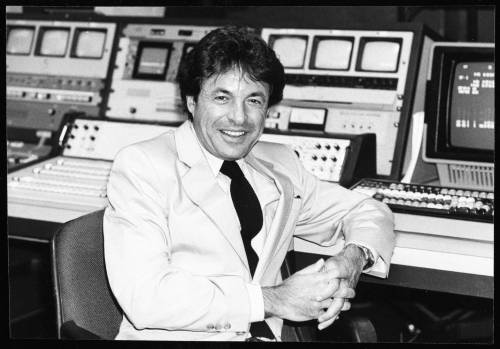
He created King of Kensington, directed the troops in the Royal Canadian Air Farce, and his creative eye was behind the lens for television shows starring Johnny Cash, Tom Jones, Mr. Dress-Up and the Friendly Giant.

He also wrote and developed the Canadian version of Sesame Street during his time as the head of school and preschool programming for CBC in Toronto, and directed a televised special in 2002 for Winnipeg sketch comedy troupe Royal Liechtenstein Theatre Company.

But before his name featured in the credits of some of the most iconic and influential pieces of the Cancon canon, Perry Rosemond was an only child living in a crammed, multi-generational home in Winnipeg’s North End, racing each day to beat the morning bell next door at William Whyte School.

In memoirs that have yet to be published, the late television producer recalled his childhood. “(T)here were 14 of us in the house at 193 Andrews St., and it wasn’t that big of a house,” he writes.

Read
Yesterday at 6:00 AM CDT

Board game company charts winning path

Aaron Epp 5 minute read Preview

Board game company charts winning path

Aaron Epp 5 minute read Friday, Oct. 2, 2026

Dennis Northcott has launched a game without frontiers.

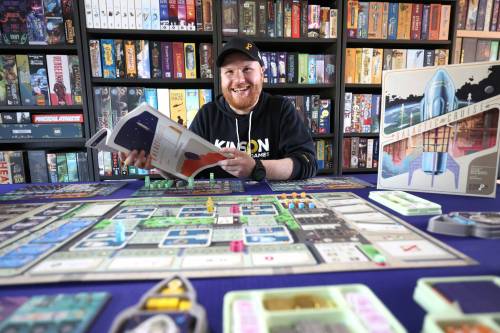
The Winnipeg entrepreneur is the co-designer of Galactic Cruise, a board game published last year by Kinson Key Games LLC, the business he co-founded. Since its release, Galactic Cruise has been translated into 11 languages and sold around 50,000 copies worldwide.

It’s also one of three finalists for this year’s Deutsche Spiele Preis, a prestigious community-voted board game award. Northcott will travel to Essen, Germany, later this month, where the winner will be announced at Spiel Essen, an annual board game trade fair.

“It’s been amazing,” Northcott said of the response to Galactic Cruise during an interview in his Island Lakes neighbourhood home earlier this week. “The sales have been great, but it’s also been amazing in terms of people giving their reviews.”

Read
Friday, Oct. 2, 2026

Brandonmeat packer thriving on its own

Abiola Odutola 3 minute read Preview

Brandonmeat packer thriving on its own

Abiola Odutola 3 minute read Yesterday at 2:01 AM CDT

BRANDON — Canada Packers has strengthened its business and laid the foundation for future growth during its first year as an independent company, its president says.

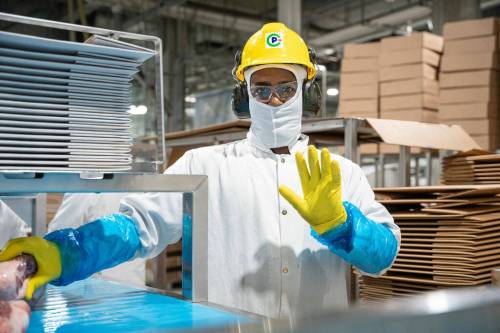
The Brandon-based pork producer, separated from Maple Leaf Foods in October 2025, established its own leadership, strategy, systems, culture and identity while continuing operations across its hog production farms and regional hog barns in southern and eastern Manitoba.

The company’s first year was focused on building a successful standalone business while continuing to serve customers, communities and shareholders, president Dennis Organ said.

“Market conditions over the past year have been more challenging than we anticipated when we became a separate entity,” he said in an email. “Despite that, we continued to execute against our priorities, including increasing processing volumes, maintaining disciplined operations and strengthening the business.”

Read
Yesterday at 2:01 AM CDT

Letters, Oct. 3

7 minute read Yesterday at 2:01 AM CDT

A morning in the life …

My very first lesson does not start when I walk into that lecture hall, oh no — it starts long before. It begins when I walk to my car, check the estimated arrival time to the University of Manitoba and hope that Winnipeg traffic agrees with it.

A drive that appears completely manageable changes almost immediately when I’m greeted by a tsunami of orange pylons and a line of cars that appears to go on forever. Traffic moves by the inch, lanes magically disappear and the detour I took yesterday now has a detour of its own. These factors make me do a calculation that I have become all too familiar with. How late can I arrive and still find parking, run to my class across campus and get to class with enough time left to make it worth it?

I have grown used to people saying, “Why not just leave earlier?” I do. But when I’m already leaving for my 8:30 a.m. class at 7 a.m., there’s only so much I can do. This drive that some would think is relaxing is one that feels like an assignment that I didn’t know I had to complete and is due at 8:30 a.m.