Takeaways from the AP’s story about the Trump administration’s effort to end ‘Housing First’
Advertisement
Read this article for free:
or
Already have an account? Log in here »
To continue reading, please subscribe:

Digital Subscription
One year of digital access for only $205*
- Enjoy unlimited reading on winnipegfreepress.com
- Read the E-Edition, our digital replica newspaper
- Access News Break, our award-winning app
- Play interactive puzzles
*First annual payment billed as $205.00 + GST for one year. This annual subscription will automatically renew at $233.00 + GST every 52 weeks (10% off the regular annual price of $259.35). Offer available to new and qualified returning subscribers only. Cancel any time.
To continue reading, please subscribe:
Add Free Press access to your Brandon Sun subscription for only an additional
$1 for the first 4 weeks*
- Enjoy unlimited reading on winnipegfreepress.com
- Read the E-Edition, our digital replica newspaper
- Access News Break, our award-winning app
- Play interactive puzzles
*Your next Brandon Sun subscription payment will increase by $1.00 and you will be charged $17.95 plus GST for four weeks. After four weeks, your payment will increase to $24.95 plus GST every four weeks.
Read unlimited articles for free today:
or
Already have an account? Log in here »
President Donald Trump’s administration is shifting federal policy and dollars away from the “Housing First” approach that’s been the heart of federal homelessness policy for more than a decade.
The concept calls for getting the most vulnerable people living on the streets and in shelters into permanent housing first before addressing their other problems. The administration prefers relying on temporary housing where people can live for no more than two years while they go through required programs to address issues such as substance use disorder and job readiness.
There’s deep debate about which way is more effective, and the abrupt shift has left local housing organizations that depend on federal funds to make changes reluctantly. They fear the new way will hurt the people they are trying to serve and could put some people with extreme health risks back on the streets, or keep others there.
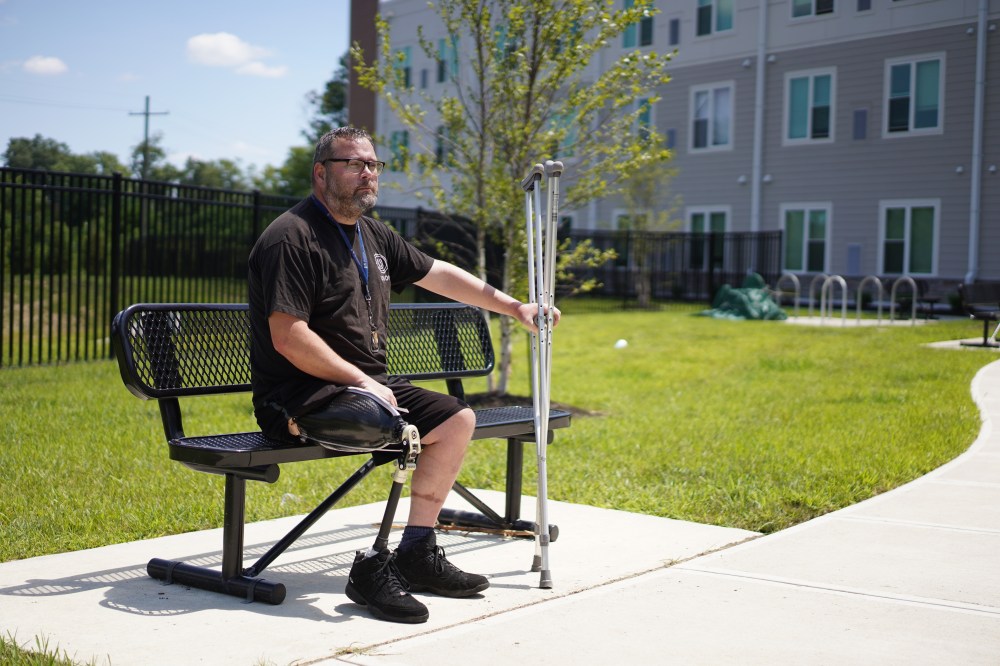
Here are some takeaways from The Associated Press’ reporting:
The homeless population has grown and has health problems
Across America, nearly 750,000 people were homeless last year, according to an estimate compiled by the U.S. Department of Housing and Urban Development. That number is down slightly from the previous year but up 31% from 2019.
The portion considered chronically homeless — having a disability and long-term or repeated episodes of homelessness of at least a year — has also risen since 2019. It’s now about a quarter of the total.
Overall, research shows, roughly half of homeless adults live with a disability, up to two-thirds have mental illness and 2 in 5 have substance use disorder. Rates of disability, heart disease and diabetes are two to three times higher than in the general population.
Housing First helps people with housing stability, but outcomes are mixed for other issues
Determining the best solutions to homelessness depends on the lens used to judge it. The answer may be different if the goal is reducing overall homelessness, helping people into the job market, spending as little taxpayer money as possible, improving health outcomes — or just keeping people alive.
Studies have consistently shown that Housing First programs keep people stably housed. Some research says they do so better than other models, including “Treatment First,” which favors mandatory services for addiction and serious mental illness. But findings on health outcomes have been mixed.
Service providers say temporary, or transitional, housing is a good option for some people, such as those getting on their feet after evictions. But they say most chronically homeless people can’t pull their lives together within two years and would likely wind up homeless again.
The administration’s approach is a big change
Last year, Trump signed an executive order calling for an end to federal support for Housing First policies. His proposed budget for next year calls for eliminating the federal initiative that goes mostly to Housing First programs.
After HUD tried to rework its homelessness grants to fit the administration’s preferred policies, a consortium of local governments and advocates for homeless people sued. A federal judge agreed with them. But this month, an appeals court said the administration could move ahead awarding grants.

Also, Trump’s proposed budget calls for eliminating the $4 billion Continuum of Care program, which in 2024 awarded money to 6,500 projects. At that time, more than 60% went to permanent supportive housing, mostly to continue existing efforts. Just 1% went to transitional housing.
Organizations across the US have altered plans as a result
Trump’s proposed policy changes have left homelessness organizations scrambling to figure out how to alter their housing strategies so they can keep getting federal money.
Planned housing projects have been scrapped in Corbin, Kentucky. Less housing is available for those currently homeless in places including Santa Cruz County, California. In Louisville, Kentucky, nonprofits are looking at making some permanent housing temporary.
And in Santa Cruz County, California, officials said losing permanent supportive housing funds would exacerbate existing problems caused by the winding down of another federal program: pandemic-era emergency housing vouchers. People set to lose those vouchers are being prioritized for available housing, meaning the county can’t help as many people who are homeless now.